
| No | Name | Description |
|---|---|---|
 |
This progressive biological farm grows some 50 types of biological vegetables and greens. The farmers own 10 ha of land where they grow various vegetables outdoors and in greenhouses in the Biržu region. |
|
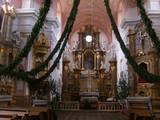 |
This is one of the most outstanding Catholic churches in Latvia. The current building was built in 1761 in the Polish Baroque style. The interior from the 18th century is original and very ornate. Each year there are spiritual music events and Polish cultural festivals here. The guide will give you a tour of the church and of other tourism destinations along the frontier line of the EU (please be sure to bring along your passport!). |
|
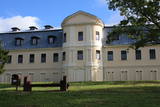 |
There are several buildings from the estate that survive to the present day and were built by the Plater dynasty of noblemen. The old mansion that is on the side of the Count Plater Street was built in 1759 on the banks of the Jāņupīte River. The Baroque building was designed by an architect from Venice, Antonio Parazzo. Later the mansion was rebuilt, and after a new castle was erected, the Plater family spent its summers on the first floor of the old building. The second and third floors had a library with some 20,000 books. The noblemen managed to move most of the contents of the library to safer locations during World War I, when the library as such was destroyed. Work on the new castle of the Krāslava Estate (on the upper part of the Daugava River Valley) began in 1756 (architect Domenico Parazzo). Initially it was in the Baroque style, but reconstruction at the turn of the 18th century involved Classicism. Unique Rococo wall paintings with views of Rome have been discovered in the building. These were based on samples from castles in Poland and were painted during the 1760s and 1770. A high school used the new castle until the 1970s. Then the building was abandoned and gradually turned into a ruin. More recently there has been major renovation of the castle’s façade, and it now has a good appearance. Surrounding the structure is a romantic landscape park that dates back to the mid-18th century. It is on the hillocks of the Daugava River Valley and the valleys that cross it. An artificial grotto has been restored, and a statue of a lion stands guard over the site. The stairway has been placed in its historical location, and the park features pathways and a yard. |
|
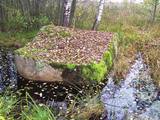 |
Platais Boulder (Wide boulder). You can find it in the rural municipality of Mākoņkalns not far from a
small meadow close to the boulder of Āžmugura. Both the boulders have their legends. Some say that the
boulder of Āžmugura is the part of Platais boulder and the rainwater from its cavity heals the warts.
|
|
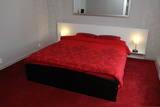 |
Guest house AMRAI is located in Ventspils, in a quiet, tidy area, 6 km from the central beach and 2 km from the wild beach. For accommodation we offer a well-equipped two-storey holiday house with two separate rooms, as well as well-equipped 1-room and 3-room apartments in a private house with separate entrances from the yard. The one-room apartment has a shower, toilet, kitchen, TV - local, internet. The three-room apartment has a jacuzzi bath, toilet, kitchen, TV-spot, internet. Both apartments have a washing machine. In the garden there is a place for games, trampolines, grills. Offers board games and outdoor games - free of charge. Possibility to order meals, talk to a babysitter, rent bicycles. |
|
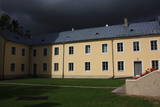 |
The origins of the castle date back to 1237. The closed yard that was typical of Medieval castles has been preserved. The interior took on its Historicism design in the mid-19th century, but there are also more ancient elements such as the gate tower, the basic walls, the firing apertures, the vaulted structures, the window apertures, etc. The Jēkabpils Museum of History was installed in the castle in 1994, and it can be toured in the company of a guide or an audio guide. |
|
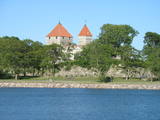 |
The Capital of Saaremaa island. Popular resort. The Town Hall is built in the style of Baroque. |
|
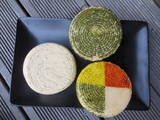 |
The Talsi Dairy was established in 1922 after merging several other dairies. The Talsi Dairy company was established later on these foundations. One of the best known products is “Talsu Ritulis” cheese. Products such as milk, kefir, cottage cheese, butter, cheese, etc., can be purchased at the “Piena sēta” store that is alongside the company. |
|
 |
The "Stender's" bar is situated in the centre of the city of Kuldiga at the start of Liepājas Street, which is the main pedestrian and biking thoroughfare in Kuldīga. The two-story wood building was once a granary and is of architectural importance. The bar is situated on the second floor of the building, with the lowest door jambs in Kuldiga and wooden shears in the bar. Latvian cuisine: Farmer’s breakfast, oatmeal, cold kefir soup, sorrel, cucumber and bean soup, beef in onion sauce, hunter’s sausages, potato pancakes, sweet pancakes with lingonberry sauce. |
|
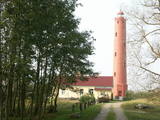 |
This was Coastal Defence Battery No. 500 at one time, and it was dismantled in 1955. There were four 130 mm cannons, and their foundations can still be spotted in the forest northeast from the lighthouse. They are mostly covered by moss and can be very hard to find. Those who are not familiar with the region will probably have the most trouble of all.
|
|
 |
Liepene, in the Ventspils District, was once home to a coast guard division. The facilities are now privately owned and offer accommodations to tourists.
|
|
 |
The café is located right by the old brick bridge of Kuldīga and boasts a wonderful view over Ventas Rapid, the widest waterfall in Europe. Offers grilled dishes in summer, as well as burgers, steaks, shashlik and pastries. |
|
 |
Eine der neuesten Städte in Lettland. Im Jahr 2013 wird die Stadt ihr 20. Jubiläum feiern. In Salaspils befinden sich mehrere in Lettland bedeutende wissenschaftliche Institutionen (während der Sowjetzeit wurde die Stadt zu einem Zentrum für Wissenschaft gebildet): Institut für Biologie, Institut für anorganische Chemie, Institut für Physik, der Nationale Botanische Garten. Während der Sowjetzeit befanden sich hier der ehemalige Kernreaktor von Salaspils und das Institut für Forstwissenschaft Silava. In den letzten zehn Jahren hat sich die Infrastruktur der Stadt entwickelt, es sind mehrere große Bezirke mit Einfamilienhäusern entstanden. Im Jahr 1996 wurde in Salaspils eine neue katholische Kirche gebaut. Ihrem Wesen nach ist die Stadt ein Schlafbezirk der Hauptstadt Riga. |
|
|
|
Gebaut als ein Gebäude des Festungstyps. Wurde in der Zeit des Livländischen Kriegs und des Nordkriegs zerstört. 1865 wurde der heutige Turm gebaut. Die von J. V. Rabe gebaute Kanzel mit Spindeltreppe. |
|
|
|
Iekārtots bijušā Džūkstes – Lancenieku skolā, kur ikviens var iepazīt mūsu „Pasaku tēva” – Anša Lerha-Puškaita devumu folkloras mantojuma vākšanā.
|
|
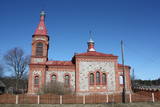 |
Die Angaben darüber, dass die Liven den orthodoxen Glauben angenommen haben, beweist eine Urkunde, die in den 1990er Jahren während der Restaurationsarbeiten im Turm der evangelisch-lutherischen Kirche (siehe auch weiter) gefunden und dort beim Bau der Kirche im Jahr 1885 hineingelegt wurde. Diese Urkunde erzählt, dass der Übertritt der Liven zum orthodoxen Glauben, dem sogenannten Glauben des Kaisers, „nicht mit der Glaubensüberzeugung verbunden ist, aber das ist ein Mittel, wie man an Vorteile für Grundstücke und an Genüsse gelangen kann.” Die orthodoxe Gemeinde hat schon im Jahr 1885 ein Grundstück vom Baron Osten-Sacken gekauft, auf dem im Jahr 1890 die Kirche, das Priesterhaus und ein Schulgebäude gebaut wurde. Alle Gebäude haben sich bis heute erhalten. Die Kirche hat ihre eigene Gemeinde und die Gottesdienste werden hier einmal im Monat abgehalten. Man kann Angaben darüber finden, dass Kolka das einzige Dorf an der livischen Küste ist, wo in den 1890er Jahren eine orthodoxe Kirche gebaut wurde. Die Glocke hat ihren Platz im Jahr 1936 gefunden. Während der Sowjetzeit wurde die Kirche als eine Leichenhalle benutzt, aber dient sie ihrem ursprünglichen Ziel. |
|
 |
Cīravas muižas ūdensdzirnavas būvētas 1881. g., bet 20. gs. – pārveidotas. Šīs ir vienas no salīdzinoši retajām Latvijas ūdensdzirnavām, kas tādā apjomā saglabājušas vēsturiskos mehānismus. Apskatāmas no ārpuses. |
|
 |
Als das Gründungsjahr von Daugavpils wird das Jahr 1275 angesehen. Das ist die Zeit, als der Heermeister des Livländischen Ordens Ernst von Ratzeburg auf dem Burgberg von Naujene die Burg Dinaburga (Dünaburg) gebaut hat. Die Burg hat mehrmals unter litauischen und russischen Einfällen gelitten, bis sie im Jahr 1557 von dem russischen Heer unter der Leitung von Iwan dem Schrecklichen zerstört wurde. Nach diesem Ereignis wurde die Dünaburg 17 km weiter am rechten Ufer des Flusses erneuert, wo sich heute die Stadt Daugavpils befindet. In der Zeit zwischen 1810 – 1833 wurde eine neue Festung gebaut. Im Jahr 1826 wurde mit dem Bau des heutigen historischen Zentrums begonnen. Während des Ersten Weltkriegs wurden die wichtigsten Industrieunternehmen mit ihren Mitarbeitern nach Russland abtransportiert. Während der ersten Unabhängigkeit Lettlands blühte das Kulturleben von Daugavpils auf. Der größte Teil der Stadt wurde während des Zweiten Weltkriegs – im Juli 1944 – zerstört. Heute ist Daugavpils die zweitgrößte Stadt in Lettland und ein bedeutendes wirtschaftliches Zentrum der historischen Region Latgale. Vor einiger Zeit wurden Rekonstruktionsarbeiten in der Festung von Daugavpils begonnen, die auch in Europa einzigartig ist. |
|
 |
Das alte zemgalicshe wirtschaftspolitische Zentrum, das eine stark befestigte Siedlung vor der Ankunft der Kreuzritter war. Die Ruinen der Burg des Livländischen Ordens. |
|
 3 Tagen
|
Это один из 6 маршрутов путешествий в серии «Насладитесь деревней!», который приглашает Примерное время прохождения маршрута: четыре – пять дней, в зависимости от количества выбранных достопримечательностей и времени, отведенного для их осмотра. |
|


