
| No | Name | Description |
|---|---|---|
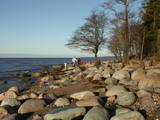 |
Neliels, bet ļoti ainavisks un ar lieliem laukakmeņiem klāts
zemesrags. No raga iztālēm redzamas Veczemju
klintis.
|
|
 13 days
|
This cycling route will take you from Riga along the West coast of the Baltic Sea of Latvia and Lithuania. On the way the route passes the sea resort Jurmala with 19th century wooden archicture, the picturesque Abava river valley, geologicaly interesting steep banks of Jūrkalne, historically exiting city of Liepaja with great ambience and charming Kuldiga with the widest waterfall in Europe. In Lithuania the route goes through Palanga where Amber Museum is located and culminates at the National Park of the Curonian Spit with 60m high sand dune. |
|
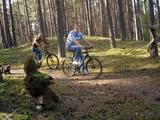 |
Brīvdienu mājas "Korķi” apkārtnes priežu mežā ir izveidota Jāņtarpiņu taka. Ideāla vieta aktīviem sēnotājiem un ogotājiem. Savukārt saules un jūras cienītāji pa šo taku 5-10 minūšu gājienā nonāks Vitrupes pludmalē, kur varēs baudīt sauļošanās un peldēšanās priekus.
|
|
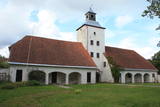 |
The complex dates back to the 17th and 18th century, when a fortress was replaced by a mansion and other buildings. The rectangular yard that is in the centre of the state is surrounded by the mansion, two granaries with columns that were built opposite one another, a stable and a wheelhouse. The stable and wheelhouse, the bell tower and the gate create the most impressive part of the buildings. Bells were rung because of religious rituals, but also to inform people at the estate about everyday issues. The silhouette of the building is reminiscent of cloisters, city halls and churches that were common in Europe in the 18th century. In 1780, the estate was taken over by the family of Karl Otto von Löwenstern, and the mansion can only be viewed from the outside. There is a hiking trail near the estate. |
|
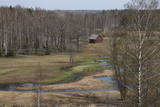 |
Bijušā piecstāvīgā metāla skatu torņa apkaimē plešas Lemmjegi upes palieņu pļavas. Netālu atrodas kādreizējā Oksas kroga (Oksa kõrts) vieta, kur saglabājies iespaidīgs manteļskurstenis. Apkaimes apskatei izveidota 0,8 km gara koka laipu taka. |
|
 |
One of the largest meat and dairy farms in Kurzeme, with a herd of around 500 heads of cattle. The farm also breeds most of the types of fowl that are known in Latvia. An informative tour is available, and you can purchase meat, milk and eggs. |
|
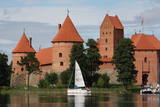 |
The Trakai Island Castle is the only East Europe's castle which is built on a little island. The process of building this castle started in 14th century. After its fall on 1410 during a war it lost its meaning as a military base and became a living place for ruler of Lithuania. Trakai Castle is one of the most popular objects in Lithuania for tourists. Inside the castle is a museum which tells about Trakai history.
|
|
 |
Atrodas Inciema centrā. Piedāvā maltīti visām ēdienreizēm. Lielas porcijas, garšīgs ēdiens. Iecienīta tuvākas un plašākas apkaimes maltītes ieturēšanas vieta. Klāj galdus. |
|
 |
The family company in the centre of Trikāta prepares a variety of chocolate delicacies - truffles, chocolates figures. During summer you can buy ice-cream made from the milk and cream of local producers. |
|
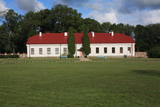 |
Atrodas Grāfu Plāteru parkā, blakus Krāslavas jaunajai pilij. Tas izvietojies vienā no 18. gs. celtajām muižas saimniecības ēkām. Muzeja ekspozīcija ir veidota interesantā veidā – 17 m garā laivā, kas (laiva ar pieciem airiem) ir pilsētas ģerbonis. Muzeja krājums iepazīstina ar Krāslavas novada vēsturi, sākot no akmens laikmeta līdz mūsdienām. Muzejā tiek organizētas Krāslavas mākslinieku izstādes. |
|
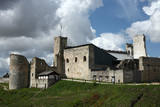 |
The Castle is a theme park depicting life of the 16th C stronghold where families can spend an exciting day as soldiers and noble knights. There is horse riding, bow and crossbow shooting, you can practise carpentry and blacksmith skills, mint coins, make gold and gunpowder. Facilities include a wine cellar, torture chamber, death room, medieval brothel, astronomy room, barber and alchemist workshops. The Schenkenberg Tavern menu has dishes cooked to medieval recipes. |
|
 |
The owners of Tahku coastal houses organise cucumber marinating and salting workshops with a happy mood. Cucumber festival Tahkuranna takes place every year on 20 August, and there you can buy canned cucumbers, local food and handicrafts, participate in master classes, and also make handicrafts. |
|
 |
The granary of the Dviete Estate magazine is on the side of the Dviete-Bebrene road. The restored building dates back to 1874 and was used as a prayer house from World War I until 1929, when the Dviete Catholic Church was rebuilt. |
|
 2 days
|
This route offers most unusual views. Seda is the only town in Latvia with Soviet-era planning from the middle of the last century, featuring a central square and streets stretching from it in a star pattern. The architectural style of apartment and public buildings is rather exotic. The Seda Swamp yielded peat moss during the first period of Latvia’s independence and is one of the largest industrial and environmental territories of its kind in Latvia and the Baltic States. Former peat fields have partly become flooded and are overgrown with reeds, thus creating an outstanding environment for nesting water birds and migrating birds which rest at the swamp. Peat is still being extracted, and perhaps you will be lucky enough to spot the “little peat moss train.” Route information from Latvijas Lauku forums |
|
 |
Valkas novadā esošā saimniecība "Kurģi" ir vieta, kur braukt atpūsties gan ģimenēm, gan draugiem. Viesiem tiek piedāvātas izjādes zirga, ponija mugurā, pajūgs gan ģimenēm, gan kāzām. |
|
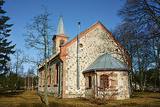 |
Kolka Evangelical Lutheran Church. A story has survived of one Danish trader saved in a shipwreck at Kolkasrags who in gratitude built a church in Kolka. The church had changed its location for three times in Kolka. The foundation of the church visible nowadays and built of boulders was laid by Karl Ludwig Ferdinand von der Osten-Zaken, the former owner of the Dundaga estate. It was built instead of the wooden church (or close to it) which was heavily damaged during the Crimean War. The first construction works were started in 1885 by the construction foreman Otto Sievert (Architect: T. Zeiler). In the Soviet time, the church was vandalized and it was used as a warehouse. It is worth to see the modern- style altarpiece |
|
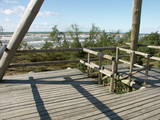 |
The Grey Dune of Pāvilosta nature reserve covers 42 hectares of land and has been designated to protect Latvia’s widest dune (1.5 km parallel the seacoast, and 812m in the direction from the sea to inland) and the biotopes and species found there. A two-storied watching platform is built to savour the scenery. In Soviet time, local fishermen used to dry seaweed in dunes for production of agar, and thus rich vegetation developed in the dune. The Gray Dune is part of a unique landscape with the sea view, the traditional architecture of Pāvilosta fishing town, and biotopes, including protected, which border the nature reserve: pine forest, embryonic dunes, white dunes, and wet beech where once can find springs. Biotope 2130, “Fixed dunes with herbaceous vegetation (grey dunes)” is found here. At present, pines are taking over the biotope, therefore some maintenance activities are required. The Grey Dune is most beautiful in the second half of July and in August when the blossoming Breckland Thyme (Thymus serpyllum) and Narrowleaf Hawkweed (Hieracium umbellatum) colour the dune in shades of yellow and violet. The most typical species here are Pasqueflower (Pulsatilla pretense), Grey Hair-grass(Corynephorus canescens), Blue Hair Grass (Koeleria glauca), Sand Pink (Dianthus arenarius). The Gray Dune earned wide recognition when a group of enthusiasts actively campaigned for six years to achieve the status of the nature reserve. Guna Grimsta, a group representative remembers that they organised events and activities throughout Latvia involving large part of the society, prominent personalities, church parishes, NGOs, school youth and university students. The activists were writing letters, making videos, doing research articles, composing music, collecting signatures and submitting proposals to achieve official status of the Grey Dune as an especially protected nature site. They organised seminars, concerts, art plenaires and exhibitions, educational excursions, joint-work, musical church services, meetings with high officials and their on-site visits to the Gray Dune. In 2006 the group received the title „Proudness of Latvia” awarded by the national TV3 broadcasting company and daily paper „Diena”. |
|
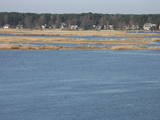 |
The restricted area protects the seashore meadows of the Lielupe River estuary, which are a very uncommon habitat in Latvia. The restricted area is on the left bank of the river, where one of the largest areas of wild swamp angelica is found. This is an important nesting area for birds. The territory is not improved for tourism, and it should be viewed from the Baltā (White) dune that is on the opposite bank of the Lielupe River. From there, the visitor will see a lovely landscape featuring the river estuary and the meadows which are around it.
|
|
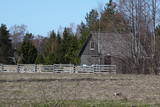 |
This village appears in historical documents from 1310. A census in 1582 and 1583 recorded eight farms in the village, while a 1731 census conducted by the Dundaga Estate found only three. In 1826, each farm had 16 or 17 people, with some 60 in total. A census in 1935 showed that all 49 Livonians in Saunags spoke the Lithuanian language, but only 11 of them spoke the language at home. There was a store that was owned by Kārlis Tilmanis, who also owned a factory where sprats were salted. Also born in Saunags was the seafaring captain Arvīds Ludeviks (1912-1996). In May 1945, he captained a tugboat, the Rota, in an attempt to bring Latvian refugees to Sweden. The ship was detained, and the captain was sent to Siberia. Another seafaring captain from Saunags was Visvaldis Feldmanis (1938-2017). |
|
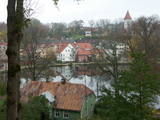 |
The town of Talsi is known as the “town of the nine hillocks,” and it is worth touring the location on foot. You’ll find the best views from the Talsi castle hill (views of Lake Talsi and Ķēniņkalns Hill), Sauleskalns (Lake Talsi, the castle hill, Ķēniņkalns Hill), and the hiking trails of Ķēniņkalns (Lake Talsi, the castle hill, the historical town centre).
|
|


