Kontaktinformation
Related objects
| Foto | Name | Beschreibung |
|---|---|---|
 |
At the estuary of the Inčupe River, there is the White Dune, which is around 18 metres high and is the most lovely element of the Vidzeme shoreline among those that have been created by the wind, sand and sea. There is a wooden footpath (the Saulriets trail) which is meant to view, but also protect the dune. It has a viewing area, too. The territory to the south of the river is in the Piejūra Nature Park.
|
|
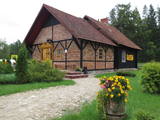 |
Das Café befindet sich im 115. Kilometer der Straße von Vidzeme (A2). Hier kann man am Backprozess des Brotes teilnehmen, das jedes Wochenende organisiert wird. Lettische Innenausstattung. Produkte von lokalen Bauern und Heimarbeitern. Lettische Küche: Hähnchenleber-Salat, Lammfleischsuppe, Suppe mit Fleischbällchen, kalte Suppe, gebratener Wels, geschmortes Schweinefleisch, Kartoffelpfannkuchen, Pfannkuchen mit Marmelade, Quarkfladen, geschichtetes Roggenbrot-Dessert. Das besondere Gericht: Selbstgebackenes Roggenbrot. |
|
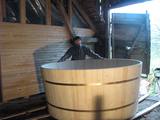 |
The craftsman represents the fifth generation of the oldest dynasty of Latvian barrel makers. The family began such work in the early 19th century, and he is continuing on with traditions related to barrels that are made of oak and ash. He will talk about the various aspects of making a barrel, and you will be able to watch him at work. The craftsman produces barrels, wooden tubs, scoops for saunas, etc. You can order and purchase these items. |
|
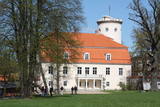 |
Der Ursprung der Stadt ist auf dem 18m hohen Riekstu kalns (Nussberg) und dessen Umgebung zu suchen, denn im 11. -13. Jh. befand sich hier die Holzburg Venden. Der Nussberg befindet sich in der Mitte des Burgparks, von dort hat man eine schöne Aussicht auf den Park, den Weiher und die Burgruine von Cēsis , wohin man gelangt, wenn man die lange kaskadenartige Treppe hinuntersteigt. Die im 13. Jh. gebaute Burg von Cēsis war Residenz des Ordensmeisters und eine der stärksten Ordensfestungen im gesamten Baltikum. Daneben befindet sich das neue Schloss, das 1777 an der Stelle der Torbefestigungen erbaut worden ist. Das Gebäude beheimatet das Museum für Geschichte und Kunst der Stadt, in einem Anbau befindet sich das Besucherzentrum des Schlosses und das Touristikinformationszentrum von Cēsis. Wenn man den Turm besteigt, hat man Aussicht auf die Burgruine, auf die lutherische Kirche und den Nordteil der Stadt. Gegenüber des neuen Schlosses gibt es noch mehrere Gebäude – den Stall und den Wagenunterstand des Schlosshofes (beide Gebäude wurden Anfang des 19. Jh. gebaut), wo heute das Ausstellungshaus Cēsis (Cēsu Izstāžu nams) eingerichtet ist. Auf dem Schlossgelände kann man von außen noch die Scheune, das Kutscherhäuschen sowie die alte Bierbrauerei sehen. Auf der gegenüberliegenden Seite der Straße befindet sich der romantische Mai-Park (Maija parks), der in den 30er Jahren des 19. Jh. angelegt worden war. Begibt man sich weiter in die Straßen der Stadt (Lielās Katrīnas, Mazās Katrīnas, Mazā Kalēju, Kalēju, Lielā Līvu iela un Līvu laukums), kann man Holzbauten des 18. und 19. Jh. sehen. In der Torņa ielā (Turmstraße), die entlang der Schutzmauer der mittelalterlichen Burg verläuft, kann man an der Kirche die Skulptur mit dem Namen „Durch die Jahrhunderte“ von Matthias Janson sehen. Der Sage nach kann man, wenn man die Laterne des Nachtwächters reibt, in die Zukunft sehen. |
|
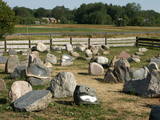 |
The craftsman produces gravestones, commemorative plaques and stone sculptures on the basis of orders from clients. He is prepared to tell you about a stonemason’s work and demonstrate his skills. |
|
 |
The Vildeni farm
*Object Inactive*

|
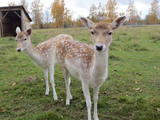
The farm has more than 20 types of chickens along with African ostriches, peacocks, pheasants, quails, turkeys, guinea fowls, peacock pigeons, other exotic birds, pygmy pigs, ponies, rabbits, marmots, fallow deer and various pets. Tours are offered, and eggs from the birds can be purchased during the appropriate season. |
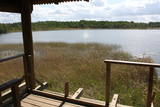 |
This is on the north-western shore of Lake Lielezers of Limbaži, at the start of the Lielezers nature trail. The tower opens up a view of the lake and its lovely shores. It is worth walking the trail, which is several kilometres long, because it is an interesting one. This is part of the ZBR. |
|
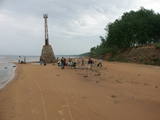 |
Ķurmrags is one of the most distinct capes along the Vidzeme shore of the
|
|
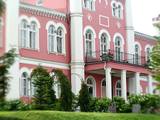 |
Der Birinu Gutshof mit dem Park wurde im 18.-19. Jh. erbaut. Das Schlossgebäude stammt aus dem Jahr 1860 und ist ein erfolgreiches Beispiel einer Vermischung mehrerer Baustile. In der Aussenarchitektur dominieren Neogothik und Formen des Halbkreises, in der Innenarchitektur – die Neorenaissance. Heute ist das Schloss ein angesehener Platz für Veranstaltung, Bankette und Seminare. Getrennt von den Banketträumen befinden sich im Schloss Hotelyimmer und Restaurant. Auch Individualreisende sind eingeladen Ferien im romantischen Schloss und desssen Umgebung zu verbringen.
|
|
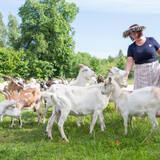 |
Ein lettischer Hof, auf dem ung. 50 Ziegen weiden. Exkursionen und Erwerb von Käse. Käse kann man auch auf dem Markt von Straupe kaufen. |
|
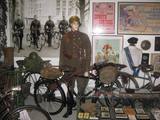 |
This collection contains bicycles from five different armies and five different eras in the history of Latvia. They include a World War I bicycle from the Russian Empire, a bicycle from the Latvian army, two World War II German bicycles, and a Monark-brand military bicycle from Sweden that was donated to the renewed Latvian army in the 1990s. The exhibition also features items that are related to the use of military bicycles – seals, awards, and information about the bicycle units of Latvia’s Home Guard.
This is the only bicycle museum in Latvia, and its exhibits are unique, as well.
|
|
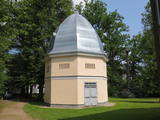 |
Käserei oder auch Glockenturm (wegen der Glocke, die ins runde Fenster des Dachs eingebaut ist), befindet sich bei den Eingangstoren des Landguts Naukseni. Ein achteckiges Steingebäude ist mit einem kuppelförmigen Blechdach bedeckt. Der Glockenturm ist zweigeschossig. Der erste Stock ist gut durchlüftet, mit kleinen länglichen Fenstern, die sich an allen Fasadenflächen des Gebäudes befinden. Die Käserei ist schon auf einer Zeichnung des Etnographs J.H. Brotze (um das Jahr 1800) zu sehen. Man kann merken, dass sein ursprüngliches Aussehen hat das Gebäude bis heute erhalten. In der Sowjetzeit ist der Zustand des Turmes schlechter geworden – ein Schuppen wurde angebaut und eine große Wandöffnung durchgeschlagen. Im Jahre 2002 wurde das Renovierungsprojekt des Käsereiturmes erstellt und realisiert (Arch. I. Maurāne). In den Innenräumen sind ein historischer Herd aus den Ziegeln und eine Treppe zum ersten Stock erhalten geblieben. In der Käserei sind etnografische Gegenstände platziert und heutzutage ist die Käserei eines der touristischen Objekte des Landguts Naukšēni. |
|
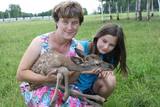 |
Some 250 deer graze on 100 ha of land in the Umurga Parish. The farm also offers a look at peacocks, rabbits, sheep, goats and a pony. Biological products are on sale, and visitors are welcome all year round.
|
|
 |
Die Käserei von Rauna gehört der Familie Ceriņš, die schon 10 Jahre den Käufern 23 qualitative und hochwertige Produkte – Käse, Butter und Röhrennudeln anbietet. Das beliebteste Erzeugnis der Käserei ist der Käse „Zaļais”. Einer der Hauptinhaltsstoffe dieses Produkts ist der Käseklee, der in eigenem Garten angepflanzt wird. Der Käseklee ist eine einjährige krautige Pflanze. Geerntet werden die grünen oberirdischen Pflanzenteile, die in einem mit Holz beheizten Trockner getrocknet werden. Nach dem Abtrocknen werden die Pflanzenteile gemahlen, durchgesiebt und einer Eiweißmasse zugesetzt. Diese Masse wird dünnschichtig in die extra angefertigten Holzkasten geschüttet und getrocknet. Nach der Anfügung des Käseklees erhielt das Produkt ein ausgeprägter Geschmack, Duft und Farbe des Käse „Zaļais”. Nach vorheriger Vereinbarung können die Gruppen (min. 10 Personen) die Käserei besichtigen und mit einem bekanntmachen. |
|
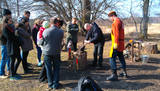 |
Visiting a blacksmith has always been something special. Does this job still exist, and is it still importance? Some may wonder who is a blacksmith is in the first place. The DUDU Nests open-air smithy will answer all of your questions. The blacksmith will teach you all about his profession, talking about the tools and materials that are necessary, the relevant traditions and the everyday work of blacksmiths today. You can forge your own nail to test the difficulty of the work. The blacksmith will happily attend your event with his open-air forge. This is perfect for students, smaller children, wedding guests or individual visitors.
|
|
 |
A/s „Limbazu siers” (AG)
*Object Inactive*

|
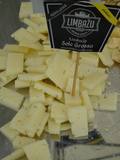
Das Unternehmen „Limbažu siers” hat mehr als 90 Jahre Erfahrung im Milchverarbeitungsbereich. Für die Herstellung von Käse wird nur Milch, die die einheimischen Bauer produziert haben, verwendet. Die technische Ausstattung stammt aus der Schweiz. 95 % der Erzeugnisse werden ausgeführt. In einem Geschäft in der Nähe vom Unternehmen, gegenüber den Ruinen der Burg von Limbazi, kann man die Erzeugnisse kaufen. |
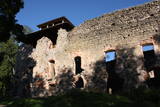 |
The ruins of the Rauna castle (which was built in 1262 and was a main residence of the Livonian archbishop) have a modern viewing tower which offers a view of the impressive castle walls, the place where the former Medieval city was located, and the centre of Rauna. The local government office has the keys to the tower.
|
|
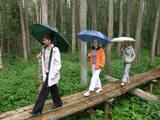 |
Im Jahr 2005 wurde ein Stegpfad angelegt, über den man vom Haus Dunte (Münchhausenmuseum) durch die feuchten Küstenwälder bis zur Küste spazieren kann. Entlang des Pfades wurden Erholungsplätze mit Holzskulpturen und Spielen nach dem berühmten Baron Münchhausen geschaffen.
|
|
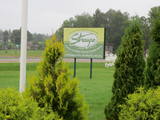 |
Befindet sich in einem 1911 errichteten Gebäude der Molkerei. Herstellung von Milch, Kefir, Buttermilch, saure Sahne, Sahne, Quark, süße Quarkcreme, Butter, Joghurt und Käse. Die Produktion kann man in einem Geschäft der Molkerei (in der Nähe vom Unternehmen) kaufen. Im Geschäft kann man auch die von den Kooperationspartnern (A/s „Smiltenes piens” und SIA „Latvijas piens”) hergestellten Käsespezialitäten kaufen. Eines der fünf lettischen Unternehmen, das den weichen Kümmelkäse "Jāņu" herstellen darf, der als garantiert traditionelle Spezialiät in das EU-Register eingetragen ist. Die Erzeugnisse des Unternehmens haben die Qualitätszeichen „Grüner Löffel” und „Latvijas labums” erhalten. Für die Gruppen – Verkostungen und Einblick in die Tätigkeit der Milchgenossenschaft. |
|
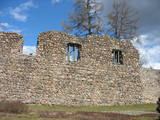 |
Der Bau der Valmiera–Burg wurde 1283 angefangen. Im Laufe des Nordkrieges (1702) wurde die Burg verbrennt, aber am Ende des 17. Jh. wurden die Außenmauern der Stadt abgebaut. Es sind die Ruinen der Burg und die Reste der anderen mittelalterlichen Befestigungsanlagen erhalten. |
|
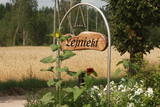 |
Ein neuer bäuerlicher Betrieb, der Käsespezialitäten herstellt und auf die Besuchergruppen wartet. Die Besucher können an der Herstellung von Käse teilnehmen, Käse verkosten und kaufen. Der Hof „Lejnieki” wurde als der gepflegteste bäuerliche Produktionsbetrieb des Gebietes Valka anerkannt. |
|
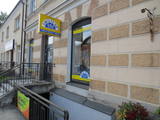 |
Das Unternehmen „Smiltenes piens” ist stolz auf eine mehr als hundertjährige Geschichte. Zur Zeit ist das Unternehmen der drittgrößte Käsehersteller und das sechstgrößte Milchverarbeitungsunternehmen in Lettland. Arbeitet mit ~ 150 Lieferanten der qualitativän lettischen Milch zusammen. Das einzige Unternehmen, das die exklusive Käse „Latvijas” herstellt. Die Erzeugnisse des Unternehmens haben das Qualitätszeichen „Grüner Löffel” erhalten. Ausfuhr der Erzeugnisse in 5 Länder. Die Produktion kann man in einem Geschäft des Unternehmens „Smiltenes piens” in Smiltene kaufen. Das Geschäft befindet sich unweit vom Unternehmen. |
|
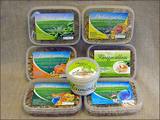 |
The farm produces mixes involving seeds from various plants – ones which are very healthy in terms of human nutrition. Visitors will hear stories, purchase products and taste hemp pancakes. The tour takes place at the “Mazais Ansis” saloon. |
|
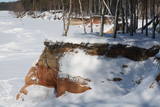 |
This is the most impressive and colourful set of cliffs along the Vidzeme coastline. Waves have created the steep shore that is as much as 6 m high, with several hundred meters of red sandstone cliffs with narrow caves, niches, grottos and other formations. The nearby Veczemu farm is where the Rīga Film Studio shot the films “Long Way into the Dunes” and “The Nest of the Old Fisherman.”
|
|
 |
The creative workshop Ezerini
*Object Inactive*

|
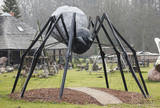
This workshop is in a lovely location, and you can commission and purchase interesting artworks made of various materials such as stone, glass and metal. The craftsman will demonstrate his work with glass and stone, also allowing you to take part in creative activities. |
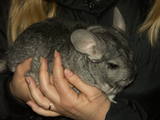 |
The owners breed chinchillas, which originated in the Andes in South America. They offer a tour and a story about the lives and growth of chinchillas. Animals and their pelts can be purchased. The lady of the house is also a painter. |
|
 |
The Naukšēni People’s Museum, where we tell intelligent people about those who were born at the NAUKŠĒNI DISCO, arrived here and stayed here. We’ll look at how they talk, sing, think and love. |
|
 |
Der bäuerliche Betrieb stellt Joghurt, Quark, saure Sahne, Sahne und Käse aus der Milch der eigenen Kuhherde (70 Kühe) her. An jedem Freitag kann man die Erzeugnisse vor Ort im bäuerlichen Betrieb kaufen. |
|
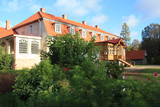 |
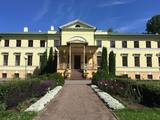
Der älteste Komplex des Landguts Oleru begann sich im 17. Jahrhundert zu bilden. Ursprünglich bestand das Landgut aus dem Holzherrenhaus und dem Wirtschaftsgebäude. Ein neues Landgutszentrum ist am Ende des 18. Jahrhunderts im Stil des frühen Klassizismus gebaut worden. Nach der Agrarreform wurde im Wohnhaus des Landguts eine Schule eingerichtet, aber in der Sowjetzeit (bis zu den 70er Jahren) – eine Hilfsschule für zurückbleibende Schüler. 2000 hat das Schloss vom Landgut von Oleru durch Brandt gelitten. Nach dem Unglück begann die Renovierung des Schlosses und die Gesellschaft „Oleru muiža” (das Landgut von Oleru) trägt viel dazu bei. Das Herrenhaus ist durch die Wandmalereien im Stil des frühen Klassizismus berühmt, von denen die sogenannte „Bildgalerie” einzigartig ist. Neben dem Herrenhaus befindet sich ein malerischer Park. Das Landgut von Oleru ist durch Konzerte der Kammermusik bekannt. Unweit vom Landgut befindet sich das Oleru-Moor mit einem Moorsteg und einem Aussichtstürmchen. |
|
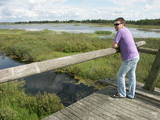 |
The tower is at the western end of the Seda swamp, accessed from the side of Jērcēni. Transport is limited here. The tower is in the area of the swamp where peat moss is extracted. It offers a broad view of the ponds of Seda and a boat rental facility that is nearby. It is an appropriate location for bird-watching during the season of migration. There is another bird-watching platform near the town of Seda. This is part of the ZBR. |