
| Нo | Название | Описание |
|---|---|---|
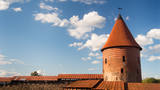 |
Kaunas Castle is the oldest stone castle in Lithuania and interestingly enough, the museum that is inside is also the oldest one in Lithuania. It's possible to take a tour to get know more about Kaunas Castle and also visit the museum where there's not only information about the castle but also about the city of Kaunas itself and much more. |
|
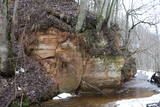 |
It is worth hiking this road where in crosses the Šlītere Blue Hills. This part of the road is approximately one kilometre long, and it goes down to the valley of the stream which crosses the hills. The place has been given a peculiar name – the Kušperlankgrāvis ravine (or the Zeltiņi ravine, as is claimed in other sources). If you're driving, be careful, because there is no bridge here, just a ford. During the early spring or the winter, you will appreciate the ravines and the impressive Blue Hills themselves. Impressive sandstone cliffs which are several metres high and have been vandalised by human hands are on both sides of the road. There is a small niche in one of the cliffs. To the right (East) from the road at the terrace of the Blue Hills is a side road which leads to the Mežlīdumi homestead. Please be gentle with the cliffs! |
|
 |
1339. g. Livonijas ordeņa mestrs (no 1328. – 1340.) Eberhards fon Monheims pašu zemgaļu 1286. g. nodedzinātās pils vietā uzceļ jaunu - mūra pili. To sešus gadus vēlāk nodedzināja lietuviešu karaspēks. Pili gan atjaunoja Kurzemes hercoga Ketlera valdīšanas laikā, taču Ziemeļu kara laikā - 1701. g. to atkal noposta zviedru karapulki. Līdz mūsdienām ir saglabājusies tikai no laukakmeņiem celtās pils sienas atliekas. |
|
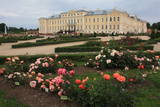 |
Рундальский дворец был построен как летняя резиденция Курляндского герцога Эрнста Иоганна Бирона по проекту выдающегося итальянского архитектора Франческо Растрелли. Строительство дворцового комплекса происходило между 1736 и 1740 годами, однако художественную отделку внутренней части замка с 1765 года по 1768 год осуществили скульптор Иоганн Михаель Граф, художники Франческо Антонио Мартини и Карло Цуки. Дворец важен своей аутентичностью, так как его не затронули перестройки более поздних времен. Интенсивная реставрация дворца была начата в 1972 году, когда был основан музей, а завершена в 2018 году. |
|
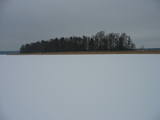 |
There are six islands in the Great Baltezers lake – the Auzu, Priežu, Mazā, Liepu, Ropažu and Meldru islands. These are distinguished by a great diversity of plants, including forests of broadleaf trees, black alders and pines. The territory can be surveyed quite well from the side of the Ādaži Lutheran Church. The Great Baltezers lake is a popular place for fishing, including ice fishing during the winter.
|
|
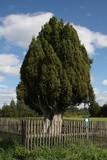 |
This is the thickest common juniper (Juniperus communis) in Latvia and the Baltic States. It stands in the middle of a field and looks wonderful. The tree is sometimes known as the Rieteklis juniper, because the Latvian poet Rieteklis (Jūlijs Eduars Balodis, 1856-1940) like to sit under it.
|
|
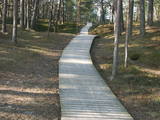 |
The nature reserve “Plieņciema kāpa” is founded in 1987 and covers 60.6 hectares of land. Since 2005 it is a Natura2000 site. The nature reserve protects a 150-200m wide and 3.5km long part of a distinct, continuous dune rampart. The dunes shelter Plieņciems village protecting from sea winds. The key natural values here are rare and protected biotopes of national and European significance: “Wooded dunes of the coast 2180” in the area of 61.8 ha, “Fixed dunes with herbaceous vegetation, 2130 (grey dunes)” in the area of 8.27 ha, “Shifting dunes along the shoreline with Ammophila arenaria (white dunes) 2120 in the area of 3.20 ha”, “Black alder swamp forests 9080”, ) in the area of 2,68 ha, as well as rare and protected species of Latvian and European significance including eastern pasqueflower (pulsatilla patens), Rolling Hen-and-chicks(Jovibarba sobolifera), Nothorhina muricata, Wryneck (Jynx torquilla), Woodlark (Lullula arborea). In the nature reserve, there is a “Vabu square” – a deflation in the dune where for centuries local fishermen have been drying nets. In the 18th and 19th centuries ships were built here. Nine ships have been built here in 1882 - 1925. The four-masted gaff-rigged schooner with hoisting engine “Eurasia” was completed in 1925, the largest ship built by the Kurzeme fishermen. It was one of the works of Martin Morgenstern (1866-1945), a famous shipbuilding master. Thanks to dunes, Plieņciems village was a popular holiday resort and has been mentioned in written sources already in 1738. Clergymen and landlords with their families used to stay here. In 1808, a merchant from Riga bought the local pub and replaced it with a massive two-storey building with a large ball-room and dining hall. On July 15, 1810, a sea bathing facility was opened for health treatment. For arrival of the empress Elisabeth Alexeievna, the wife of emperor Alexander I of Russia, who was a grandson of Catherine the Great, the road from Tukums town was repaired, the two highest hills were levelled, a road passage was dug across the Plieņciems dune, and a lime-tree alley was planted to facilitate access to the beach and bathing spot. Later, in 1920ies, the resort circles consisted mainly of the Kurzeme region landlords. There was a dance-floor in the park of Plieņciems village, and a special orchestra played music for resort guests three times a day. |
|
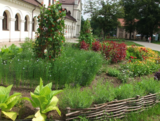 |
Единственный в Литве школьный ботанический огород был заложен в 1989 г. в Школе им. Трауписа. Все коллекции растений (в целом здесь произрастает уже более 8000 видов, форм и сортов) были собраны одним человеком – С. Обелявичюсом. |
|
 |
Крупнейшая в Латвии страусиная ферма находится неподалеку от Кулдиги, здесь можно купить питательные и полезные для здоровья продукты из страусиного мяса, а также отправиться на экскурсию по страусиной и козьей ферме. Предлагаются услуги питания. |
|
 |
Семейное хозяйство неподалеку от Валмиеры, владеющее обширными полями, пашнями и 400 коровами. Производство сметаны, творога, йогурта, сыра, мороженого и др. продуктов из молока коров, принадлежащих хозяйству. |
|
 |
Auf dem Urbo-Hügel befindet sich der 1953 ronovierte schönste Leuchtturm an der Küste Litauens. Das Licht von diesem Leuchtturm kann man in einer Entfernung von 22 Seemeilen sehen. |
|
 |
Один из самых популярных прибрежных туристических объектов в Курземе – высотой до 20 метров, омываемый морской волной берег, состоящий в основном из песка и узких полосок гальки - валунов. Напротив центра Юркалне построена смотровая площадка и лестница, по которой можно спуститься к морю. Крутой берег Балтийского моря продолжается как в направлении Павилосты, так и в направлении Вентспилса. |
|
 |
This is a short stretch of the Daugava River valley between Lielvārde and Dzelme, with islands and shallows in the river, as well as with reeds and wet meadows alongside it. During migration season, many goose-type and plover-type birds rest and feed here. The location is also an important nesting area for several other kinds of birds.
|
|
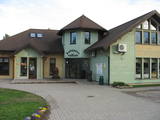 |
В Стукмани, у шоссе Рига – Даугавпилс (A6) находятся булочная «Лиепкални», в которой может покушать и купить только что испеченный хлеб и кондитерские изделия. Несколько десятков видов хлеба, печенье, торты, пирожные и сдобные булочки. Здесь можно покататься на корабле викингов. Рядом с булочной находится Туристический информационный центр Плявиньского края и центр туристических услуг «Латвью спикерис». По берегу Даугавы проложена прогулочная тропа. Латышская кухня: Суп с фрикадельками и щавелевый суп, крестьянский завтрак, глазунья, свиные ребрышки, серый горох, картофельные блины с лососем, тонкие блины, крем из ежевики. Особое блюдо: Лиепкалнский черный хлеб, хлебный квас. |
|
 |
Birch juice syrup with reverse osmosis is obtained. Technologically impressive view of 1.5 tons of water squeezed out of birch sap per hour. Here, reverse osmosis equipment can press 95% of pure water from birch sap. As a result, the sugar content of the remaining birch sap concentrate reaches 33% Brix. The concentrate is frozen and sold. |
|
 |
В хозяйстве Epi на острове Сааремаа производят фруктовые и ягодные кетчупы, различные виды варенья, выращивают пряности и чаи. При изготовлении продуктов используется только местное ‒ выращенное на островах Сааремаа и Муху ‒ сырье. Продукты можно купить напрямую из хозяйства. |
|
 |
Biškopības produktu ražošana - medus, ziedputekšņi, bišu maize, propoliss, bišu māšu peru pieniņš. Bišu māšu selekcija, bišu saimes. |
|
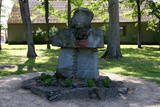 |
Находится в центре Джуксте. Установленный в 1990 году памятник через год был взорван, нынешний создан из его остатков. Памятник посвящен воинам 19-ой дивизии Латышского легиона, павшим в Рождественских боях 1944 года. |
|
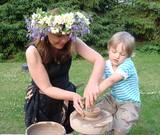 |
Умелица из глины, каменной массы и других материалов делает посуду и всевозможные предметы интерьера, обжигая их в печи с открытым огнем. Посетители могут отправиться в познавательную экскурсию, понаблюдать за работой ремесленницы и сами попробовать выточить кружечкус. Приглашает на открытие печи. |
|
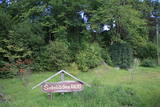 |
Atrodas ~ 1,5 km ziemeļos no Krāslavas centra, Jāņupītes krastā (ir norāde). Pēc atsevišķiem savrupatradumiem var spriest, ka pilskalns apdzīvots laikā no I g. t. pr. Kristus līdz vēlajam dzelzs laikmetam. Domājams, ka savu nosaukumu tas ieguvis šeit sastopamo mālu dēļ. Nelielas mālu ieguves vietas pilskalna nogāzēs ir redzamas arī šodien. Saglabājies nostāsts, ka grāfs Plāters šeit apraudājis savu sievu, kuru pats neuzticības dēļ licis iemūrēt pazemē. |
|


