
| No | Name | Description |
|---|---|---|
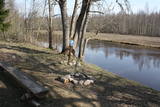 |
~ 3 – 5 km gara taka, kas ved pa veco ceļu gar Tēramā upes (Tõramaa jõgi) kreiso krastu. Takas malās izvietoti interaktīvi elementi bērniem, kas palīdz labāk uztvert dabā notiekošo. Taku ieskauj mitrie meži un palieņu pļavas, kas palu laikā atrodas zem ūdens. Tēramā (Tõramaa) ciemā apkārtnē atrastas cilvēka darbības pēdas jau no akmens laikmeta. |
|
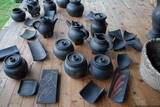 |
The attractive potter is a member of the “Potter School,” and he uses knowledge from his ancestors. The “Malny Wylky” workshop offers a look at traditional pottery work, including a foot-powered potter’s wheel and a firing pit that uses firewood and the smoke technique. You can examine and purchase the finished products. Vēsma, in turn, is an oil painter and will demonstrate her artworks. |
|
 |
Hiiu Vill is a family business and one of very few wool manufacturing companies in Estonia, it uses 19th C machinery of Polish origin (carding and roving machines), which the owners are happy to demonstrate. A café is open in summer only; woollen handicrafts are sold all year round. |
|
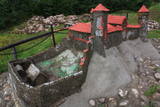 |
The Naujene castle hill is on the steep bank of the Daugava River, is up to 25 metres high and has two valleys on its sides. Between 1275 and 1277, the master of the Livonian Order, Ernst von Ratzenburg, organised the construction of a brick castle to replace a Lettigalian wooden castle that had stood there before. The castle had a drawbridge and an external and internal forecastle. Until the middle part of the 16th century, the castle was the residence of one of the top officials in Dünaburg. The forces of Ivan the Terrible sacked the castle in 1577, after which the location lost its strategic importance. New fortifications were built in the location that is now the city of Daugavpils. Alongside the ruins of the castle is a miniature model that helps to imagine the appearance of the location many centuries ago. A well-appointed pathway leads from the car park to the castle hill. The hill offers one of the loveliest views of the curvy Daugava River and its surrounding nature park. |
|
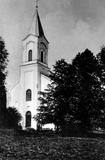 |
The first building of the church was built in 1641. The fourth building of the church was only built in 1856 – during the times of Pastor Johann Wilhelm Knierim. Its altar painting – The Crucified Christ (Golgotha) was painted in 1856 by Jozeps Millers, who was influenced by the altar piece in Munich Louis Church created by his teacher Peter Cornelius. An epitaph of Baroness Auguste Amalija von Pistohlkros, the sister of the owner of Bīriņi Manor and the patroness of the church, was immured in the memorial wall. Construction of the tower was completed on 11 June 1856, as evidenced by a memorial plaque on the wall of the church with an inscription “Erbaut von August Pistolkors 1856”. The church was consecrated in 1864. And a year later an organ by Martin Company with 8 registers, which was extended to 14 registers in 1903, was installed in the church. Unfortunately, the organ was destroyed in WW2. Saulkrasti (Pēterupe) Evangelical Lutheran Church survived both World War 2 and the Soviet period. The Soviet era was one of the most difficult times for the church, because many churches in the area were destroyed, pastors were discharged and the congregation fell apart. The Pēterupe congregation remained. As an architectural monument the church was lucky enough to undergo roof repairs of the tower even during Soviet times. Funds were granted by the Chairlady of the Executive Committee Ņina Manzūrova. |
|
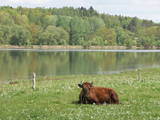 |
The nature park in the Daugava River valley is the only place between the cascades of the Daugava hydroelectric power plants there is still a chance to see the Daugava River valley and the ravines of its tributaries as they appeared before the area was flooded so that the power plants could be constructed. Particularly lovely views are found on the right bank of the river near the Aizkraukle church and castle hill. Forests, meadows, origins of streams and small dolomite cliffs in this area are all protected biotopes. Leisure facilities have been installed on the Aizkraukle castle hill, and the Aizkraukle castle ruins are not far away. |
|
 6 days
|
From Riga the route goes to the goats farm where to enjoy funny and cute animals and try exclusive cheeses. Then visit Mālpils Manor and taste the selection of local cheeses made from cows' milk. Afterwards the route turns towards Daugava river to Skriveri for some gorgeous home made ice-cream and traditional hand-made toffees "Gotiņa". Further on head to the legendary Koknese castle ruins. Next day the route goes to the ethnographic working farmstead located in picturesque spot of Jaunpiebalga and family cheese and macaroni production in Rauna. Nearby there are clay production established within the former brick factory where the hand-made ceramics creation can be observed. Then sightseeing in Cesis with its old town and medieval Livonian Order Castle. Further on the route goes to hemp growing farm where to taste them prepared traditional way. Then you have an excursion and tasting at the Rujiena ice-cream factory. Stay at the former mill where ancient wool processing equipment are still used and can be seen. Heading back to Riga the route follows the coast line. Visit the museum of the biggest liar in the world - Munchausen, where you are entertained with his fantastic adventure stories, visit the lamprey fishermen and have a stroll on sandy beach. |
|
 |
The pub is located in a wooden log building and situated in the suburbs of Sigulda, allowing one to feel the Latvian spirit in the interior and enjoy Latvian-style dishes. The pub has maintained the traditions and quality of Latvian cuisine. Latvian cuisine: Sauerkraut soup, filet of pike-perch, pike cakes, pork tongue, pork ribs, homemade steak haché, potato pancakes, stacked rye bread, rye bread baked in honey, baked ap.ple, homemade ice cream. Special foods: “Steak a la Bucefāls,” “Ice cream a la Bucefāls”.
|
|
 |
The owners of Tahku coastal houses organise cucumber marinating and salting workshops with a happy mood. Cucumber festival Tahkuranna takes place every year on 20 August, and there you can buy canned cucumbers, local food and handicrafts, participate in master classes, and also make handicrafts. |
|
 2 days
|
On the first day visit a farm specialised in goat breeding and making exclusive cheese, a farm which grows and processes hemp in several generations, berry and fruit grower as well as traditional lamprey fishermen. Next day have a master-class with famous chefs in the restaurant in Riga where these ingredients will be used to prepare first class meals. |
|
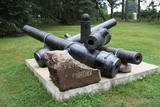 |
Dole Island is the largest river island in Latvia, and it is the site of the Dole baronial estate. The mansion of the estate was built in 1898 by the aristocratic family which owned the estate. Today the mansion is home to the Dole Museum with a rich exhibition which tells about the lives of people on the shores of the Daugava River. The adjoining park features ethnographic buildings, as well as lamprey and salmon spawning grounds. There are five unique cannons that were found in Salaspils when a new stadium was being built there. In 1910, a tsarist military camp was here, and a monument to Tsar Peter the Great was unveiled. One of the cannons is in the exhibition of the museum itself.
|
|
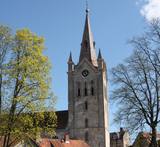 |
Gebaut am Ende des 13. Jh. als eine dreischiffige Basilika im romanischen Stil mit gotischen Elementen. 1853 wurde der 65 m hohe Turm aufgebaut (Aussichtsplatz). In der Kirche befinden sich die Grabsteine der livonischen Bischöfe, Kanzel (1748), Altar aus Eichenholz (1858), Altarbild (1862), Buntglasfenster und eine der besten Orgeln Lettlands (1907). |
|
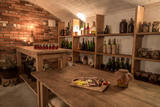 |
Die Gäste sind eingeladen den traditionellen, litauischen ethnographischen Keller zu besuchen. Hier wird die Verkostung von gepökeltem Speck aus eigener Produktion mit sauren Gurken aus ökologischem Anbau geboten, zudem kann man sich Frischkäse mit verschiedenen Beerenmarmeladen schmecken lassen und die ganze Sache mit auf dem Hof erzeugten Wein und Apfelwein abrunden. Im Angebot steht ferner Kräutertee aus Gemeinem Schneeball. |
|
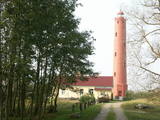 |
This was Coastal Defence Battery No. 500 at one time, and it was dismantled in 1955. There were four 130 mm cannons, and their foundations can still be spotted in the forest northeast from the lighthouse. They are mostly covered by moss and can be very hard to find. Those who are not familiar with the region will probably have the most trouble of all.
|
|
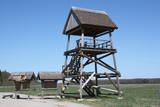 |
This barrow is on the western side of the Dunduri meadows and was built on the parking lot of the former collective farm. From the second level of the tower, you will have an excellent view of the meadows all the way to the Džukste River and the Kauguri canal. There are livestock accustomed to life in the wild, although they will sometimes be quite distant. This is a bird-watching location from the springtime until the second half of the summer. |
|
 3 days
|
This part of the Forest Trail gives an opportunity to see Setomaa or “the Land of Setos” which is inhabited by Setos – an ethnographic group with specific ancient traditions and a unique language dialect. Forest Trail hikers can visit the traditional Setos homestead and enjoy Setos cuisine. The forests of the region are especially charming in early autumn, when the ground is coloured lilac by the blooming heather. There is a good chance to pick wild mushrooms and berries. One of the most beautiful sections of this trail in Setomaa leads along the River Piusa, where the river is surrounded by sandstone outcrops. You will also visit the Piusa caves. The tour will end in Värska resort – with its sanatorium and SPA, which use the strengths of local nature: mineral water and lake mud. Värska mineral water is well known in Estonia and elsewhere. |
|
 |
SIA “Rundāles Dzirnavas” 2021. gadā īstenoja projektu, lai izveidotu nelielu alus darītavu un uzsāktu alus ražošanu Rundāles ūdensdzirnavu teritorijā. Tiek ražots gaišais un tumšais alu, kura visas sastāvdaļas tiek iepirktas Latvijā, bet graudi no vietējiem zemniekiem. Videi draudzīgā iekārta atbilst jaunākajiem ES standartiem un prasībām. Latvijas un ārvalstu tūristiem ir iespēja apvienot Rundāles pils apskati ar vēsturisko dzirnavu muzeja un alus darītavas apmeklējumu. Kompleksa teritorijā ir daudz iespēju daudzveidīgai interesantai laika pavadīšanai. Vienas dienas laikā var apmeklēt aizraujošas ekskursijas pa dzirnavām un alus darītavu, pastaigāties pa vietējiem, tuvējiem apskates objektiem, uzņemt lieliskas fotogrāfijas, atpūsties pludmalē un vizināties ar laivu, katamarānu, SUP dēli. |
|
 5 days
|
After the establishment of the Livonian state, the pope consecrated this land in honour of the holy Virgin Mary. This created Terra Mariana or Māra’s Land. The road between Ludza, Rēzekne and Daugavpils runs along an ancient trading route that once connected Vilnius and Kaunas to Pskov and, later, to St Petersburg and Warsaw. Very beautiful and poetically picturesque with rivers and lakes that are in Latvia’s forested land and among hillocks that offer a wonderful look at the distant horizon – that is Māra’s Land, which is also known as the Land of Blue Lakes. Lake Rāzna is the second largest in Latvia, and when the weather is clear, Mākoņkalns Hill or Padebešu Hill is reflected in its water. Atop the hill are the oldest ruins of fortifications in Latgale, dating back to the Livonian era. Rēzekne is known as the heart of Latgale, because it has always been the centre for Lettigalian culture and education. People contributed donations for the 1939 construction of a monument to Māra of Latgale. It is dedicated to those who fell during Latvia’s independence battles and the liberation of Latgale. The monument also speaks to the Catholic identity of Latgale. The monument was rededicated on August 13, 1992, the date of the assumption of the Virgin Mary. A Catholic festival at Aglona and the monument to Māra of Latgale – these are integral components of this part of Latvia. The present day is marked out clearly by the new Gors concert hall in Rēzekne, and well as the Zeimuļš student interest education centre. Daugavpils is Latvia’s second city and an important centre for industry, culture, education and sports. The Daugavpils pellet factory is unique, and the oldest pellet casting tower in Europe is now open to visitors, as are the restored Daugavpils fortress and the new Rothko Museum. Not far from Daugavpils are the small Birķeneļi semi-estate and the Rainis Museum. Latgale was the “land of new days” for the poet, and the museum now hosts gatherings of young artists and craftspeople. The ancient tradition of ceramic art that is typical specifically of this part of Latvia is still thriving. |
|
 |
Atrodas galvenās Kuldīgas gājēju ielas malā. Sadarbojas ar vietējiem zemniekiem un piedavā Kurzemes novadam raksturīgus ēdienus, kā arī ēdienus no dažādu pasaules valstu receptēm. |
|
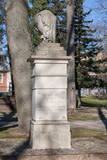 |
In 1877, Baron August von Pistohlkors, celebrating the merits of his ancestors in the foundation and development of Neibāde, ordered a monument to be erected in the park. After World War I, in the early 1930s, the monument was accidentally found during the cleaning of the bed of the River Ķīšupe. The monument was renovated by the Neibāde Aid and Improvement Society and officially reopened in 1933. The monument also suffered damage after World War II. Now the monument is restored and located in the park of the open-air stage. |
|


