
| No | Name | Description |
|---|---|---|
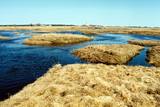 |
This is one of Estonia’s most beautiful karst fields, covering 125 hectares which feature different karst processes – subterranean streams, the dry Jõelähtme River bed, karst streams, funnels, ditches, caves, cliffs, a unique rock “mushroom,” etc. During the spring, the field is flooded, but at other times of the year, its contents are easily visible.
|
|
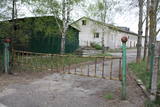 |
The Latvian Border Guard still uses some of the Soviet-era guard facilities that are at this location.
|
|
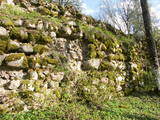 |
The Volkenberga Castle was built in the 13th century by the Livonian Order, and it was practically impregnable, as it was on top of Mākoņkalns hill. These were among the first fortifications in Latgale, and only fragments of the castle remain today. Architect Pēteris Blūms has said that this was a special type of fortification. Legends say that after the lord and lady of the castle died, the property was divided up among their three daughters – Roze, Lūcija and Marija. Each sister built a new castle on the land which she inherited – Roze built Rēzekne, Lūcija built Ludza, and Marija built Viļaka. A memorial plaque at the foot of Mākoņkalns hill recalls the visit which pre-war Latvian President Kārlis Ulmanis paid to Latgale in 1938. |
|
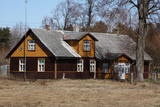 |
This set of buildings represents a homestead for a fisherman and a farmer. The house was built in 1926, and the ancillary buildings all date back to the first half of the 20th century. The homestead can be seen from the road. |
|
 |
The farm dates back to 1992 and uses milk from its own cows. Tours are available along with tastings and purchase of products. Cheese can be ordered in advance. |
|
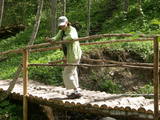 |
The Akmeņupīte river starts in the highlands and ends at the Daugava, and it is a rapid river only during the spring or after lots of rain. Otherwise it is a shallow little river with a rocky bottom. On the shores of the river is a nice path with several places to relax or to build a campfire (firewood is available). Water from the local streams is potable.
|
|
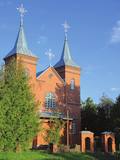 |
Holy Trinity Roman Catholic Church of Stoļerova. The construction
works of the church were finished in 1999 by the support of dean Butāns. The building is slightly larger than
the previous one; the newest (restored) church in Rēzekne district. The church has a specific icon of Our
Lady that was transferred from the chapel of Rozenmuiža.
|
|
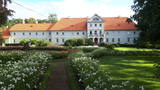 |
One of the oldest buildings at the Pope Estate is the old hunting castle that was built in 1653. The mansion was built in 1608 or 1620. The Neo-Gothic porch was added in 1840. The interiors of the mansion have been preserved since the 18th century and the 3rd quarter of the 19th century, including wood panelling, original decorated ceilings, a front door in the style of Classicism, and a Rococo stove. Sadly, one of the oldest buildings - the home of the estate's governor - burned down in 2018, but the rest of the estate did not suffer and retained its beauty. Visitors will be delighted about the aromatic garden of phloxes, as well as the impressive oak trees. Worth a look is the hillock behind the main building of the estate, near which there used to be a narrow-gauge railroad (the Pope Station). The other buildings cover a fairly extensive territory, and so it is worth spending a few hours to tour the village of Pope. The Pope Estate and its park are among the best-preserved estates in the area. Since March 1941, it has housed a school. Most of the trees in the park are common, but there are a few rare ones. |
|
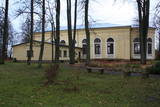 |
Dievnams celts (1851. g.) un vēlāk (1876. g.) paplašināts. Tas tika sagrauts 2. Pasaules kara laikā un pēcāk atjaunots. Līdz Latvijas neatkarības atgūšanai to izmantoja par skolas sporta zāli. Pēc draudzes darbības atsākšanas (1989. g.) sākās arī baznīcas un ar to saistīto tradīciju atdzimšana. Apskatāma no iekšpuses. |
|
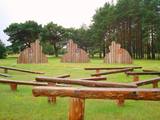 |
The environmental object “SUITI MEETING PLACE” was established during an international arts plénière in Jūrkalne, and the originator of the idea was the musician Igo. Sculptor Ivars Miķelsons with assistants Didzis Grodzs and Juris Krafts produced the environmental object. The idea of marking out the Suiti cultural space among Gudenieki, Alsunga and Jūrkalne in nature began in 2013, when the first Suiti meeting place was established where the Gudenieki-Ēdole and Alsunga-Basi roads cross. The second meeting place was established the next year where the Kuldīga-Alsunga-Jūrkalne road crosses the town in the direction of Jūrkalne past the Alsunga centre. The third Suiti meeting place was established in Jūrkalne. The objects were established in partnership with local governments and landowners by the “Vēju sēta” association. |
|
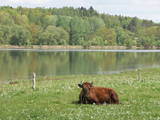 |
The nature park in the Daugava River valley is the only place between the cascades of the Daugava hydroelectric power plants there is still a chance to see the Daugava River valley and the ravines of its tributaries as they appeared before the area was flooded so that the power plants could be constructed. Particularly lovely views are found on the right bank of the river near the Aizkraukle church and castle hill. Forests, meadows, origins of streams and small dolomite cliffs in this area are all protected biotopes. Leisure facilities have been installed on the Aizkraukle castle hill, and the Aizkraukle castle ruins are not far away. |
|
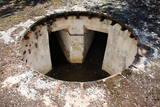 |
Today there’s a single-family farm and not much else, but at one time Olmaņi was the site of two important coastal batteries collectively known as “Krastnoflotskaya.” Until 1955, the one to the South of Olmaņi, there were four 152-mm Kane type cannons, which were manufactured during World War I and were widely used to protect the coastal territory of the Baltic Soviet republics of Latvia and Estonia during the rule of the Soviet regime. Small concentric ramparts of earth are all that’s left there today. After 1955, to the North of Olmaņi, another battery was installed with four MY-2 152-mm cannons. They had a range of 25 km. The battery remained in battle readiness until 1975, when it was turned into a reserve facility. It’s not easy to find, but it’s worth the search. The platforms for the cannons and the subterranean bunkers are still there. This was indeed one of the most impressive coastal batteries along the shores of the Baltic Sea.
|
|
 5 days
|
The historical route from Rīga to Liepāja passes through Dobele, Saldus, Skrunda, Durbe and Grobiņa, and it dates back to the 13th century. Remnants of Scandinavian settlements near Grobiņa also testify to the antiquity of the region. Many things happened on the road and around it that were directly linked to the establishment of the Republic of Latvia and to its subsequent freedom battles. At the Tīreļpurvs swamp, Latvian riflemen demonstrated their battel capabilities and heroism during the so-called Christmas battles, thus proving that a new country had been born. The trails of the swamp are open to visitors, and there is an historical exhibition at the Mangaļi homestead. Rīga is clearly marked along this route by the Latvian National Theatre, where independence was proclaimed in 1918. Later the hostile attack of Bermont’s forces was stopped at the banks of the Daugava, and the superior force was ejected from Rīga and Latvia. Approximately 70 km from Rīga is the Pikšas museum, which is the birthplace of Latvian President Kārlis Ulmanis and a good example of farming between the two world wars. The museum of Colonel Oskars Kalpaks at Airītes offers a look at battles that occurred in the region and at things that Kalpaks did during World War I and the subsequent liberation battles. There were battles near Skrunda and Saldus, and it was in Liepāja that German General von der Goltz conducted a coup that led Latvia’s temporary government to seek refuge on the ship the Saratov, upon which it sailed to Rīga after the city’s liberation. Liepāja has always been an important port, and once it offered passenger services all the way to New York. |
|
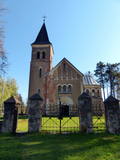 |
This, the third church at this location, was built in 1906 at the initiative of and financing from Gotthard von Budberg, who dedicated it to his late wife, Gertrude. The Walker company organ in the church was built in 1906 in Ludwigsburg in Southern Germany. In 1992, a memorial plaque to commemorate people from Gārsene who were repressed by the Soviet regime was consecrated at the church. 100 m to the East is a cemetery where we see the legendary chapel of the Budberg dynasty, as well as the graves of the noblemen. The church is open to visitors. |
|
 |
Dendrological plantings by Māris Linde are located in Aizpute, about 1km to the south-west of the town centre. Under trees, there is a decorative garden showing rare tree and flower cultivars. The owner shares attractive stories about the plant varieties in his garden. Visitors can buy plants and learn about the books written by Māris Linde. |
|
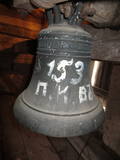 |
The church was opened in 1651 after half a century of sometimes interrupted construction. It was fully rebuilt and took on its current appearance in 1876. The church contains one of the most important church objects in Latvia – the oldest pulpit in the country (1590). It was designed in the style of Mannerism. The church also has a bell from a wrecked chapel of the local knighthood. The bell was manufacture in 1450 and was installed at the church in the 19th century. It is the oldest church bell in Latvia. The German painter F. Wolff painted the altar painting, “Christ on the Cross,” and it, along with the altar, have recently been restored. |
|
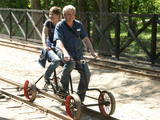 |
The museum was established in 1954 and features the traditions of Latvian and Livonian fishermen, sailors and farmers and their lives and residences. There are fishermen’s homesteads with net huts, smokehouses, granaries, etc. There is a collection of fishing boats and the largest assemblage of anchors in the Baltic States (more than 100 anchors, the heaviest one weighing 22 tonnes). The windmill was transported from the Užava Parish. The 19th century Smiltnieki home features authentic household objects. The newest thing at the museum is the Lielirbe Baptist Prayer House, which is nearly 100 years old. A narrow-gauge railroad runs down the 1.3 km Mountain line from May 1 to October 31 every year, and at its end is its turntable. The building of the museum was designed on the basis of the Mazirbe train station. The museum is in the Jūrmala park, with playgrounds for children and the Anchor trail. |
|
 |
Maizes un konditorejas izstrādājumu ceptuve “Re:Maize” gatavo kvalitatīvus produktus, kas ir ne tikai vizuāli pievilcīgi un garšīgi, bet arī ilgtspējīgi un organismam veselīgi. Nosaukums “Re:Maize” ietver sevī ilgtspējības filozofijas principus un to var definēt kā renovāciju kulinārijā. Tas saskan ar cirkulāras ekonomikas principu definīciju - “Raw to recycling”, kas šajā gadījumā pamatā attiecināms uz maizes un mīklas izstrādājumu ražošanu un patēriņu. Latviskojot šo filozofiju, izvēlēts sauklis, kuru izmanto uzrakstā uz izkārtnes un citos materiālos – «Rūpēs par ēdienu», kas pēc saimnieces domām pilnībā atbilst uzņēmuma principiem un ir saprotams arī viesiem. Re:Maize piedāvā katru dienu svaigi ceptu maizi un konditorejas izstrādājumus līdzņemšanai vai baudīšanai uz vietas, kafiju, vīnus un Straupes piena produkciju. Tiek piedāvātas arī meistarklases - praktiskas klientu apmācības par Zero waste principiem. |
|
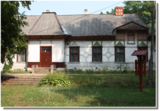 |
Zosna (Veczosna) Manor. The building is surrounded by a small park near the bank of Lake Rāzna.
There are 39 different species of trees and bushes. It was built in 1870 by the order of duke Goļicins. It is
one of the rare truss buildings in Latgale.
|
|
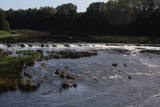 |
This is the widest water fall in Latvia – 249 metres wide and up to 1.75 metres high. This is an interesting natural, cultural and historical object in that it is linked to various events and legends. Duke Jacob of Courland invented equipment to catch fish. It was fastened to the cliffs of the waterfall, and this created the tale of a city where salmon and other fish who were leaping across the waterfall fell into the nets and were thus caught in the air. During Jacob’s rule, there was talk about digging a canal around the waterfall to ensure shipping, and work began on the project. During the early 18th century there was the idea that the Baltic Sea and the Black Sea could be connected via the Venta, Nemuna and Dnieper rivers. Turkish prisoners of war continued to dig the canal, but the local dolomite cliffs were a problem. Attempts to blow up the cliffs led to damage to nearby buildings, so the work ended. The impressive ditch can still be seen today. In 2012, a wooden pathway was installed on the right bank of the Venta to offer a good look at the waterfall. It is worth visiting here during various seasons of the year, when different types of fish migrate. |
|


