
| Nr | Name | Beschreibung |
|---|---|---|
 |
The cafe is situated in the guest house Zitari on the first floor, in the town of Roja, alongside the road, 500 m away from the sea. |
|
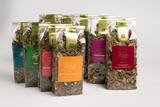 |
In the farm "Ozoliņi" organic tea is produced. With brand "Lauku tējas" tea has been sold in stores more than 17 years. Hostess is happy to share her knowledge through seminars and tea workshops. The farm is surrounded by forests and biologically valuable meadows where you can find up to 50 plants per square meter. |
|
 |
Rečina Old-Believers Prayer House was built in 1912. It has a rectangular shape with a single-hall,
rubble-wall foundation and a small tower on the top of the altar.
|
|
|
|
„Zaļmuiža” (Green Manor) is notable because of its legendary past. The protector of peasants and poet Peter
Miglinīks (1850 – 1883) worked there as a clerk in the beginning of the 19th century. In 1784, the building belonged
to Frederick von Korf. The manor was bought by officer of Russian army Nikolaj Paulin von Rosenschild. Once
the manor had a large farm (800 ha): several cattle-sheds, fruit and wine cellars, alcohol brewery. Now there in
only a manor house and a barn. Till 1960s, the manor house was the centre of kolkhoz „Liesma”, later the club.
Now there is a smithy of a craftsman Jānis Ļubka. Guests are welcome to watch and try the metal processing.
|
|
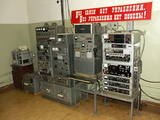 |
Dieser extra heimlicher Bunker mit einem Deckname "Altersheim" war einer von den strategisch wichtigsten Orten im Falle des Atomkrieges im Sowjetstaat Lettland. Im Territorium vom Rehabilitierungszentrum "Līgatne" 9m unter die Erde ist ein gut eingereichteter Bunker gelegen. Im Falle des Krieges könnten wichtigsten Militär- und Zivilpersonen aus diesem Bunker aus die Staatsleitung fortsetzen und damit das Bestehen der Republik in der Zeit des Krieges gewährleisten. Bis zum Jahr 2003. wurde der Bunker geheim gehalten. Die sämtliche authentische unterirdische Ausrüstung ist bis heute erhalten geblieben. Die Besucher können den Bunker in Begleitung eines gebildeten Reiseführers besichtigen, als auch eine typisch sowjetische Mahlzeit einnehmen. Ein Objekt dieser Art in so gutem Zustand ist das Einzige in baltischen Staaten, möglicherweise – auch das Einzige in der ehemaligen Sowjetunion.
|
|
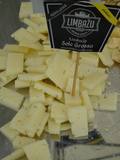 |
Das Unternehmen „Limbažu siers” hat mehr als 90 Jahre Erfahrung im Milchverarbeitungsbereich. Für die Herstellung von Käse wird nur Milch, die die einheimischen Bauer produziert haben, verwendet. Die technische Ausstattung stammt aus der Schweiz. 95 % der Erzeugnisse werden ausgeführt. In einem Geschäft in der Nähe vom Unternehmen, gegenüber den Ruinen der Burg von Limbazi, kann man die Erzeugnisse kaufen. |
|
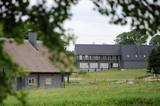 |
Lauku viensēta ar 8,9 ha lielu teritoriju atrodas Alītas rajonā, netālu no Simnas pilsētas pie gleznaina Atesio ezera Atesninki ciemā.100 m attālumā no ūdens ierīkots viesu nams ar 70 gultas vietām. Piemērota svinību un konferenču rīkošanai līdz 100 personām. Iespēja pašiem gatavot ēst, jo aprīkota ar plašu virtuvi. Lauku sēta radīta gan aktīvai, gan mierīgai atpūtai. Ir basketbola un volejbola laukumi, bērnu rotaļu laukums, dārzs, zvejas būdas, grilla vieta. Bezmaksas izmantojami 4 ūdens velosipēdi, kanoe vai koka laivas. Pirts patīkamai laika pavadīšanai. |
|
 12 Tagen
|
Diese Route bietet besonders authentische Erfahrungen, die nur eine Reise durch das Land der blauen Seen im östlichen Teil Lettlands und Litauens bringen kann. Es ist eine Region, in die keine Touristenmassen strömen und wo die Einheimischen leutselig und gastfreundlich sind. Hier gibt es traditionelle Dörfer, viele religiöse Stätten und Bauernhöfe, die zum landwirtschaftlichen Erbe des Landes gehören. |
|
 3 Tagen
|
Die Tour beginnt an der Burg Jaunmoku, wo sich auch das Waldmuseum befindet. Der Stolz der Burg ist der einzigartige, bemalte Kachelofen (Anfang des 20. Jahrhunderts) aus 130 bemalten Fliesen mit 50 verschiedenen Ansichten der Städte Rīga und Jūrmala. Der Wald-Wanderweg läuft auf kleineren Wegen durch das Austrumkursa-Hochland, das Tal des Flusses Slocene, entlang des Sekļa-Sees und des Jumprava Sees, um schließlich die Stadt Tukums zu erreichen. Nach Tukums der Schönheit wegen! Die Stadt ist stolz auf ihre Blumentöpfe, Pflanzgefäße und Blumenbeete mit blühenden Rosen entlang ihrer Straßen. Anschließend schlängelt sich die Route durch Wälder zum anspruchsvollen Hügel von Milzkalns und dem Valguma-See, wo Sie den Barfußweg und einen abgeschiedenen Kunstraum im Wald finden. Weiter macht der Wald-Wanderweg einen Zwischenstopp im Nationalpark Ķemeri. Der Park ist dem Schutz von Feuchtgebieten gewidmet, da er eines der größten Sumpfgebiete Lettlands beherbergt – das große Ķemeri-Moor (Lielais Ķemeru tīrelis). Die Kleinstadt Ķemeri war einst eine Kurstadt, die balneologische Prozeduren und Mineralwasserbäde anbot. Die Tour endet im Dorf Bigauņciems, wo sich er Wald-Wanderweg mit dem baltischen Küstenwanderweg (Europäischer Fernwanderweg E9) verbindet. Alternativ kann man auch im Naturpfad zum See Sloka abbiegen, den Vogelbeobachtungsturm hochsteigen oder das „Waldhaus“ – das Besucherzentrum des Nationalparks Ķemeri – besuchen. |
|
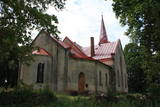 |
A bit less than one kilometre from the Aizkraukle castle hill, the church can be seen from the Rīga-Daugavpils highway (A6). The church was built in 1688 on the steep banks of the
|
|
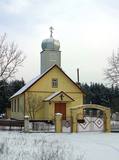 |
Malta (Borovaja, Borovska) Old-Believers Prayer House. The construction
of the church was started in 1931 by A. Gruncevičs. The Church is an architectural
monument of local importance.
|
|
 |
Das Mühlenrestaurant Saaremaa ist ein Restaurant mit den beliebtesten Geschmäcken der Einwohner von Saaremaa und bietet die besten und frischesten Produkte an. In der Speisekarte findet man Wildfleisch aus den Wäldern von Saaremaa, im Sommer auch geräucherte Fische, Beeren-Dessert, lokalen Apfelwein sowie die besten Weine aus der Insel Saaremaa. |
|
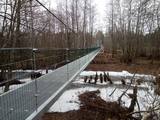 |
The bridge across the Irbe river so that bicyclists and pedestrians can cross the bridge where the former tram tracks were located. |
|
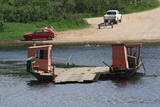 |
In the southern part of Līvāni, where Zemgales Street ends at the Daugava River, there is a fairly unusual and exotic form of transportation – one of three river crossings in Latvia. Unlike the one in Līgatne, this one is operated by a motor, not the flow of the river. It involves a cable across the river, and it is based on Soviet military pontoons that were used to build pontoon bridges for tanks. The crossing point was established by its owners. |
|
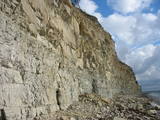 |
Die höchste Felsenwand der estnischen Inseln (21 m hoch), ausgedehnt in die Länge von 2 km. |
|
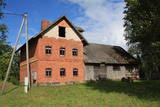 |
Braucot cauri Kaives ciemam, var pievērst uzmanību Kaives muižas „atliekām”. Vietas vēsture ir sena, jo jau 1440. gadā Livonijas ordeņa mestrs piešķīra šeit īpašumu Johanam Kaivenam. Kungu māja gāja bojā 1905. gadā, bet pārvaldnieka ēku nopostīja 2. pasaules kara laikā. 1956. g. nodega kalte, bet pirms trijām desmitgadēm - muižas krogs. Līdz mūsdienām palikusi tikai 1861. gadā celtā magazīna (sarkana ķieģeļu ēka) pakalnā un tai blakus esošais parks, kurā izveidots neliels skulptūru dārzs, estrāde un atpūtas vieta. |
|
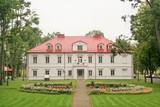 |
Das neu restaurierte Gutshaus, das von einem schönen Park umgeben ist und im Stile der Mitte des 19. Jh. daherkommt, befindet sich 14 km südlich von Panevėžys. Das Gutsensemble Bistrampolis besteht aus Gebäuden, die ab der zweiten Hälfte des 19. Jh. bis zu Beginn des 20. Jh. errichtet wurden: zweistöckiges Herrenhaus im klassizistischen Stil (Mitte 19. Jh.), Marstall, Eiskeller, Gärtnerhaus, Wirtschaftsgebäude. Das Gut ist von einem in der zweiten Hälfte des 19. Jh. angelegten Park im gemischten Stil mit Teichen umgeben. Im Gutspark ist der Pavillon auf dem Birutė-Hügel unweit des Gartenhauses ein besonderes Prunkstück. Der Park wird weiterhin belebt durch die neu gepflasterten Wege und die Brücken über die Teiche. |
|
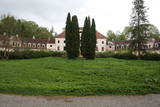 |
Vieta, ko nekādi nevar uzskatīt par tūrisma objektu, bet tajā pat laikā tas ir Latvijas mērogā nozīmīgs kultūras un vēstures piemineklis, ko nevar nepieminēt! Laikā no 1923. – 1943. gadam muižas pilī atradās Latvijā zināmākā mājturības skola, kurā mācījās izslavētās kaucmindietes! Tagad muižas pils ir pamesta, avārijas stāvoklī un apskatāma tikai no ārpuses un „pa gabalu”. Ap 1780. gadu celtā pils, kas 1909. – 1912. g. tika pārbūvēta pusloka būvapjomā, ir Latvijai diezgan unikāls arhitektūras paraugs. |
|
 |
Atrodas Vecpiebalgas dienvidaustrumdaļā aiz baznīcas. 1340. - 1365. g. Rīgas arhibīskaps šeit uzcēla pili - cietoksni, ko apjoza aizsarggrāvji (atliekas redzamas arī mūsdienās). Pils ziemeļu pusē atradās priekštilta nocietinājumi, bet austrumdaļā - pils galvenā ieeja un tornis. Pili postīja 1577. g., bet pilnībā sagrāva 18. gs. |
|
 |
In der Umgebung von der 52 m hohen Parniddenen Düne sind die im 18. Jh. bei einem Holzeinschlag entstandene Wanderdünen zu sehen! Aussichtsplatz. |
|


