
| No | Name | Description |
|---|---|---|
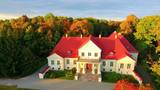 |
The Jakiškiu Estate was first mentioned in documents in the late 16th century. The estate had elements of Classicism in terms of its architecture. Among the buildings, the only ones that have survived are the mansion, an ice cellar and a steam-driven windmill. The estate has not been restored, so it is still authentic. Its artistic soul is preserved by various objects that remain from the time when people lived at the estate and from the Soviet era. Alongside the estate are a few fragments of a park, which covers approximately 2 ha. There is an ancient alley of linden trees that are on both sides of the entrance road, as well as several other valuable types of trees and a small pond. |
|
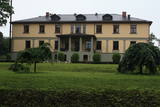 |
The origins of the castle that was built in the style of Classicism date back to 1784. Later it was rebuilt into a two-story building with a portico with four columns at its centre. A new period in the development of the state began in 1993, when restoration of the buildings began. The estate currently houses a children’s village, while the mansion is now a hotel.
|
|
 1 day
|
The Forest Trail leads through smaller paths, arching around Vangaži Lutheran Church and the Werewolf Pine. On its way to the Hunting Palace, it passes the garden created by opera singer Anna Ludiņa and then follows the Hunting trail. The first side ravines with the pronounced relief of the ancient valley of the River Gauja can be seen here. One of them is located by Inčukalns Velnala (Devil’s Cave), surrounded by small river channels of the old Gauja. From there, the Forest Trail continues through meadows and crosses the Murjāņi–Valmiera motorway, where the recreation park “Rāmkalni” is located. In this park, there is a café, shop and active leisure centre with a sledge track. On this route you will mainly see pine forests of various ages, as well as the botanical plantation with 80 tree and 120 shrub species. By the end of the section, the landscape features sandstone outcrops – Devonian sedimentary rocks and habitats protected in Latvia. |
|
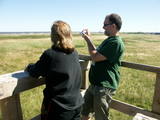 |
The key treasure in this park is that it has a lake that is one of the most intensive sites for birdwatchers in all of Latvia. It also features outstanding flora and the shallow waters of the Bay of Rīga. Recommended: Hike along the seashore from Mērsrags to Engure (20 km). See wild domestic animals (horses and cows) on the eastern shore of Lake Engure. There’s a bird-watching tower on the NW shore of the lake (approach from Kūļciems, where you can see domestic animals adapted to life in the wild, including the Blue Cows of Latvia). A bird-watching tower can be found at a place called Jomiņa near Mērsrags, where the seashore meadow is an uncommon biotope
|
|
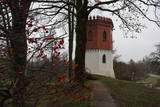 |
С XV века в Приекуле правил род баронов Корфов. Один из них – Иоганн Альберт Корф (1697 - 1766.) был президентом Петербургской Академии наук (1734 - 1740 гг.), дипломатом и литератором, который занимался исследованием истории Курземе. Приекульский замок находится на западе от улицы Айзпуте, на берегу реки Вирга. Первоначально дворец господской усадьбы построили в XVIII веке, а в конце XIX века велись большие работы по перестройке здания (проект Пауля Макса Берчи). В здании находится Приекульская средняя школа. Примерно в 100 м к востоку от господской усадьбы возвышается смотровая башня усадьбы (построена в конце XIX века), над которой развевается государственный флаг Латвии. |
|
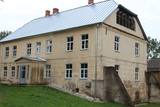 |
Muižas dzīvojamā ēka līdz mūsdienām nav saglabājusies. Šodien Dvietes muižas parkā ir apskatāmas muižas pārvaldnieka māja un trīs mūra saimniecības ēkas. 19. gs. veidots ainavu parks ar laukakmeņu mūrējuma tiltu. Parkā atrodas Dvietes muižas ēkas. |
|
 |
Die zweitgrößte Insel Estlands mit breiter Waldung, Sand- und Steinstränden und einem der ältesten Leuchttürme Europas. |
|
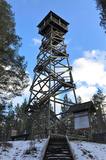 |
This recently built 26-metre wooden tower is on Ūdri Hill (58 metres above sea level). It is on the north-eastern shore of Lake Usma, less than one kilometre from the lake. The tower offers an excellent view of Lake Usma, its islands, and the vast forests which surround it.
|
|
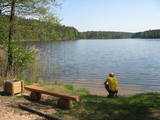 |
The aim of this territory is to regulate the natural and cultural landscapes of the upper reaches of the Daugava River valley, where there is a great deal of biological diversity. Nature trails have been installed in the park, as have bicycle routes. The river is good for boating in this area, too. The Curves of the Daugava nature park is part of the territory (see “Nature Parks”). |
|
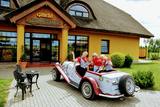 |
Older residents say that the guesthouse is located in the centre of the Domanti village. The guesthouse has four buildings built in accordance with ethnic architectural traditions, including a granary, a sauna and a traditional residence with two ends. |
|
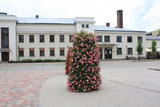 |
Old Town Square is the city’s historic centre. It was here, on February 12, 1670, that Duke Jacob of the Duchy of Courland proclaimed the establishment of a town. During the early 20th century, the square was covered in paving stones, and the city market was held there. On the sites of the square are the People’s Centre, the Unitarian Church and a tourism information centre. In the square are a water pump, an enormous scale, and a sculpture of a cougar, which is the symbol of Jēkabpils. From here you can tour the historical centre of Jēkabpils with its narrow streets and low-story buildings. |
|
 3 days
| ||
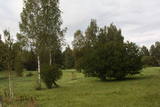 |
Work on the arboretum, which covers 15 hectares of land, began in 1968, and it was meant to be a landscape park. The first plants were planted in 1972. During the fierce winter of 1976, sadly, many of the plants froze. In 1987, the park was redesigned. At that time it had 234 types of deciduous trees, coniferous trees and bushes. There are signs showing the Latin and Latvian names of the various plants
|
|
 3 days
|
This tour takes you to beautiful gardens in Latvia and Lithuania. Poems are dedicated to trees in the garden surrounding the memorial house of Edvarts Virza, a Latvian poet and writer who wrote a legendary novel about the lives of Latvian farmers. Strūbergu decorative garden offers a garden excursion and consultations in gardening. At Brukna manor you will see a vegetable garden that is arranged as a Renaissance park, a rose garden and a vineyard. The beautiful 18th century Mazmežotne castle is renovated by a grain farmer’s family. The Rundāle castle is known as Latvia’s true jewel of Baroque and Rococo architecture featuring also a rose garden with over 2200 varieties of roses. At Blankenfelde manor you will see a collection of bells and will enjoy natural juices, syrups and pickles produced in-house. Visiting Mint House you will taste mint tea, biscuits, honey with peppermint and peppermint syrups. Next stop is at the vegetable and herb farm “Droši vesels” producing herbal ointments. In Lithuania you will visit Žagarė, known for its cherry orchard-park and the special species of cherry – the ‘Žagarvyšnė’, on the National List of Plant Varieties. Stop by Žagarė Manor Park, containing more than 100 species of trees and shrubs. Back in Latvia you can have a picnic at Vilki arboretum showing about 1000 different plants - both typical of the landscape of Latvia and quite unique. At Zaļenieki tree nursery, you can walk in the garden with over 2000 trees and shrubs. Further you will enjoy the beauty of peonia in the collection garden by Andris Berkins. Amatnieki homestead offers tours of their tulip garden. Klūgu landscape garden is famous for begonias. Institute of horticulture in Dobele owns a collection of over 200 types and forms of lilac plants. ''The beautiful and practical idea garden'' is proud of its collection of conifers, and the hosts offer tastings of herbal spice powders, dried berries and fruit. “Rūķīšu tea” is one of the largest farms for medicinal plants in Latvia (purple coneflowers, marigolds, chamomile, etc). And finally, visit Liepas tree nursery specialised in cultivation of fruit-trees, berry bushes and roses. |
|
 |
The "Dzirnavinas" café is along the Rīga-Liepāja highway (A9) at the 67th km road marker. Travellers love to stop here for lunch. Latvian cuisine: Sorrel soup, marinated herring with cottage cheese, “Countryside Feast” (potatoes, eggs, smoked meat, marinated pickles), pork steak haché, Kurzeme stroganoff, sautéed sauerkraut with hunter’s sausages, barley porridge with meat, rye bread cream, bread soup with whipped cream. |
|
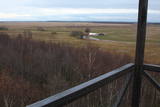 |
Suitsu tornis celts 1979. g. kā pirmais Matsalu rezervāta metāla tornis. To atjaunoja 1998. g. Torņa augstums ir 21 m, tādēļ no tā paveras izcila dabas un kultūrainava uz Kazari deltas niedrājiem un blakus esošo Suitsu upi (Suitsu jõgi), kuras krastā ir uzceltas vairākas zvejnieku laivu būdas. |
|
 |
Находится в Пастари, примерно на расстоянии 2,5 км от дороги Прейли - Виляны, в самом высоком месте с красивейшим пейзажем на Латгальскую возвышенность. Ветряная мельница голландского типа (с вращающимся механизмом крыльев) построена в 1902 году. В 2012 году были восстановлены крылья ветряной мельницы. По предварительной договоренности мельницу можно осмотреть изнутри. |
|
 |
The farm produces six different kinds of blackberries. You can tour the surrounding fields, learn about how blackberries are grown, and taste and purchase valuable berries. Your children will love the rabbits and goats that are at the farm. |
|
|
|
Organic farm "Mežvijas" is engaged in vegetable growing, fruit growing and beekeeping and their processing - dried vegetables, berries, fruits, spice mixtures, candies, juices, syrups. |
|
 2 days
|
Маршрут подходит для активных туристов, интересующихся многообразием природной и культурной среды национального парка «Кемери». Национальный парк «Кемери» (основан в 1997 г.) создан, прежде всего, для защиты водноболотных угодий – мелководного побережья Рижского залива, заросших прибрежных озер, болот, влажных лесов (трясин и др.) и пойменных лугов, как значимых мест произростания многих растений (~ 25 % от видов растений, занесенных в Красную книгу Латвии) и обитания животных, особенно мест скопления гнездящихся и перелетных птиц. На территории парка находится один из крупнейших заболоченных массивов Латвии – Большое Кемерское болото. Заболоченные массивы являются значимым местом образования и выхода сероводородных вод, а также местонахождения лечебных грязей, используемых в медицине, которые в свое время послужили основанием для создания известного курорта «Кемери». Информация о маршруте от Latvijas Lauku forums |
|


