
| No | Name | Description |
|---|---|---|
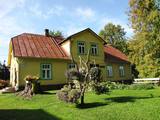 |
Pēteris Barisons (1904-1947) was a Latvian composer and conductor, and this is his birthplace – the Skudras homestead. The exhibition features the composer’s personal items, including musical instruments, documents and other bits of evidence about his life. Call +371-6512-9504 to arrange for a visit. |
|
 |
1935. gadā Tūjā darbojās ķieģeļu ceplis, kas
ražošanā izmantoja apkārtnē esošās Devona perioda mālu iegulas.
1936. gadā uzsāka jaunās fabrikas celtniecību. Šeit ražoja arī augstas
kvalitātes ķieģeļus, ar kuriem tika apšūts arī Rīgas Pulvertornis. Tagad
fabrikas vietā ir pamests grausts, kas redzams no Tūjas centra, ejot jūras
virzienā.
|
|
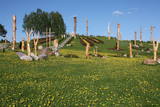 |
Atrodas nepilnus 2 km austrumos no Aglonas, Aglonas – Dagdas ceļa malā. Tā ieceres autors ir Ēriks Delpers, kurš 2006. g. uzsāka vietas labiekārtošanu, izveidojot brīvdabas skulptūru dārzu un stādījumus. Kristus Karaļa kalns šobrīd atrodas izveides procesā, taču neskatoties uz to – objekts, ko ir vērts redzēt! |
|
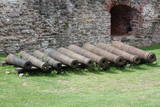 |
The Bauska Castle contains a collection of cast iron cannons which date back to the latter half of the 17th century and the beginning of the 18th century. They were manufactured in the Duchy of Courland. The cannons that are in the garden of the castle were not found there – they were found in different locations in Zemgale. Four of the largest cannons came from Jaunsvirlauka, where they were found on the banks of the Lielupe River opposite Emburga. They are the best preserved weapons of their type in Latvia. The only cannon that was found in the castle itself is currently in its South-eastern tower as a thematic exhibit. When it was being cleaned, two cannonballs were found in the weapons. The local Livonian Order castle is in ruins, but it and its defensive structures, including earthen ramparts that were installed from the mid-15th until the early 18th century, represent an important element of Latvia’s military heritage.
|
|
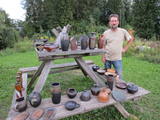 |
This craftsman produces beautiful ceramics and uses the so-called black or smoke-based technique. You can try your hand at the potter’s wheel and watch as the kiln is opened. You can commission or purchase ceramics. You can also tour the beautiful garden and receive services related to flower design. |
|
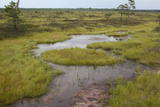 |
Very wide territory for a nature restricted area where extensive forests and several bogs can be found. The territory is important living space for many bird species. Vasenieku bog path with observation tower is the most attractive sites of the restricted area and offers unique landscape of the bog for its visitors. Waterproof shoes are recommended for visitors as the first 500 m of the path is molded turf rampart. Information stands are significant source of information along the path. It is suggested to visit also Stikli (Glass) village where glass factory used to be. Chandelier of Stende church has been made in this factory (by memory of Inese Roze).
|
|
 7 days
|
Driving out of Riga stop at Kemeri National Park for a boardwalk trail through enigmatic bog scenery. Further on the way there is a tasty treat - Pure Chocolate Museum. Ventspils is one of the most affluent towns with excellent infrastructure, well- restored Livonian Order Castle, promenade, arty fountains, manicured parks. Whole town is family oriented but kids particularly enjoy the Blue Flag beach with different swings, climbing and sliding options as well as Kids Town with activity zones for different age groups. A short trip by the narrow-gauge steam engine is a special attraction for kids as well as adults. Water pleasures can be fully enjoyed at indoor or outdoor aqua parks. Go for self-drive excursions in vicinity featuring scenic sea coast, traditional fishing villages where smoked fish can be bought from fishermen, Slitere National Park with beautiful view from its lighthouse, charming Kuldiga with its wooden architecture and waterfall. On the way back to Riga, adults might enjoy stop at the home winery to taste excellent wines made from everything else but grapes. Kids would love a stop at the farmstead to see various farm animals and feed some rabbits. Before Riga make a stop at Jurmala, famous historic sea and spa resort. |
|
 |
A monument to those who liberated Northern Latvia in 1919 was designed by Teodors Zaļkalns and is along the Inčukalns-Valka road. The monument contains text by Edvarts Virza: “As long as grain is sown in these fields, you will be praised and honoured.” The monument features a farmer with a sword and a horse. |
|
 |
The Rožlejas farm is in the Džūkste Parish of the Tukums Administrative District, where the Eastern Courlandian highlands interact with the Heath lowlands. The parents of the current owner, Jānis Ukše, began work there in 1989, establishing a natural farm to grow sugar beets and then also wheat. Thanks to thoughtful farming, Rožlejas has, over the past quarter-century, turned into one of the largest grain farms in Western Latvia. The owners have taken active part in EU projects to purchase modern equipment and to build hangars for the storage of grain and equipment. The farm specialises in winter barley and winter wheat, using ~1,200 ha of land for that purpose. |
|
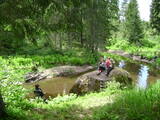 |
The trail tells about grey dunes which have survived thanks to the border restrictions and the presence of military. The trail starts from the parking place at the mouth of the Užava river. It is one of the few natural rivermouths in Europe. One can also see the „tacis”, an industrial installation for lamprey (Lampetra fluviatilis) fishing during their spawning migration period. The 3km long trail is circular. It winds for 1.5km from the Užava rivermouth to the North, along the coastline (the beach is covered with sand and pebbles), and returns to the starting point by a gravel road through grey dunes. Along the trail, one can observe a distinct white dune with rare plant species Linaria loeselii, Lathyrus maritimus, Anthyllis arenaria, Tragopogon heterospermus. About 1km from the rivermouth, in the sea, one can see a wrack of a sailing ship (parts of frame). The visibility depends on the flow of sand in the sea. The way back opens a beautiful view of the range of grey dunes. Unfortunately, Scots Pine starts taking over the area. There are three important biotopes of EU significance: „Fixed dunes with herbaceous vegetation 2130”, „Decalcified fixed dunes with Empetrum nigrum 2140” and „Dunes with Salix arenaria 2170”, forming a unique mosaic. Typical species here: mountain Alison ‘(Alyssum gmelinii), Pasqueflower (Pulsatilla pratensis), Sand Pink (Dianthus arenarius), Rosemary Leaved Willow (Salix rosmarinifolia), Dark Red Helleborine (Epipactis atrorubens), Kinnikinnick (Arctostaphylus uva-ursi). As a former military site, some military constructions can be seen here like horseshoe-shaped sand ramparts by the road in gray dunes. They were built to disguise military vehicles in case of sea attack. By the Kangroti graveyard, towards the Užava river, there is an underground pillbox. It is a one-man fortification to fire along the coastal perimeter. The Mouth of River Užava walking route is in the nature reserve „Užava” |
|
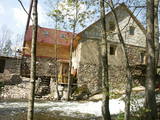 |
The Narūta River which flows out of Lake Ežezers is approximately 1 km long and ends at the small Obiteļi windmill lake. On the right bank of the river is a windmill that was built around 1900. Today the site has the Obiteļa leisure centre with a sauna and banquet facilities. |
|
 |
Here you will find some 30 types of birds and animals, including cranes, pheasants, swans, pygmy sheep, pygmy pigs, kangaroos, squirrels, etc. You can take a tour and learn about the animals, or walk through the garden on your own. You can also purchase rare and exotic plants from the farm’s garden. |
|
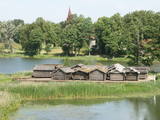 |
The Lake Castle of Āraiši is of pan-European importance. It is a reconstructed Lettigalian lake castle from the 9th or 10th century, and it is the only place in the Baltic States at which visitors can learn about how people lived more than 1,000 years ago. The castle offers various thematic events. |
|
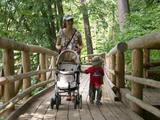 |
This park is located along the shores of the Tērvete River Valley. It is a vast forested area which has been adapted successfully for travellers. In 2004, it was nominated as the most family - friendly destination in the land. There is a web of trails for one-day hikes. Viewing tower on the shore of the Tērvete River, views also from the Tērvete castle hill and Zviedru (Swedish) Hill.
|
|
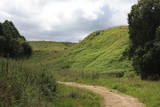 |
Found on the right bank of the Daugava, approximately half a kilometre upriver from the Skrīveri Agricultural Institute, the hill is in a place where the bank of the Daugava River Valley is split by the deep Ašķere stream valley. The castle hill was occupied beginning in the first millennium BC, with antiquities from the Lettigalian and Livonian tribes found there. During the 13th century, a brick castle was built on the hill, but it was sacked during the 17th century. Nothing remains of the castle. The castle hill is also known as Raven Hills, and it offers one of the most beautiful views of the central part of the Daugava. In the direction of Rīga, there is a field with a white cross that represents an ancient church. There is a hiking trail along the Ašķere stream. The area is well improved with four trails. The longest is the Daugava trail (10 km). |
|
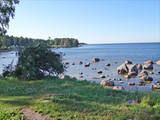 |
In 1804 Käsmu founded the first Estonian naval school and from 1798 – 1920 built more than 40 ships. Now there is a museum about seafaring. |
|
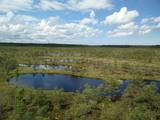 |
This is one of the largest high-type swamps (6,192 ha) in Latvia, with very distinct landscapes of little lakes and hillocks. The Great Ķemeri Heath is of importance as an extensive hydrological system and preserver of the local microclimate. It is also of international importance as a site for birds, as well as a major source of sulphurous water. Along the Kalnciems-Kūdra road, which is on the eastern edge of the swamp (3.4 km from the Rīga-Ventspils highway), there is an information stand with information about the management of the heath and about the role of swamps in nature and in the lives of people. Great Ķemeri Heath wooden pathway trail is now restored and opened for visitors in 2013. |
|
 |
The restaurant is on the shore of the Bay of Rīga, between the VIA Baltica highway (A1) and the sea. It is part of the “Kapteiņu Osta” territory, which is surrounded by the meadows of Randa. The restaurant has a summer terrace with beautiful sunsets. Latvian cuisine: Cold beet soup, potatoes with cottage cheese and herring, smoked eel, oven-baked catfish, baked pike-perch with hemp butter, cottage cheese buns, strawberry soup. Special foods: Fish soup. |
|
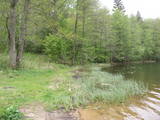 |
The most important aspect of the Sasaļi forest is the eutrophic Lake Sasalis, as well as the unusual Lake Melnezers. Also of importance are various types of forestland in the area. Lake Sasalis is a popular place for leisure and swimming.
|
|
 |
Directly by the sea, only 20 minutes’ drive from Pärnu, is the Captain's House (Kapteni talu), where the captain's freshly caught fish is turned into delicious fish dishes that can be bought or tasted in the Captain's Summer Café. |
|


