
| No | Name | Description |
|---|---|---|
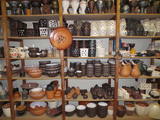 |
This old brickmaking kiln is used to prepare clay that is used by many ceramics artists. The owners also produce handmade household and design objects. Tours are available with attractive stories and creative workshops. Individual orders are also accepted. |
|
 10 days
|
Autumn is a peak bird migration time when huge flocks frequently cross the sky above your head. Cranes perform impressive displays in the fields. There are still some dragonflies and butterflies to see, plus wild animals including wild boar, deer and beaver. The landscape acquires its beautiful autumn colours while we people can enjoy oursleves gathering the wild autumn harvest - mushrooms, cranberries, cowberries and much more. From Riga the tour goes along the Vidzeme sea coast with areas of Devonian sandstone, coastal meadows and numerous places to watching wading birds. At Salacgriva you visit the traditonal lamprey weirs and can taste them grilled. The tour goes to Seda bog, which is an important nesting site for water birds. Here you might see several types of geese, swans and cranes as well as some mammals and dragonflies. Then the route goes to natural coniferous forests at Mežole with great biological diversity. Next the tour focuses on mushrooms and berries in the Gauja National Park which also provides great views of the river valley with some steep Devonian banks with several medieval castles and manors perched on top. Then the tour goes back to Riga and on to two important national parks. Ķemeri National Park has a Black Alder trail through wet forest, ideal for spotting woodpeckers. In contrast the Big Heath trail passes though a landscape of raised and transit bog and sulphurous springs. At Slītere National Park you have a wildlife day visiting a beaver lodge, tracking variousforestanimals and possibly seeing some of them. Cape Kolka offers excellent costal migration action. The tour goes along the steep sea coast of Jurkalne, stops at Ventspils town for lunch with a bracing walk along its breakwater, then turns inland towards Riga. On the way there are stops at the Abava ancient valley and Sabile wine hill. |
|
 |
Mājas restorāns mājīgā, autentiskā lauku vidē, kur tiek pasniegti lauku ēdieni, uz galda celtas svaigas jūras veltes, kuras atceļojušas no Francijas, Spānijas vai Norvēģijas, kā arī vietējās, pašu saimnieku kūpinātas zivis. Ēdienkarte tiek radīta katru dienu no jauna, kas ikdienā ļauj piedāvāt svaigus produktus.
|
|
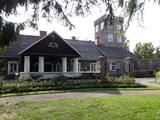 |
The Burbišķe Estate houses the Daugivene Culture and History Museum. The 28 ha territory is environmentally protected. The central part of the park has a pond that covers 3 ha and has 15 islands and 11 bridges, both large and small. Since 2000, the estate has hosted a tulip festival with some 300 types of tulips. |
|
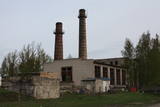 |
The boiler house of Karaosta has been used for decades to ensure heat for the city of Liepāja. Although it is part of the heating network, the facility is not guarded and has largely been abandoned.
|
|
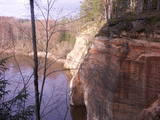 |
The viewing area on the Ērgļi (Ērģeles) cliffs offers an impressive view of Latvia’s most monolith sandstone cliffs (up to 22 metres high) – this is the highest location in the Gauja River valley. Please be very careful and don’t go anywhere near the edge of the cliff!
|
|
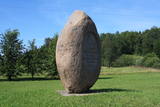 |
The G.F. Stender Museum is at the former Laši pastoral estate, 500 m to the Northeast from the Nereta-Ilūkste road. Gotthard Friedrich Stender (1714-1796), also known as Old Stenders, was the author of the first broader Latvian language grammar book (1761), the first Latvian-German and German-Latvian dictionary (1789), the first Latvian primer (1782), and the first illustrated primer, “ABC of Pictures” (1787). He worked as a pastor in Sēlpils and Sunākste and was born at the Laši pastoral estate, at which one of the buildings now contains a small museum. A memorial stone (sculptor I. Folkmanis, architect N. Tamane) is alongside the Nereta-Ilūkste road. |
|
 |
The owners have made sure that everyone can buy fresh and processed fishery products from local producers. During the summer, on the terrace, you can listen to Mazupīte's water, enjoy freshly grilled fish, as well as enjoy particularly delicious cakes, coffee and ice cream. |
|
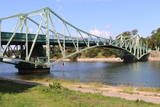 |
The bridge was built in 1906. Part of it was blown up during World War I and later restored. During the Soviet occupation, one needed special permits to cross the bridge. Military ships and other vessels used the canal, because one of the largest military bases in the USSR was sited here. In the summer of 2006, one month before the bridge’s centenary, a Georgian-flagged tanker, the Anna, rammed into the northern support structure of the bridge, and that destroyed the bridge’s turning part beyond recognition. The bridge was renovated and reopened in 2009. You can look at the bridge and cross it at any time.This is a unique engineering monument, and it is the only drawbridge of its kind in the Baltic States. It takes just five minutes to turn the two parts of the bridge.
|
|
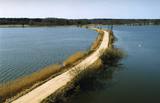 |
This territory is to the North of Skrunda, and it is an important location for water birds during their migration. Northern swans nest in the ponds, and sea eagles and other birds such as falcons and plovers use them for feeding. This is a good place for bird-watching, although it has not been particularly structured for that purpose. |
|
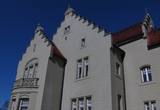 |
The museum has more than 120,000 objects which focus on the history of Liepāja and Southern Kurzeme from the Stone Age to the 19th century. Another exhibition is focused on the life and work of the wood sculptor Miķelis Pankoks (1894-1983). New art exhibitions are periodically staged at the museum. |
|
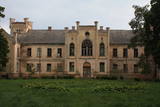 |
A very impressive ensemble that is in terrible shape. The estate dates back to the 18th and 19th century, with the castle being built in the early 19th century. Half a century later it was rebuilt in the Neo-Gothic style with symmetrical towers and bricks in the cornices. The estate belonged to the Manteufel-Stzege dynasty. The vestibule, stairwell and second floor hall still have ornamental ceiling paintings, but visitors are not allowed to enter the building, so they cannot be seen. Valuable interior design elements include a fireplace from the early 19th century that is decorated with marble elements. After the expropriation of the castle in 1920 and until 1951, the building housed a forestry school and then an agricultural crafts school. Opposite the castle was the stable of the state that was built in the style of Classicism with a pediment and mighty columns. Built in the early 19th century, the stable is no longer used and can only be viewed from the outside. A very much overgrown park surrounds the complex, and the hillock is the grave of one of the baron’s dogs.
|
|
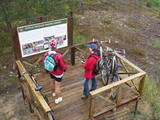 |
Lietuvas lielākais sūnu purvs, kura aizsardzības nolūkā ir izveidots Čepkeļu dabas rezervāts (Čepeklių gmatinis rezervatas). Tas izvietojies starp Dzūkijas nacionālā parka dienvidaustrumu daļu un Baltkrieviju. No Marcinkones pa smilšainu meža ceļu (~ 9 km turp - atpakaļ) ar kājām vai divriteni (arī nelielu tūrisma autobusu līdz 20 vietām) var nokļūt līdz purva malai, kur mežainās kāpās un purvā izveidota 1,5 km gara dabas taka un skatu tornis, no kura labi pārredzama purva rietumdaļa. Pirms došanās uz Čepkeļu purvu, ir jāreģistrējas Dzūkijas nacionālā parka apmeklētāju centrā (Šilagėlių gatve 11), kas meklējams aiz dzelzceļa pārbrauktuves. Te apskatāma neliela nacionālajam parkam un rezervātam veltīta ekspozīcija. |
|
 |
The guesthouse is on the shore of Lake Ciritis with a view of lake islands. Guests are offered Lettigalian dishes, including ones made from lake fish. |
|
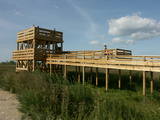 |
This is the only viewing platform in Latvia which is wheelchair-accessible. From the second level, you can see much of the restricted territory – areas of reeds, some wetlands, dunes and the estuary of the Daugava River. This is a good location for bird-watching.
|
|
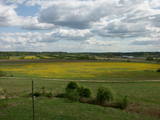 |
From the Asote castle hill, which is on the right bank of the Daugava River near Jēkabpils, there is a fine view of the Daugava River valley, the Ābeles Island, and the Kaupre castle hill that is at the northern end of the island.
|
|
 1 day
|
One of the most beautiful sections of the Baltic Coastal Hiking Route in Matsalu National Park, which leads through the agricultural lands and coastal meadows located near Matsalu Bay, where thousands of migrating cranes and geese gather in autumn. There are excellent birdwatching sites with towers near Haeska village (coastal meadows, shallow coves, small islets, cattle pastures) and at Cape Puise (coastal meadows with pastures, shoals). The most panoramic views of the sea and strings of islands can be seen in the surroundings of Põgari-Sassi and Puise nina |
|
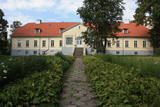 |
Находится ~ в 1 км на восток от центра Априки. Дворец господской усадьбы (стиль барокко) строился с 1742 по 1745 гг., а башня неоготического стиля как пристройка возводилась в конце XIX века. На фронтоне главного фасада дворца выполнен рельеф из песчаника с гербом родов баронов Остен – Сакенов и Корфов, который является самым роскошным элементом среди подобного рода имений Латвии. В здании сохранились и первоначальные элементы интерьера (осматриваются в сопровождении гида) – дверные створки, расписанная голландская печь, оконные дубовые ставни, коробки, чеканные металлические детали и паркет. В комплекс господской усадьбы входит дом управляющего, дом прислуги, хозяйственные постройки и парк. С 1920 года во дворце господской усадьбы действует школа и устроен музей края, который непременно следует посетить! Сейчас в музее выставлена коллекция этикеток производимого в Латвии хлеба. В 1901 году господскую усадьбу приобрел Карл Густав Маннергейм (1867 - 1951), который был президентом государства Финляндии и легендарным автором системы фортификации линий Маннергейма - Зимняя война (1939 - 1940). |
|
 |
This farm offers education about animals who live there, how they are bred and what the origins of their breeds are. You can gather eggs, learn to sit on a saddle and ride horses. The farm has Aberdeen Angus cattle, alpacas, various birds, horses, ponies, rabbits and goats. |
|
 |
The statue of Virgin Mary, also called „the statue of Madonna” was
repeatedly erected in Lūznava Manor park in 1991.
|
|


