
| No | Name | Description |
|---|---|---|
 |
The Jūrkalne People's Centre is the main gathering place for Suiti people and is in a former saloon that was built around 1875. Major restorations were conducted in 2011. The centre offers various events, there is an exhibition hall for visitors, and the "Maģie Suiti" ethnographic ensemble and other amateur ensembles are active there. If you want to meet the Suiti and learn about their traditions, contact the centre in advance. |
|
 |
Atrodas austrumos no Alūksnes Tempļa kalna un dienvidos no Lieliem kapiem – Tempļa kalna parkā. Skatu torņa platforma atrodas apmēram 30 m augstumā virs Alūksnes ezera ūdeņiem. Labi redzama Marijas sala, Alūksnes parks, Alūksnes ezera piekraste līdz Kolberģim un Lāzberģim. Izcili ainavisks skats! |
|
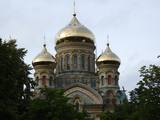 |
This church was built between 1900 and 1903 in the Byzantine style, and was meant for the local military garrison. The church, which was built to honour St Nicholas, patron saint of all seamen, and it was consecrated in the presence of Tsar Nicholas II. The ornate building was sacked by the Germans during World War I. During Latvia’s period of independence, the cathedral was used by the local military garrison. The Soviet military, in turn, turned into a sports hall, a cinema for sailors, and a warehouse. There are stories to say that Soviet soldiers broke off bits of the golden mosaic of the icons in the church. The building has now been returned to an Orthodox congregation. The builders of the cathedral used a unique way of pouring cement, which is why there are no supporting columns in the church. Instead, its weight is bolstered by its walls, with four arched vaults supporting them. It is the tallest Orthodox cathedral in Latvia at this time.
|
|
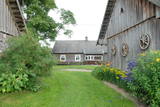 |
The “Gulbji” Selonian homestead is one of the very few places in Latvia where you can see a farm typical of the historical region of Selonia with its typical buildings. “Gulbji” is comparatively far from major roads and populated areas. It is on the so-called Dronku Island, not far from the beginning of the ancient Dviete River valley. The owners of “Gulbji” have collected a wealth of ancient household objects. Visitors can study the farm, examine a collection of medicinal plants, enjoy Selonian foods, or take a “black sauna.” It could be said that people at “Gulbji” have a natural farm which nurtures and maintains the traditions of the historical region. Latvian cuisine: Crepes, grit soup, cream of potato soup, beans sautéed in a special sauce, fruit dessert, bread soup with whipped cream, tortes, herbal teas. Special foods: Zeppelins. |
|
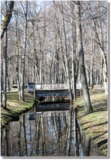 |
Vēršupīte is a small river which curves through the
town of Ķemeri and has more than 10 small and
romantic bridges across it – each with its own name.
|
|
 |
The café is in the basement of the Līgatne Cultural Centre. There is a summer terrace alongside the Līgatne River. Latvian cuisine: Herring, cold soup, sausages, pork haché, hunter’s sausages, pork ribs, pancakes with cottage cheese, potato pancakes. Special foods: The “Pie Jančuka” pork chop. |
|
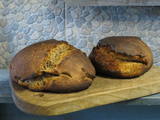 |
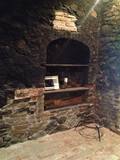
Sweet and sour rye bread is baked here on the hearth of a wood-fired oven, following an old family recipe and using home-grown, historical varieties of rye flour. The dough consists of rye or barley flour, salt, sugar, caraway seas and natural yeast. You can help to bake the bread, taste and buy it, and tour the farm’s museum. The farm grows its own grain in an environmentally friendly way. Available for purchase: sweet and sour rye bread, sweet and sour rye bread with peas, garlic, seeds, hemp, or without sugar. |
|
 2 days
|
Путешествие для гурманов и любителей путешествий, в котором будет возможность попробовать не только традиционные курземские блюда, как скландраусис и копчушка, но и блины, приготовленные из свежемолотой муки, крестьянский сыр, домашнее вино и другие дары села. Кроме дегустации даров села, будет возможность пройтись по природным тропам и познакомиться с культурно-историческим наследием. Информация о маршруте от Latvijas Lauku forums |
|
 |
Located in the Līva Hotel in Old Liepāja, the restaurant offers Latvian and global cuisine. It has an herb garden to produce ingredients for the dishes. Latvian cuisine: Low-salt herring with cottage cheese, stuffed crepes, potato pancakes, sautéed pork ribs, venison with juniper berries, roast leg of duck, roast filet of pike-perch with grits, smoked herring filet. Special foods: Smoked cod with potatoes, onions and dill in a ceramic ramekin. |
|
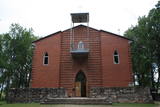 |
The first church in Vecpiebalga was built in 1345, and the next one was built between 1839 and 1845 by the Livonian builder Mārcis Sārums. The church was destroyed in 1944 and restored between 1995 and 1997 (architect Ausma Skumiņa). The altar painting is titled “Christ Walking in the Land of Piebalga.” Outside the church is a rock to commemorate those who suffered from political repressions in Latvia. |
|
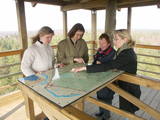 |
This hill in the Tīreļpurvs swamp is an historical object of national importance – the only area in Latvia that is restricted for cultural and historical purposes. There is unique evidence here of World War I fortifications and the so-called Christmas Battle that was fought here.
|
|
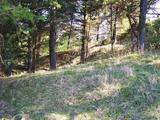 |
Kirkas Hill in Micāni. In 1792, a small castle on the hill Priežukalns (Kirkas kalns) was rebuilt into
Lutheran Church. Nowadays, the hill still is called Kirkas kalns (in German „Kirche” means „church”).
Old people say – under the church there is a big cellar where the jewellery of church and the Mantefel
family is hidden; Manteifel family vault is there too.
|
|
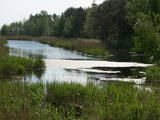 |
Taka izveidota 2005. gadā. Tā atrodas uz Lapmežciema un Bigauņciema robežas un izskatās kā koka dēlīšu laipa gar Siliņupi. Taka aizved līdz jūrai, kur apskatāms vecais Lapmežciema mols. Siliņupē novērojami ūdensputni. |
|
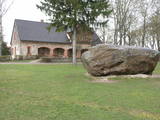 |
The museum is in the Lielvārde Park. It is in the granary of the Lielvārde Estate that was built in the early 19th century. It was later used as a residential building. A veranda was added to it in 1922. The museum has been there since 1970, and it features exhibits about the Latvian national epos “Lāčplēsis” and its author, Andrejs Pumpurs (1841-1902). The museum also features information about the history and ethnography of the Lielvārde Administrative District. Alongside it is a large rock that weighs around 80 tonnes and is known as Lāčplēsis’ Bed. A broken part of the rock is known as the Lāčplēsis blanket. Both rocks were once on the banks of the Daugava River next to the Lielvārde island. Waters from the Ķegums hydroelectric power plant now make waves in that area. Nearby is the so-called Spīdala log that was brought from Aizkraukle.
|
|
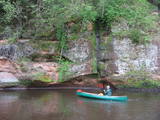 |
The Brasla River flows through a lovely valley that is approximately 300 m wide and up to 30 m deep. It is near the Inčukalns-Valka highway. The river has among the most beautiful rapids in the country, with mighty cliffs (the Brasla cliffs) that can be seen at nearly every curve in the river (except along the lowest reaches of the river). During the winter, various unusual frozen waterfalls can be seen in some of the cliffs, including the Krauļukalns cliff and the Jāņavārti cliff. On the left bank of the Brasla, opposite the Brasla fish farm, there are the Aņīte cliffs -- a series of sandstone cliffs that are 1 km long. The cliffs are between 2 and 35 m in height, and the sandstone cliffs are separated by ravines. On the right bank of the Brasla, there are major cliffs such as the Vāršavu cliff, the Kraukļukalns cliff, the Jāņavārti cliff, the Slūnu cliff, the Virtaka cliff and the Buļi cliff. How can you best learn about them? Boat down the river from the aforementioned highway or even from Straupe, which is further upstream. An alternative is hiking down the right bank of the river, though please take into account that the terrain is fairly extreme, and you are going to have to think about what to do when you arrive at the place where the Brasla River flows into the Gauja. |
|
 |
Apmeklētāju centrā var iegūt noderīgu informāciju un iepazīt ekspozīciju par Karulas augstienes veidošanās vēsturi, ezeru iemītniekiem un šejienes novada kultūrvēsturiskajām tradīcijām. Apmeklētāju grupas semināru zālē var noskatīties izzinošu prezentāciju. |
|
 |
The Skala silence home is on the banks of the ancient Nevežio river valley. You will be served happy dishes from everything that is grown at the farm. |
|
 |
The farm store Leppanide is only a 15-minute drive from Kärdla. The farm breeds goats and sheep, as well as grows various vegetables. |
|
 |
Guides will offer you a tour during which you can watch red deer, fallow deer and wild sheep. You will learn about the specifics of breeding them. The farm engages in selection, as well. |
|
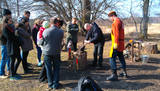 |
Visiting a blacksmith has always been something special. Does this job still exist, and is it still importance? Some may wonder who is a blacksmith is in the first place. The DUDU Nests open-air smithy will answer all of your questions. The blacksmith will teach you all about his profession, talking about the tools and materials that are necessary, the relevant traditions and the everyday work of blacksmiths today. You can forge your own nail to test the difficulty of the work. The blacksmith will happily attend your event with his open-air forge. This is perfect for students, smaller children, wedding guests or individual visitors.
|
|


