
| No | Name | Description |
|---|---|---|
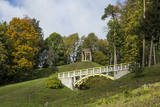 |
Temple Hill is steep (with artificially created steepness) and about 30 m high, and it is opposite Marijas Island. It is an ancient Lettigalian castle hill, 80 m long and 40 m wide, with several artificial ramparts. One of the oldest objects found in the region is an axe from the 2nd to 3rd millennium BC. Archaeologists believe that the island was populated at that time. There was a Lettigalian castle on the hill during the 10th and 11th century, but it was sacked by the Holy Crusade. The surface of the castle hill was transformed comparatively recently in 1807, when a granite rotunda was built there in honour of Russian Field Marshall Sheremetev and Swedish captain Wulff. The view of Lake Alūksne and the town is one of the most beautiful ones in all Vidzeme. The Sun Bridge (1937) is also worth a look. A wooden viewing platform is nearby. |
|
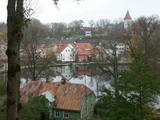 |
The historical centre of Talsi, which is known as the town of nine hillocks. The historical construction around Baznīckalns hill, Lake Talsi and Lake Vilkmuiža mostly dates back to the 19th century. Lielā Street is particularly beautiful with its low-rise buildings (two or three floors and ridged roofs). There are beautiful views from the area around Lake Talsi and Ķēniņkalns hill. |
|
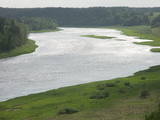 |
The Dinaburga trail first goes downhill, and then it quickly goes uphill to the steep shores of the Daugava river. Among a set of gullies, there is the Naujene (Vecpils) castle hill – some 25m high and the “cradle” of the city of Daugavpils. The ruins of the castle are still visible, and a unique open-air model of the old Dinaburga castle has been prepared. There is a lovely view of the Daugava river valley, and the visitor can expect to spend 20 minutes to an hour here. Objects are located in a protected area of Augšzeme landscapes and in the Curves of Daugava nature park.
|
|
 |
Auf einer hohen vom Wald bedeckten Düne, wo sich in 14 – 15 Jh. ein heidnisches Heiligtum und eine Sternwarte befand, wurde 1869 eine Kapelle und Skulptur erbaut. Eine Geschichte über Priesterin Birute, die das Großfürsten Kestutis geheiratet und den Sohn Vitautas geboren hat. |
|
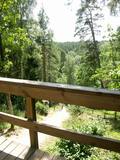 |
This is one of the most lovely and expressive castle hills in Latvia, with a very fine view of territory all the way to Lithuania. According to Ernests Brastiņš, a researcher of castle hills in Latvia, this was the site of the Semigalian Sidrabene castle. There are no improvements in the area.
|
|
|
|
The only island in Lake Ciecere has a more or less virgin forest of oak, linden and elm. Some of the oaks are huge. This is an important habitat for woodpecker-type birds. The island has not been improved. |
|
 |
A family-friendly grill bar and restaurant with a children’s play area, special dishes for children, and a positive and relaxed atmosphere. The chef mainly opts for Latvian products when creating the menu. |
|
 12 days
|
This is the longest of the Forest Trail tours, where you will hike on many beautiful forest nature trails in Latvia and Estonia. These nature trails are part of the Forest Trail and this tour is suitable for self-drive tourists, who wish to hike different sizes of trails and get an impression of the forest diversity in both countries. You have the possibility to see the northern coniferous forests with spruces and pines, broadleaf forests, wet floodplain forests and picturesque forests growing on slopes and ravines. You will also see the most interesting tourist sights in Latvia and Estonia, which are close to the Forest Trail. In Latvia you will visit Sigulda, the historic Ligatne papermill village, medieval Cesis, the River Amata valley, which is located in Gauja National Park. Then you will drive to the less populated eastern part of Latvia – the Northern Gauja protected landscape area, Aluksne Town and hike in the Korneti-Peļļi subglacial depression, one of the most impressive ravines in Latvia. You can climb to Drusku castle mound – the highest and steepest of all the castle mounds in Latvia, When entering Estonia, you will see the highest point of the Baltics – Suur Munamagi Hill, where the observation tower is built. Further on the tour will lead you to the River Piusa valley, Obinitsa, with the culture of Seto people. You will hike in the historic Varska resort town, which is very close to the Russian border. Then you will reach Tartu and Lake Peipsi, which is the 5th biggest lake in Europe. You will hike in the Kurtna landscape reserve, see the Ontika limestone cliff, Valaste waterfall – the highest in Estonia. Finally you will hike in one of the beautiful wooded areas in Estonia – Lahemaa National Park. The tour ends in Tallinn, where you can enjoy the medieval Old Town and many other attractions. |
|
|
|
Pie Melekiem sākas dabas lieguma teritorija. Meleku
krastmala būtiski mainījās 2005. g. orkāna laikā.
|
|
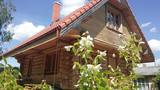 |
Brīvdienu māja "Jasmīnu nams" atrodas pie pašas Jelgavas robežas - tikai 7 minūšu braucienā līdz pilsētas centram. Brīvdienu māja ir lieliska vieta mierpilnam dabas baudījumam, kas rit roku rokā ar iespēju stiprināt veselību pirtī vai alternatīvā SPA - āra kublā. Brīvdienu mājā ir 3 istabas, savrupa teritorija vienai līdz divām mājsaimniecībām – līdz 6 personām, īpašu uzsvaru liekot uz atpūtu kopā ar bērniem. Nav paredzēts skaļām ballītēm un jauniešu tusiņiem. Namiņā ir viss nepieciešamais maltītes pagatavošanai gan iekšā, gan ārā svaigā gaisā. Tuvumā atrodas Svētes upe un atpūtas zona - Svētes palienes pļavu koka laipu celiņu tīkls. |
|
 |
The craftsman typically produces objects that are of use on an everyday basis. They have laconic forms and reticent decorations. You can take a tour of the workshop and kiln, watch demonstrations, and work with the clay yourself. You can purchase finished products, look at the beekeeping operation, and taste and purchase honey. |
|
 |
The farm produces tomatoes, cucumbers, red peppers, strawberries, apples, plums and cherries. The fruits and vegetables are available for purchase. |
|
 8 days
|
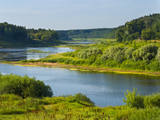
The Daugava River is known as our river of destiny, the Daugava of our hearts, or our beloved mommy. It is a large and full-blooded artery of water that has flowed through our land and our history. The Vikings were aware of the river during the 5th century AD. Krāslava is the site of an ancient castle hill, and the fearless sailors were well aware of it in that downriver from it, the ships could sail with raised sails. It is known in Viking sagas as Dynasaiforgarðr. Goods from the East sail down the river to Rīga, where it is reloaded into seafaring ships for delivery to Europe. That has been the case for many centuries. Many powers wanted to control and govern the process, as is seen in the large number of castle hills, castles and populated areas around the river’s banks. The majestic ruins of the Koknese Castle, Krustpils, the grassy and mighty castle hill at Aizkraukle, another one at Daugmale. The unique fortresses at Daugavgrīva and Daugavpils are like large keys that lock or unlock this mighty and ancient trade route. Under the water in the Daugava are the ruins of the ancient Ikšķile Castle that was built by St Maynard himself. It is seen as the first brick building in the Baltic States. Nearby is Death Island, where Latvian riflemen fought for the future of their country and their land, defending each square metre of land. The Daugava proved insurmountable for Bermont’s troops, and the riflemen defended Rīga successfully. The curves of Daugava are unique. The village of Slutišķi is particularly known because the Daugava there is just like it has been in the past. The high dolomite shorelines and canyons that once made the Daugava unique in all of Northern Europe have now been lost in the reservoirs of hydroelectric power plants, as has the eternally weeping cliff of Staburags, the Liepavotu stream and the Pērse waterfall. The age of national renaissance in Latvia importantly began with a battle against the construction of another power plant on the Daugava, which would have fully destroyed the beauty of the noble river. We managed to protect it, if only a small part of it, but we succeeded. We must not stop! |
|
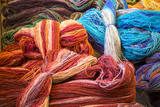 |
This is the only factory in Latvia that offers the full processing of wool, and it has been open since the late 19th century. There is a workshop in Dundaga where woollen blankets and pillows are sewn. |
|
|
|
Skuķu un netāli esošais Dvietes ezeri ir vieni no teritorijas grūti pieejamajiem palieņu ezeriem – lielākie šāda tipa
ezeri Latvijā. Palu laikā pārplūst, savienojoties vienā lielā ūdenskrātuvē.
|
|
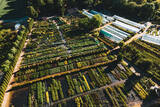 |
This is one of the most ornate and beautiful tree farms in Latvia, with some 1,000 types and forms of plants. The owner will take you on a tour, and you can purchase coniferous trees, decorative bushes, plants for fencing, ivies, and outstanding grafted trees and bushes in containers (1-200 litres). A colourful arboretum is also on offer, along with garden consultations. This can be used as a venue for events and photo sessions. |
|
 |
The museum at Egļava has an exhibition about forestry in Latvia before and after World War II. The exhibit features forestry tools and equipment, as well as textiles from the former Balvi District along with samples of ceramics and woodworking. The former forest ranger house has rooms to provide accommodations to guests. |
|
 |
The saloon is in the historical centre of Līgatne, alongside a pond, and in a building that was once home to the first Līgatne paper factory. Latvian cuisine: Vidzeme stroganoff, grilled Kolka herring, grilled pork, Amata trout, potato pancakes with cream, pancakes with jam, beer, kvass. Special foods: A special dessert. |
|
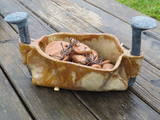 |
The potter offers tours of his workshop, a chance to use the potter’s wheel to produce your own clay dishes, opportunities to draw, and a chance to manufacture drums and dolls. You can buy the finished products and listen to the craftsman playing his drums. |
|
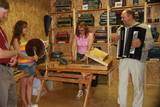 |
Here you will find a vast collection of antique instruments. You’ll learn about their history and about how they were manufactured. You can play music or commission or purchase homemade instruments. If you contact the venue in advance, the Igaunis family will organise a concert performance for you. |
|


