
| No | Name | Description |
|---|---|---|
 |
Since 1820 people have been brewing Estonian beer here using local ingredients, like groundwater, yeast and others. The Saku Brewhouse name comes from the previous brewery that worked until 1992. The brewhouse also has a museum where you can see beer production from centuries ago until this very day. During the tour it is possible to taste freshly made beer. Minors are not allowed to participate in the tour. |
|
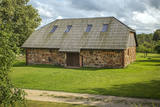 |
One of the 15 semi-estates of the former Dundaga Castle, Vecmuiža, has a private collection of historical materials. |
|
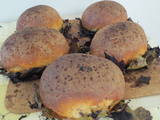 |
The owner of the bakery bakes bread on maple leaves in accordance with ancient recipes. She also bakes three-layer carrot buns (rye flour, potatoes and carrots). You can learn about the baking process and then taste and purchase the finished products. The lady of the house demonstrates and teaches traditions related to the baking of bread and carrot buns. While the buns are in the oven, she will talk about the Suiti region and offer a look at Suiti folk costumes. |
|
 |
В давние времена проспект Курмаяс был главной дорогой, ведущей на пляж. Вдоль проспекта стоят роскошные дома и виллы рубежа XIX – XX века, принадлежащие аристократам – обожателям моря и побережья. Здесь установлены отлитые в бронзе скульптуры из гимна Лиепаи «Город, в котором рождается ветер» - «Лодочник», «Янтарные латыши», «Ворона» и др. В конце проспекта возвышается памятник погибшим морякам и рыбакам (установлен в 1977 г.). Он символизирует женщину, которая ждет возвращения домой своего мужчины. На проспекте Курмаяс 16/18 находится Лиепайский историко-художественный музей. Музейный фонд (всего более 100 000 экспонатов)разместился в построенном в 1901 году в стиле эклектизма (с элементами готики) доме, который строился по эскизам берлинского архитектора Эрнеста фон Ине и проекту П. М. Берчи. В экспозиции представлена каменная стела – единственная подобного рода находка в странах Балтии с могильника под Гробиней (могильник Скандинавов). |
|
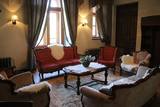 |
The castle was built as an almost exact copy of the architecture of Windsor Castle in the UK and is among the most unusual of the Estonian manor buildings. At least as interesting is the owner and initiator of the manor building design - Count Friedrich von Berg. There is also a Dendro park with rare species behind the Castle. |
|
 |
The hotel is on the banks of the Daugava River, which is the boundary river between Latvia and Belarus. It offers Lettigalian foods, as well as parties in the Lettigalian, Belarusian and Polish style. |
|
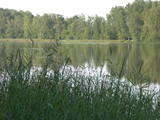 |
These two lakes, along with Lake Mazezers, Lake Auziņš, Lake Skuja and Lake Bruņķītis, are found in a sub-glacial depression with shores and hillsides that are home to various kinds of forest, including stands of broadband trees such as ash. These are protected habitats. Alongside the Priedītes homestead there is a well-appointed nature trail for visitors who wish to study Lake Dziļezers and its surroundings. A boating facility is on the north-eastern shore of the Lake.
|
|
 |
In 2006, a wooden pathway was installed across the Planči swamp – 500m long, which means that the visitor will spend around 20 minutes there. This is probably the only nature trail in Latvia for which there are plans to post information in Braille for people with impaired vision.
|
|
|
|
The cave, which is 45 m deep and up to 5.5 m wide is found on the right bank of the Strīķupe river, by the Cēsis-Lenči road. The cave and its nearby sandstone cliff have suffered much damage from local visitors, which is why the administrators of the national park limited access to the surrounding territory a few years ago. You can no longer approach the cave. This is a positive example of who an important geological monument and a protected biotope can be protected. |
|
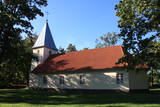 |
according to legend, was washed into the sea because of collapsing shores along with other buildings and the old road. The church was built in 1862 and has an altar painting from the late 19th century, "Mother of God," along with an organ. The metal elements of the building's doors are interesting. Hanging from the ceiling of the church is a sailing ship that has to do with the rescue of the crew of the sunken ship. |
|
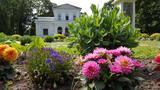 |
The Švekšnos Estate and its park are among the most beautiful venues of this type in Žemaitija. Alongside the estate is an impressive park, with two segments that are linked by a wide parade staircase that is decorated with vases and offers a lovely view of the lower terrace. On an island I the central pond of the park is a statue of the goddess Diana. A colourful sundial, a vase on a pedestal, a sculpture of St Mary, and a sculpture called "Angel of Freedom" are all found in the park. Other elements, including viewing areas, pathways and gates have also been restored. |
|
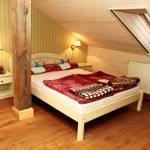 |
This guest house is in an old baronial estate on the banks of the Neris River. You will love the landscape, the opportunity to swim in the Neris River, or ride a bike. The owners are architects who teach classes about ethnic architecture. |
|
|
|
Evidence found at Dievukalns tells that Baltic tribes lived at this place 3,000 years ago the, but in 7th and 9th here at the Daugava Livs tribes settled. Bishop of Riga built stone castle at the bank of the river Daugava (first mentioned in the 1229), whose ruins you can see today as well. Lielvarde is an inspiration for such people of cultural awakening time as Andrejs Pumpurs (1841-1902) and Auseklis (1850-1879). During World War I (almost three years Daugava served as front line) Lielvarde was completely destroyed. After the World War II, here, as well as elsewhere in the Latvian territory, begins the establishment of collective farms. During this time Lielvarde became known for another symbol - "Lacplesa" beer. Today Lielvarde is a favourite of travellers, who have chosen to make their route along the right bank of the Daugava. |
|
 |
A former pharmacy recalls the fact that Ķemeri at
one time was a spa of allSoviet importance. Symbols
devoted to the subject of pharmacies are still on the wall.
|
|
|
|
The cafe in the guest house Imals, next to the highway Kandava-Sabile (9th km). In the ancient river valley of Abava, 5 km away from Sabile. Both traditional Latvian dishes and tasty grilled steaks with different garnishes; as well as Italian pastas or Chinese food. |
|
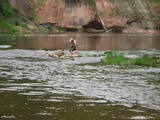 |
Ģeoloģiskā taka sastāv no trīs saistītiem posmiem: „Melturi – Kārļu zivjaudzētava”, „Kārļu zivjaudzētava – Zvārtes iezis” un "Zvārtes iezis - Veclauču tilts". Amatas senleja veidojusies vienlaikus ar Gaujas senleju leduslaikmeta beigu posmā un pēcleduslaikmetā, ledāja kušanas ūdeņiem plūstot uz Gaujas ieleju. Gaujas NP teritorijā Amatas senielejas dziļums sasniedz 50 metrus un platums palielinās līdz apmēram 1-1,5km.
Augstas kraujas (vairāk ne kā 40 metru), kurās redzami augšdevona Pļaviņu svītas dolomītu un augšdevona Amatas un Gaujas svītu smilšakmeņu atsegumi, mijas ar mežiem apaugušām, 3-16m augstām stāvām terasēm.
Amatas senieleja ir nozīmīga ne tikai ar savām dabas ainavām. Tās krastus grezno dolomīta un smilšakmens atsegumi, kas atklāj zemes vēstures lappuses 350-400 miljonu gadu tālā pagātnē, kad Latvijas teritoriju klāja jūra.
Velobraucieniem taka nav piemērota!
|
|
 3 days
|
From Riga the route goes to the historic Estonian sea resort and then by ferry to Muhu island. On the way there is ethnographic village of Koguva, the Liiva church and the elegant Padaste Manor. Overnight at Muhu island. 28 km cycling there juniper fields, its small fishing villages, and the magnificent Juigu cliffs, which open up a view of the other small islands in the Monzunda archipelago. Then drive to Saaremaa and stay in Kuressare, the island's capital. There the rooute covers such attractions as Kaali meteorite crater, impressive Valjala church and castle mound, Piretikivi rock and Poide church. Cycle along the Tagameisa Peninsula, up to 30 km. Driving to the ferry take a loop along Viidumae National Park with its viewing tower, Kihelkonna Church, the Odaletsi streams and nature trail and the dolomite Panga cliffs. |
|
 |
Take a tour of this lovely plant farm, which has more than 3,000 types of plants, including a wide range of water plants. You can purchase plants and receive consultations on growing them. |
|
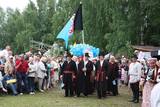 |
Mulgima or Mulgi is a cultural and historical region in the south of Estonia. The part of Viljandi county located south of the rivers Raudna and Tenasilma was considered to be region of Mulgimaa. In ancient times, Mulgi farmers were famous for their sharp minds and determination, which helped to buy land from German-Baltic nobles and become rich farmers. The icons of Mulgi culture - the dialect, the well-known men's long black jacket and the traditional Mulgi porridge - have survived to this day. |
|
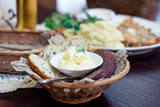 |
The “Pilsbergu krogs” guesthouse and café is 300 metres from the steep shores of Jūrkalne. It is in an historical building that has been restored. The Restaurant is open for the whole year. Foods from European cuisine as well as local dishes like local fish are served. Catering for tourist groups, banquet hall for up to 30 persons, restaurant hall for 25 persons and summer terrace for 30 persons. |
|


