
| No | Name | Description |
|---|---|---|
 |
Here you can taste the best flavours of the beer kitchen Pihtla, traditional Saaremaa house beer, and also Saare cheese, Fresco ice-cream, apple lemonade and other local delicacies. |
|
 |
Piemājas zoodārzs "Brieži" atrodas netālu no Rīgas. Šeit sastopami daudzi un dažādi dekoratīvie putni, tītari, pīles, fazāni, pāvi un žagata, starp tiem dzīvo jūrascūciņas un truši. No četrkājainajiem draugiem te var sastapt Holandes pundurkaziņas, Haidšnukes aitas, Šetlandes ponijus, ēzeļu ģimeni, vāverēnus un jenotpuiku Bārniju. Zoodārzu palīdz sargāt zosu bariņš un Peruāņu pundursivēns - Pigis. No 2015. gada Briežos dzīvo arī dambrieži un briedis Munžaks. Pēc pastaigas zoodārzā, iepriekš piesakot, iespējams izmantot piknika vietas un bērnu rotaļu laukumus. |
|
 |
The main building of the grand manor Alatskivi has a restaurant serving local specialities. The rich history of the manor house connects Estonian peasant culture, Baltic-German culture and Scottish culture depicted in the manor's architecture. The restaurant menu combines these three values. Favourites of the guests are Peipus pike perch and pork chop, but many guests also love the surprising Scottish dessert and local onion jam. |
|
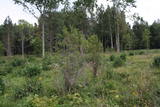 |
One of few places in Latvia (around 1 km to the North from Lapmezciems) where used to be beautiful juniper meadows. Since no agriculture activity (grass cutting, cattle grazing) has been implemented in the area, juniper meadows are overgrowing and disappearing. To save the area sustainable management is needed. Slitere National Park with Blue Mountain cliff and Slitere lighthouse is located in short distance from Kadiku nora (Juniper meadow).
|
|
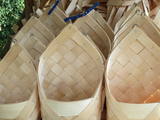 |
The workshop manufactures household products such as benches, tables, hangers, kitchen equipment, sauna barrels, other barrels, outstanding souvenirs of wood, etc. You can commission or buy the products, and tours are also available. |
|
 |
The restaurant-cafe Moka is situated in Estonia, in the city of Tartu, not far from Tartu university and offers a wide variety of foods. |
|
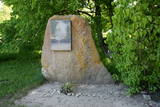 |
The memorial to Latvian President Gustavs Zemgals (1871-1939) was first installed in 1990 at the Brātiņi homestead, where he grew up. In 2016 it was moved to the Džukste memorial park. |
|
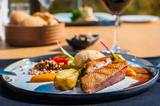 |
The restaurant is located in the first five-star hotel located outside the cities in Latvia, in a beautiful place with a story and a future - in Amatciems. Chefs use local, natural products to prepare meals and serve them with a contemporary interpretation and an emphasis on taste and quality. |
|
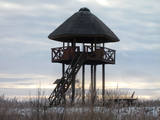 |
A island in the delta of Nemuna. Etnographical museum, Uostadvaris lighthouse, bird watching tower. |
|
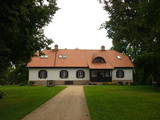 |
The Berķenele semi-estate is a historical monument of national importance, known as the place where the distinguished Latvian author and politician Rainis (1865-1929) spent his childhood. The house was restored in 1995, and since 1996 it has been the Rainis house in Berķenele. Rainis recorded his childhood impressions in a poetry collection called "Five Sketch Notebooks from Dagda." Today the managers of the house offer tours, creative workshops and exhibitions. Visitors can don the clothing worn by the lord and his servants. Around the house is a large orchard, featuring a programme called "Route of Apples." The house also has a lovely landscape that is interesting to see. |
|
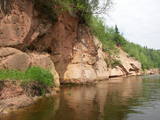 |
Eine der malerischen Sandsteinaufschüssen in Lettland. Die Länge beträgt ung. 500 m, die Höhe – 43 m. Gegenüber befindet sich die Ķūķu-Schnelle. |
|
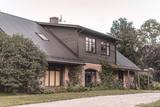 |
The guest house is located near Ventspils, surrounded by meadows and forests, and offers to enjoy the peace and charm of the countryside. The guest house offers accommodation in 7 comfortable and cozy en suite rooms, relaxation in the sauna and a refreshing swim in the pool. There are also 3 camping houses on the territory of the guest house, where you can spend the night in the summer season. Next to the cottages there are comfortable, common toilet and shower rooms. For more active entertainment, there is a volleyball court next to the guest house, which meets all standards, as well as a children's playground, campfire sites and gazebos. The guest house offers free Wi-Fi and parking. Next to the guest house there are two swimming areas - a pond and a small river. |
|
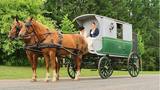 |
An age-old twisting postal road between Tartu and Võru takes travellers to Varbuse postal station dating from 1863. The Estonian Road Museum is housed in this well-preserved complex of a postal station which creates a wonderful setting for displaying the history of travelling and roads, traffic regulation and machinery. Cross-sections of road pavements disclose the secrets of road building. An outdoor display shows stretches of historic roads from Estonia and former Livonia creating an authentic ambience of the past. |
|
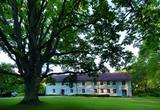 |
The first mention of Pēterupe Rectory goes back to the late 17th century. The Manor Park and the buildings have partially survived to the present day, including a linden alley at the end of Smilšu Street, planted by the pastor Jānis Neilands in 1879 and the grand oak planted by Johann Wilhelm Knierim in 1869. After the fire of 1908, the Rectory was restored and partially rebuilt. In Soviet times, the property was removed from the parish and the house was named “Līgotnes”. During German times the Rectory was occupied by legionnaires. After the war, the building of the Rectory was turned into a hospital, then into a secondary school and later it was transformed into a block of flats for teachers. Now the building again belongs to the parish and it is inhabited by a priest of the parish and his family. |
|
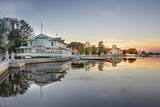 |
Haapsalu was once loved by aristocrats who stayed here during summers, nowadays this town is very appealing to its visitors because of its essence - tiny streets, old wooden buildings and promenade. Worth mentioning are also town's SPAs which were one of the reasons why Haapsalu was so popular its earlier years. Interesting enough, the famous composer Tchaikovsky considered this place one of his favorite's for spending the holidays. |
|
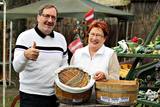 |
Lamprey catching and processing traditions started long ago in Carnikava, in the place where the River Gauja enters the sea. On the tour you can find out about lamprey and their preparation methods, as well as enjoy them grilled, jellied or in the form of lamprey sushi. Latvian cuisine: Grilled lamprey, jellied lamprey, lamprey sandwiches. |
|
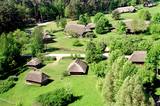 |
Countryside life open-air museum. Various historical county buildings, everyday life tools, traditions etc. |
|
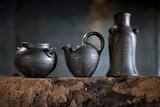 |
The potter uses the black (smoke) technique to create his artworks, and he uses clay from Latgale. He uses no industrial equipment in his work, and the kiln is fired with firewood. You can watch as he creates dishware on a foot-powered potter’s wheel and talks about the firing process. You can work with clay and purchase finished products. |
|
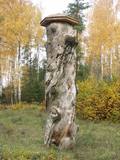 |
In 1951, when it died, the pine tree had a circumference of 4.63 metres. It was the thickest pine tree in the Baltic States
This is one of the few trees with such a long history for which age has been determined by counting up circles – 370 years. All that’s left is a conserved part of the stump at the side of the road. Cross-sections of the stump are on exhibit at the Latvian Museum of Nature and the Latvian Ethnographic Open-Air Museum.
|
|
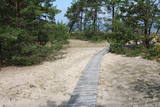 |
The trail (the length 1.2 km) introduces with the habitats of dunes and century-old pines, partly covered with sand. Biologists estimate that the oldest tree, the “mother of pines”, could be around 200 years old. Coastal pine forests serve as a barrier between the sea and land protecting inland areas from impact of the sea and winds. Felling coastal forests was forbidden by law already back in 1643, during the Duchy of Courland. Still due to economic activities, the seashore forests were often fell and fires occurred there occasionally. As a result, the sand which had for centuries been hold by trees, started drifting at Cape Kolka. In the 1930ies, there were about 142 hectares of sandy areas in the Slītere National Park, and 11.5 hectares of those were drifting sand. To stop drifting, the sand areas were carefully afforested. Afforestation was started before WW I and it was completed in the 1970ies. To plant new trees, first the sand had to be stopped. Just 26km to the south from Kolka there was one of the largest sand dunes in Latvia, 25km in length. Every year it devoured 0.3 hectares of land. The sand was stopped covering it with heather, twigs and branches of pines and junipers. Pine trees were planted between them. Today in Kolka, the old, low pine trees tell about the once drifting sand. After storms, when the water washes the bluff and tree roots are exposed, one can see that the tree trunks once have been covered with sand more than 1 meter high. The trees on the seacoast usually have crooked trunks and flag-shaped crowns formed under influence of persisting sea winds. Now these forests are designated biotope “Wooded dunes of the coast”. Stable white dunes (biotope 2120) do not form in Cape Kolka as they are washed by sea waters during spring and autumn storms. Embryonic dunes develop here (code 2120) with plants that usually grow in dunes. These plants have adapted well to poor soils, heat, drought, and the saline sea water. The Kolkasrags Pine Trail is in Slītere National Park. |
|


