
| No | Name | Description |
|---|---|---|
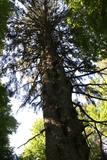 |
This is the thickest and mightiest Norwegian spruce (Picea abies) in Latvia. Its monolithic trunk, with its small holes, is unusual. The tree is in the overgrown park of the former Īve Estate, behind the ruins of the mansion.
|
|
 |
One of the most popular places on Latvian seashore to buy smoked fish or fish cooked in some other way. The fish is being smoked by local undertakers so quite often it is possible to feel a nice fish smell in tte village! |
|
 |
Taarka Tarõ Köögikõnõ is located in the traditional Setos Farm House, and besides the Setos traditional dishes, also offers flavours of other Finno-Ugric nations and Ukraine. |
|
 5 days
|
On this tour you will enjoy the diversity of nature in Lahemaa National Park – the oldest national park in the Baltic states. Lahemaa – means “the land of bays” in Estonian. It is characterised by many bays, peninsulas, forests and villages rich in cultural heritage. The Forest Trail will go along the bays and peninsulas of Lahemaa National Park, introducing the hikers to its most significant natural and cultural heritage. The forests are rich with blueberries and mushrooms in autumn, and the air is very clean. You will start the tour from Tallinn, going by bus to Lahemaa National Park, where you stay overnight in one of the beautiful manors. On the next day you will hike till Oandu. En route you will see Altja – a scenic traditional fishing village, where a traditional Estonian tavern is located and you can enjoy traditional meals. In Oandu there is the visitor centre of the Estonian State Forest Management (RMK), where hikers can learn more about forest habitat types and forest management traditions. Then you will reach Käsmu Peninsula with its wooded dunes and moss-covered rock fields, giving the feeling of being in a fairy tale. Käsmu is also a popular Estonian sea captains´ village. There you can visit the Marine Museum and lighthouse, as well as have an extra walk to the Vana-Jüri rocks. During the day from Käsmu to Kasispea you will see some of the most impressive boulders in Lahemaa National Park, the Tammispea and Jaani-Tooma boulders, which resemble huge monoliths. You will end the tour in Viinistu Village, where we suggest visiting Viinistu Art Museum. |
|
 |
The Lojas farm in the Mazsalaca Administrative District is a mixed-use farm, including grain farming (wheat, barley, rye, rapeseed) and manufacturing of straw granules as litter for animals. The farm breeds beef cattle. |
|
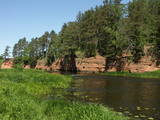 |
This park is in an area which has not been affected much by humankind – sandstone cliffs, an undisturbed diversity of caves, other habitats, species and landscapes is the attractive aspect of this area. The Salaca River is one of the most important rivers in the Baltic Sea region for the spawning of salmon, and it is the second most popular river for water tourists in the Latvian region of Vidzeme. There are geological monuments which are very attractive to visitors – the Red cliffs, Skaņais Hill, the Neļķu cliff, the Velna (Devil’s) cave, etc. There are also cultural monuments such as the Livonian castle hill, the Vecsalaca baronial estate, the Livonian Museum, the Vantenberģi estate, the unique Salaca lamprey weirs, etc. Also in the park is one of the most popular tourist destinations in Northern Vidzeme – the Skaņākalna park, which has a dense network of footpaths. The Salaca is also popular among fishermen. This is part of the Northern Vidzeme Biosphere Reserve. |
|
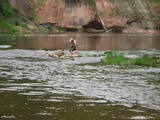 |
Ģeoloģiskā taka sastāv no trīs saistītiem posmiem: „Melturi – Kārļu zivjaudzētava”, „Kārļu zivjaudzētava – Zvārtes iezis” un "Zvārtes iezis - Veclauču tilts". Amatas senleja veidojusies vienlaikus ar Gaujas senleju leduslaikmeta beigu posmā un pēcleduslaikmetā, ledāja kušanas ūdeņiem plūstot uz Gaujas ieleju. Gaujas NP teritorijā Amatas senielejas dziļums sasniedz 50 metrus un platums palielinās līdz apmēram 1-1,5km.
Augstas kraujas (vairāk ne kā 40 metru), kurās redzami augšdevona Pļaviņu svītas dolomītu un augšdevona Amatas un Gaujas svītu smilšakmeņu atsegumi, mijas ar mežiem apaugušām, 3-16m augstām stāvām terasēm.
Amatas senieleja ir nozīmīga ne tikai ar savām dabas ainavām. Tās krastus grezno dolomīta un smilšakmens atsegumi, kas atklāj zemes vēstures lappuses 350-400 miljonu gadu tālā pagātnē, kad Latvijas teritoriju klāja jūra.
Velobraucieniem taka nav piemērota!
|
|
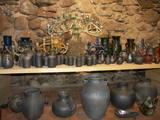 |
You can visit the workshop, watch the craftsman at work, try your own hand at the process, and purchase clay objects, including garden ceramics. There is also a lovely garden to view. |
|
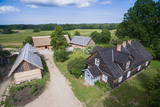 |
The museum is dedicated to the writer Ernests Birznieks-Upītis (1871–1960), whose nickname as a child used to be Pastariņš. The historic buildings have been restored according to the situation in the mid-20th century. Rye bread, Sun bread, and Shepherd's bread are baked in the museum’s farm. Each spring visitors can take part in building wattle and other types of fences, to bake bread and rolls and to taste the results. In December – baking sklandrauši (a carrot-based pastry). There are weaving demonstrations, butter churning demonstrations and opportunities to try one’s hand at other old-time farm work. |
|
 |
Uibo farm offers customers fresh pork dishes, using as little preservatives and additives as possible, characterised by traditional Estonian flavours. |
|
 |
Die zweitgrößte Insel Estlands mit breiter Waldung, Sand- und Steinstränden und einem der ältesten Leuchttürme Europas. |
|
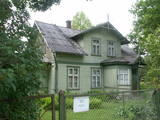 |
The Miervaldis Ķemers Museum (Durbes
street 21) is dedicated to a well known cultural
worker in Latvia (19021980) who was also a
clergyman and a painter.
|
|
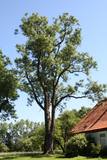 |
A very beautiful and expressive tree, it is found on the land of what was once the Vīceži Semi-estate.
|
|
 |
The sauna and rest place Raudini is a place where you can rest in a comfortable quiet atmosphere, between the sea and the forest. You will be able to experience relaxation offered by a wooden-heated sauna, wisping with besoms, enjoying the sauna ritual to its fullest and drinking herbal tea. After the wisping you can cool off in the pond with water lilies and, to finish off your sauna ritual we offer chocolate or honey massages. Here it is possible to rest with your family or a small circle of friends, preparing a tasty meal on the outdoor terrace on the real wooden stove or fireplace. In the evening you will be able to watch the sunset rays in the tree spires. It is possible to use tent places outside for spending the night and wait for the sunrise near the sea. Quiet, peaceful and natural coolness. |
|
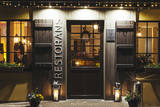 |
Small, quiet and cosy hotel with a popular gourmet restaurant near the Tallinn highway, in Ainaži, where the air is filled with the aroma of pines and the sea. In the cosy atmosphere of the restaurant you can enjoy a leisurely and delicious meal while feeling the closeness to nature. |
|
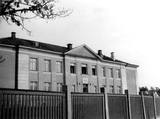 |
The roots of Saulkrasti Secondary School reach back to Pabaži, to 1912, when a young teacher – Olga Veicmane (after marriage: Cīrule) arrived from Riga to teach the sea captain Reisons’ daughter. Soon many other tutor-seekers joined her and in autumn of 1912 a school was established in Pabaži. The school had a good reputation, and pupils came from the entire surrounding area. In January of 1913, the school was moved to more spacious premises at 20 Rīgas Street. |
|
 |
The beautiful wooden building, located right at the entrance of Gulbene, provides a place for guests to have a meal, enjoying the perfect atmosphere for relaxation and well-being. Home cooking and Latvian dishes. |
|
 1 day
|
The Daugava is the largest river in Latvia and the river of destiny for the Latvian people. Since the end of the Ice Age, plants and animals travelled into what is now Latvia along the Daugava River valley, followed then by humans. The shores of the river have some of the oldest settlements in Latvia, as well as a true wealth of different kinds of plants. The density of outstanding cultural and historical monuments is why tourists love the shores of the river. The Rīga-Daugavpils rail line offers comfortable travel between Rīga and Jēkabpils. Below, find other train stations where it is worth disembarking to take circular hikes that last for a few hours or half a day before returning to the station. Route information from Latvijas Lauku forums |
|
 |
Farm Maizes māja near Cēsis, where you can gain joy, strength and vitality! This tourism farm offers cognitive and educational programmes for adults and children, introducing them to the traditional Latvian lifestyle and intangible cultural heritage. At Maizes Māja, groups of students, families, friends, and tourists become members of the family and have a lot of work to do, for example, bringing firewood and firing the oven, before baking rye bread or sweet and sour bread from Kaupo rye flour in a proper bread oven. When the work is done, a nice meal is enjoyed together. |
|
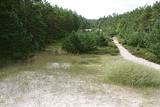 |
A shooting range which isn’t really there anymore, but it was once
used for training purposes by the Soviet military. Right now you will see
an overgrown area of land which stretches from the seashore to the
Kolka-Ventspils road. That’s where the shooting range was located.
|
|


