
| No | Name | Description |
|---|---|---|
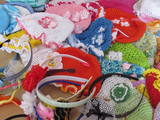 |
The Crafts Chest store offers crafts produced by women in Sabile – knit and crocheted mittens, stockings, hats, shawls, and other useful items that will be wonderful gifts and souvenirs. |
|
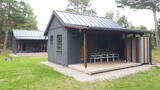 |
Brīvdienu mājiņas Jūvgumegi atrodas Kurzemes reģiona Mazirbē, Slīteres nacionālajā parkā. Viesiem tiek piedāvātas četrvietīgas un divvietīgas naktsmītnes ar bezmaksas privātu autostāvvietu. Visās ir pieejama virtuve ar ledusskapi un plīts virsmu, kā arī tualete, duša izvietota uz terases. Līdz liedagam 400m. |
|
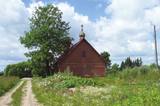 |
Rimši Old-Believers Prayer House. The church was built in the
beginning of the 20th century.
|
|
 4 days
|
Participants in this tour will learn about Latvia’s most modern crop farms that are typical in Zemgale. During the first day, participants will meet with specialists from the Latvian Agriculture Ministry and agricultural NGOs. They will also tour Rīga, which is part of the UNESCO List of World Heritage, and the Rīga Central Market, which is one of the largest closed markets of its type in Europe. Participants will visit a health food store and have dinner to enjoy traditional Latvian foods and beers. The next day we will go to Jelgava, where the 18th-century castle of the Duchy of Courland and Zemgale will host a meeting with faculty members from the Latvian Agricultural University, which is housed in the palace. We will visit a biologic bakery, as well as a farm that engages in crop farming, livestock breeding and manufacturing of biogas. An artificial wetland is used to purify runoff water. Dinner will be served at a modern leisure complex. On the third day, we will visit one of the largest multi-sectoral farms in Zemgale. It specialises in plant farming, livestock breeding, horse breeding, biogas manufacturing and beer brewing. During the afternoon, we will visit the largest and technologically most modern grain farm in the region, after which we will tour the most outstanding castle in the Baltic States – the Rundāle Castle. Built as a summer residence for Duke Ernst Johann Bieron, the castle was designed by the distinguished Italian architect Francesco Bartolomeo Rastrelli. Dinner will be served at a venue that has an historical windmill and an exhibition related to grain farming. On the morning of the fourth day, we will visit a farm that grows grains for seed, and then a biological farm that produces wheat, barley, peas, beans, rapeseed, herbs and herbal teas. Lunch will be served at a farm that will offer dishes made of home-grown grains and rough-milled flour. Then we will return to Rīga. |
|
 |
Atrodas Ostas ielas rietumu galā. No laukakmeņiem veltīto kompozīciju uzstādīja 1938. g. (idejas autors – bijušais Ventspils ostas kapteinis V. Ābelnieks) un tā ir piemiņa visiem zvejniekiem un jūrniekiem, kuriem atdusas vieta ir jūras dzelme. |
|
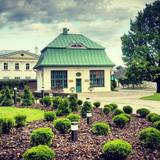 |
Located at Pils Street 25A in Alūksne, this is a building that was initially a trade pavilion and was built in the early 20th century. The Ernst Glück Bible Museum was established in 1990 as the only museum of its type in Latvia and the Baltic States. Glück (1652-1705) was a pastor and educator who was the first to translate the Bible into Latvian. The exhibition features various editions of the Bible from 1694 to the present day in 38 languages, along with books of sermons and other examples of Christian literature. |
|
 |
“Amatnieku namiņš” ir saimnieces izlolota sirds lieta, jeb vieta, kur vienkopus atrodami daudz un dažādi vietējo un apkārtnes novadu amatnieku un mājražotāju darinājumi. Tējas, garšvielas, ievārījumi, dažādi smēriņi, adījumi, kokdarbi, pinumi, ziedi un ziedu kārbas, sveces, krūzes un daudz kas cits ir atrodams tieši “Amatnieku namiņā”. |
|
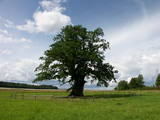 |
This is the second thickest tree in Latvia and the Baltic States. There is a large and open hole in the trunk of the tree. Like most trees of its size, it has suffered lightning damage. The tree is a wonderful part of the landscape, and a little wooden fence has been put up around it.
|
|
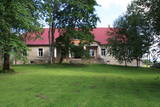 |
Lodes muižas ēkas izvietojušās t.s. Lodes – Taurenes subglaciālās iegultnes (cauri tek Gauja) austrumu nogāzē. Muižas apbūve tapusi 19. gs. pirmajā pusē, bet kungu māju (klasicisma stils) cēla 1815. g. Pēdējie īpašnieki, kas šeit saimniekoja (līdz 1939. g.) – bija Šmidtu dzimta. Mūsdienās muižas pilī vasarās dzīvo LU Ģeogrāfijas un Zemes zinātņu fakultātes studenti, kuriem šeit ir lauku prakšu norises vieta. Kungu māja apskatāma no ārpuses. |
|
 |
The farm breeds historical Portuguese Lusitano breed horses, Shetland ponies, other horses from Europe, Ango Nubian goats, sharp wool sheep from Lithuania's genetic fund, and a large group of various fowl. Visitors will learn all about the animals and their origin and be given a chance to ride horses and ponies, as well as to observe the animals. |
|
 |
The cafe is situated in Stende, approximately 12 km away from Talsi. |
|
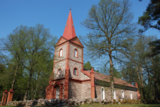 |
The church was built in 1835, and its greatest treasure is the organ, which was built by Karl Bittner in 1854. The manse is being restored. Boats are available for rental. |
|
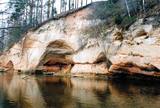 |
This is one of the most beautiful ancient river valleys in Estonia – 12 km long with nearly 40 revealed Devonian sandstone cliffs. Among these, the most important ones are Viira müür, Kalamatu müür, and Põdramüür.
|
|
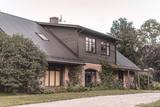 |
The guest house is located near Ventspils, surrounded by meadows and forests, and offers to enjoy the peace and charm of the countryside. The guest house offers accommodation in 7 comfortable and cozy en suite rooms, relaxation in the sauna and a refreshing swim in the pool. There are also 3 camping houses on the territory of the guest house, where you can spend the night in the summer season. Next to the cottages there are comfortable, common toilet and shower rooms. For more active entertainment, there is a volleyball court next to the guest house, which meets all standards, as well as a children's playground, campfire sites and gazebos. The guest house offers free Wi-Fi and parking. Next to the guest house there are two swimming areas - a pond and a small river. |
|
 |
Elkas kalna saimniecība is located on the top of the scenic Elkas Hill, the place where the Gauja begins. Herbal teas, birch sap, jams and other healthy delicacies from local meadows and home-grown plants. There are also nature workshops, open-air picnic areas. |
|
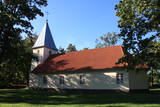 |
according to legend, was washed into the sea because of collapsing shores along with other buildings and the old road. The church was built in 1862 and has an altar painting from the late 19th century, "Mother of God," along with an organ. The metal elements of the building's doors are interesting. Hanging from the ceiling of the church is a sailing ship that has to do with the rescue of the crew of the sunken ship. |
|
 |
This is a cemetery that was originated in the Middle Ages and used until the beginning of the 20th century. A mossy stone fence surrounds the cemetery. Interesting elements in the cemetery include the grave of Heinrihs Jakobsons (1832-1911), who was the first schoolteacher in Mazirbe (the old metal cross is to the left of the main gate), a pine tree of national importance and has a circumference of 3.17 metres (during the Soviet Union someone drilled a hole in the trunk of the tree to access honey), the grave of Niks Freimanis (1845-1908), who is said to have been the prototype for a character in a story and play by Marģers Zariņš, and the Werewolf Grave, which relates to countless ghost stories, including the claim that it is the only known gravesite of a werewolf in Latvia. |
|
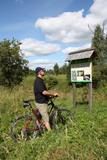 |
Taka veidota gar Gaujas labo krastu augšpus un lejpus Gaujienas un tā iepazīstina ar nogāžu mežu un dažādu pļavu biotopiem. Visā tās garumā izvietoti informatīvi stendi. Takas daļu lejpus Gaujienas var braukt ar velosipēdu.
|
|
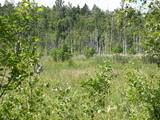 |
This swampy territory used to be part of a Littorena Sea lagoon, and it is a place where many rare and protected birds such as woodpeckers live and nest. Territory is hard to reach although some of the territory can be surveyed from the Tukums-Kolka road. Wet meadows is called "lankas" in Kurzeme region. |
|
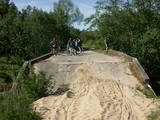 |
The Kauguri canal dug in 19321933
to divert the waters of the Džukste and
Slampe rivers to the Lielupe River to avoid
broader emergence of swamps.
|
|


