
| No | Name | Description |
|---|---|---|
 |
Burtnieku muižas parks, kas atradās kungu ēkas priekšā, ir valsts nozīmes dabas aizsardzības objekts, tika izveidots ap 19.gs. 60. gadiem 10 ha platībā. Iespēja doties ekskursijā pa Burtnieku muižas parku mazākā vai lielākā grupā. Ekskursijas laikā gida pavadībā iespējams iepazīt teikām un nostāstiem bagāto parku, apskatīt teiksmaino Burtnieku ezeru, kā arī baudīt nesteidzīgu pastaigu svaigā gaisā. Papildus tiek piedāvāta iespēja iegādāties oriģinālus Burtnieku suvenīrus, kuros dažādi meistari ielikuši ne vien savu talantīgo roku darbu, bet arī Burtnieku stāstu. Lai diena būtu piepildīta, gids ieteiks, ja nepieciešams, koordinēs un dosies līdzi apskatīt arī citus dabas un vēstures objektus tuvākajā apkārtnē. |
|
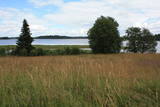 |
Ļoti ainavisks ezers, uz kuru paveras lieliskas ainas no Vidzemes augstienes pauguriem. Te jāatceras latviešu teika par Ineša un Alauksta strīdu, kā rezultātā Inesis dabūja pliķus – salas, kurām (sešām) tāpat kā Sproģu pussalai ir dabas lieguma statuss. |
|
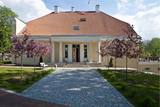 |
The restoration of Kau Manor, which was originally constructed before 1241, was inspired by the colourful history of the manor, and the imagination makes it stand out from the other manors. Kau Manor has won the 2016 World Boutique Hotel Award in the category of the World’s Most Inspired Design Hotel. |
|
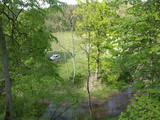 |
The viewing area is near the top of the Vilce castle hill, with a view of the Rukūze River valley, Zaķi meadow, and surrounding forests. This is an unusual landscape for the region of Zemgale. The Vilce baronial estate is nearby.
|
|
 |
The teahouse is in a lovely location – the southern part of Pilssala Island, near the pedestrian bridge over the Driksa River. |
|
 2 days
|
Latvia is the land of apples, so producing cider here is only natural! The ancient traditions of apple growing in our country, as well as the variety of high-quality apple cultivars, are key advantages of Latvia's cider culture. In our climate zone, it is challenging to grow good grapes for wine production, but the local conditions are particularly suitable for making apple cider. This is a natural consequence that local cider producers are increasingly mastering with excellence. The Cider Route will take you to various cideries in Latvia, as well as to restaurants and pubs that serve it. The Cider Route allows you to understand the specifics of Latvian cider, introducing you to the culinary traditions and cultural heritage of different regions. You will have the opportunity to meet the cider makers themselves, who run small farms, tend to the orchards, share about their work, and even let you participate in it. |
|
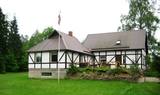 |
Guest house "Aivari" is located in a quiet forest in Inčukalns region. Offers rest in a country sauna, after the sauna it is possible to use a shower, cool off in the pool, also a swim in the spring pond and a wooden tub. There are tent sites, a picnic area with awnings, a volleyball net and several campfire sites. |
|
 7 days
|
This study tour is designed to show Latvia's rye traditions as their central focus. This tour has been developed in cooperation with the Latvian Bakers’ Association. Rye is both the basis of the Latvian diet and a powerful symbol of Latvia's culture and culinary traditions. Itinerary emphasize traditional rye bread-baking and eating, as well as insights into the history of the rye grain from Latvia's earliest archaeological record to the present day. Itinerary include visits to working farms, grain mills and culturally and historically important locations. This study tour is designed for groups and may be adapted to the needs, interests and timeframe of each client. Tour cost includes meetings with experts, site visits and admissions, accommodations, specified meals, sightseeing, transportation within Latvia and guides-interpreters. |
|
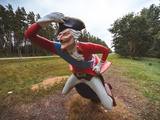 |
The restored mansion of the Dunte Estate is now a museum featuring the adventures and life of the legendary king of lies, Baron Munchhausen. The first floor is devoted to the barn and his stories, while the second floor has a collection of wax models of people who are distinguished in terms of Latvia’s history. Also there is the largest collection of beer mugs in Latvia. There are three circular trails in the forest with wooden sculptures. The longest one leads to the sea. A wooden model of a ship is interesting to children. |
|
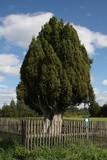 |
This is the thickest common juniper (Juniperus communis) in Latvia and the Baltic States. It stands in the middle of a field and looks wonderful. The tree is sometimes known as the Rieteklis juniper, because the Latvian poet Rieteklis (Jūlijs Eduars Balodis, 1856-1940) like to sit under it.
|
|
 8 days
|
This trip will allow you to see seaside landscapes, learn interesting facts about the ancient process of fishing, and enjoy traditional seafood dishes. Your first stop after leaving Rīga will be Ragaciems, where you will find a popular fish market that always offers a wide range of smoked fish from the sea. On the shores of the sea, you can look at a restored fishing boat pier and huts for nets. Further along, groups of 15 people or more can enjoy the "Fisherman's Banquet" programme in Roja. There you will hear stories about the lives, songs, dances and games of fishermen and, of course, enjoy an elegant banquet. Next you will visit Cape Kolka and the Slītere National Park, where men still go fishing in the sea. The aroma of smokehouses will be evident. Travellers can purchase freshly smoked fish there. Along the way to Ventspils, it is worth stopping at the Irbene radio telescope, which has a military history, but is used for scientific purposes today. Next you will drive toward Liepāja and stop at the charming town of Pāvilosta, which is popular among surfers, as well as the steep shores of Jūrkalne, where you will be able to taste fresh baked bread that has been kneaded by hand at a farm. Then you will get to Liepāja, which is the birthplace of Kristaps Porziņģis, a basketball player who plays for the New York Knicks in the NBA. A special treat in Liepāja ir smoked cod with potatoes and sweet cream. You can visit a windmill that was built in 1885 and is still operational, as well as the Pape Nature Park and the ethnographic Ķoņi village. Once you get to Lithuania, you will spend a day at the popular seaside sea town Palanga, and then continue the route to Cape Vente and the Rusne Island, both of which are famous because of fishing and fish smoking traditions. Visit the village of Minija, which is known as the "Venice of Lithuania." Finally, visit the Kurši dunes, the Sea Museum and dolphinarium, as well as the port city of Klaipeda. |
|
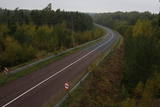 |
This is the ancient shore of the Baltic Ice Lake. We can only imagine the landscape 10,000 years ago, when the Kurzeme peninsula was covered with vegetation reminiscent of a tundra, and waves from the icy lake dashed against the ancient shoreline. We know that the lake was full of icebergs of various sizes. Today the cliff is more than 20 km long (some 9 km of it are in the Slītere National Park), and it is as much as 42 m high. It is the most impressive cliff of its type in all of Latvia. At the foot of the cliff are the Irve flatlands (the name comes from the Liv 'īrva' or 'īra', both of which refer to deer). The flatlands are the former bottom of the Baltic Ice Lake. The Blue Hills are crossed by many small streams and rivers (Pitragupe, Lorumupe, Kaļķupe, Mazupe, etc.). Their valleys are the basis for a branched and very complicated system of waterways which look particularly impressive when the trees are bare. In many places the cliffs and valleys display small areas of sandstone from the Narva suite. These are Latvia's oldest sediment cliffs that can be seen above ground. Although the Blue Hills are very impressive in scope, there are only a few places where there are important viewing areas (a viewing tower at the Dundaga-Mazirbe road, the view from the Šlītere lighthouse, the view from Mežlīdumi). The mightiness of the ancient shoreline can truly be enjoyed from the Cirste-Mazirbe road, the Cirste-Riepaldi road, Mežlīdumi and the Vīdala-Melnsils road). It is worth visiting the area in the springtime, when the slopes of the Blue Hills seem to be sinking under the fresh greenery. |
|
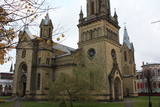 |
Atrodas starp Kr. Valdemāra un Kuršu ielām. Viena no iespaidīgākajām un greznākajām pilsētas celtnēm, kas būvēta neoromantikas formās. 19. gs. beigās katoļu draudze nevarēja saņemt atļauju jauna dievnama celtniecībai, tādēļ uz vecās ēkas uzbūvēja jaunu, kur vecā baznīca tapa par lielākās ēkas sānu kapelu. Baznīcas sienas un koka griestus rotā attēli ar Bībeles sižetiem. Dievmātes kapelā saglabājies mazās baznīcas (no 18. gs.) centrālais altāris. Baznīcas griestos ir iekārts burinieka modelis, ko dāvinājuši vētras laikā izglābušies jūrnieki. |
|
 17 days
|
The route leads through the Gauja National Park which is located on both sides of the ancient Gauja river valley. Sandstone cliffs and caves, hilly landscapes and deep forests and castles are characteristic of the park. Further on at Igate Manor stop for a lunch at their mill tavern to taste traditional Latvian food. The route turns towards the coastwhich belongs to the North Vidzeme Biosphere Reserveand continues through old Estonian fishing villages before arriving at the seaside resort of Parnu with its elegant villas. Next is a guided wilderness day in Soomaa National Park trying old-fashioned bog-shoeing and canoeing. Further on the route you will pass Pootsi with a 19th century manor and the ancient village of Varbla. Take a ferry to Muhu island and stay in the ethnographic fishermen's village of Koguva for a couple of days to explore the area. Cycle across the causeway to Saaremaa island from where you can take a ferry to laid-back Hiumaa island for a day trip to get a feeling for the true spirit of Estonia. Back on Saaremaa there is time for a free day in its capital, Kuressaare with plenty of spa and relaxation facilities. Then by bus head to Tallinn, charming with its medieval Old Town. From there enjoy a day trip to the former military base of Naissaar island where special cycling routes showcase its military history, mine and nature reserves. |
|
 |
Rabbit farm offering rabbit meat, skin and its products. The key to success is high-quality food, veterinary care and good rabbit-keeping conditions. |
|
 |
Meklējamas Lizuma ciema dienviddaļā. Tās ir vienas no retajām vējdzirnavām (1880. g.), kas saglabājušās labā stāvoklī. Mūsdienās dzirnavas ir gleznotājas Ilonas Brektes īpašums. |
|
 4 days
|
Poems are dedicated to trees in the garden sourrounding the memorial house of Edvarts Virza, a Latvian poet and writer who wrote a legendary novel about the lives of Latvian farmers. The beautiful 18th century Mazmežotne castle is renovated by a grain farmer’s family. The Rundāle castle is known as Latvia’s true jewel of Baroque and Rococo architecture featuring also a rose garden with over 2200 varieties of roses. At Brukna manor you will see a vegetable garden that is arranged as a Renaissance park, a rose garden and a vineyard. Pick your own blackcurrant berries at Bāniši berry farm. A beautiful landscape garden is open for visitors at Gundegas house. 200 year old oaks adorn the Vārkavas Park. Riekstiņi is an authentic single-family Selonian farm with a specific spirit and ambience. At Kaldabruņa you will visit an art gallery housed in a hay-shed together with a hay museum. Grape selection and cultivation was the great passion of Pauls Sukatnieks, and his memorial garden is worth visiting during the harvesting time. Dvietes Manor is proud of its 19th century landscape park and a stone bridge. Daugavpils, the 2nd largest city of Latvia, is famous for the renovated 19th century Daugavpils Fortress housing museums. Sēlija tree nursery offers a tour of their apple orchard, apple storage and production facilities. Enjoy a glass of apple juice and stories of vinemakers. Berķenele is the memorial house of Rainis, the distinguished Latvian author and social activist.The Rokiškis Regional Museum and Manor is one of the most important cultural centres of the Aukštaitija region. The Liudvika and Stanislovas Didžiulis Homestead Museum garden features traditional Lithuanian apple tree cultivars, flowers and herbs. The A. Baranauskas and A. Vienuolis-Žukauskas Memorial Museum presents culture, literature, history, agrarian culture, and technical history in the Anykščiai region. Traditional Lithuanian flower garden can also be seen at the Bronė Buivydaitė Memorial Museum. In Anykščiai you can enjoy the Treetop Walkway and Labyrinth Park, and take a train ride on Aukštaitija’s narrow-gauge railway. In Traupis Botanical Garden you will find everything from perennial flower collections and rock garden to a flower clock and decorative pool with aquatic plants. The interior of the Taujėnai Manor house was decorated extensively with the Radziwiłł family’s portraits, sculptures, hunting trophies, and antique weapons. Take a walk around the Ukmergė Old Town and enjoy the view from the old fire tower. Survilai Homestead offers a barefoot trail walking on pine cones, swamp, peat, clay, gravel, polished glass, pine-tree needles, straw. The Vytautas Magnus University Kaunas Botanical Garden exposes the Lithuanian Heritage flower garden plants according to their botanical classification. At Tadas Ivanauskas Homestead at Obelynė Park you will see a collection of 300 species and forms of plants, including some of the oldest trees on the planet – the ginkgo biloba and the dawn redwood. In Kaunas you will see the Oldest Apple Tree in Lithuania – almost 360 years old, 8 metres tall, with a girth of 285cm at a height of 1.3m. The tour ends in Kaunas, Lithuania's 2nd largest city that was the capital of the country from 1920 until 1939. |
|
 8 days
|
The tour from Rīga to Tallinn combines natural and cultural heritage and includes lovely landscapes and 15 nature trails which cross marshlands, meadows and forests along the shores of the Baltic Sea, including several protected nature reserves. Many trails are equipped with viewing towers for birdwatching. Randu meadows near Ainaži contains one third of Latvia’s entire plant species. A boardwalk leads through reeds to a viewing platform with views over the meadow and the sea. Saaremaa island is interesting with very different natural attractions to the mainland - dolomite cliffs, juniper heaths, a meteorite lake and rocky sea shore. The tour passes rural farms and traditional villages typical of the coastal areas. Hiiumaa island is a laid back place and retains a very Estonian atmosphere with an important bird reserve at Käina Bay, unusual Sääre Tirp as well as several small islets off its south-eastern coast. Back on the mainland, Paldiski peninsula gives a glimpse of the recent history with its former Soviet military base |
|
 3 days
|
This programme allows participants to learn about Latvian ethnography and traditions through meeting local craftsmen and having master classes with them in knitting traditional mittens and gloves, making amber jewellery and cooking traditional foods. There is chance to have a unique experience because of the authenticity of some places and traditions, for example the ethnographic house of living history Zvanītāji still retains its original appearance - massive ceilings, large family room with bread oven and natural, unpainted wooden floor. The carew chimney is still in the kitchen. The house is filled with characteristic looms, a family table, beds, wardrobe, cradle, various items and tools used on the farm. |
|
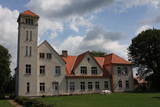 |
Jānis Čakste (1859-1927) was Latvia’s first president (1922-1927), and he began to build a house for himself in 1924. In 1999, in honour of the 140th anniversary of the president’s birth, an exhibition was unveiled about his life, work and family. Čakste’s office can be toured, and artists from Jelgava exhibit their works at the museum, as well. |
|


