
| No | Name | Description |
|---|---|---|
 |
The craftsmen's association unites 65 craftsmen from Rūjiena and its surroundings. Offers baking, jam cooking, cheese tying, jewelry making, leather goods, crochet and culinary master classes. Also offers "Made in Rūjiena" tastings (bread, smoked products, culinary products, jams, fresh juices, pumpkin products, seasonal berries and fruits, other dishes in each season) and shopping. |
|
|
|
Taka, kas izveidota Lemmjegi (Lemmjõgi) un Raudnas (Raudna jõgi) satekas vietā, iepazīstina ar palieņu pļavām un veciem pārmitriem mežiem, kas ir vieni no lielākajiem Igaunijā. Takas sākumā dominē atklātas lauku ainavas. Viens no 4,9 km garās lokveida takas apskates objektiem ir Lemjē dižozols. Mitrā laikā noderēs ūdensizturīgi apavi. |
|
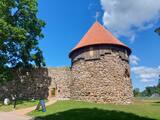 |
The Livonian Order built a fortified castle on the largest island in Lake Alūksne – Marijas Island (Pilssala Island) in 1342. It was linked to the land by a 120 m drawbridge. The castle had several forecastles, and it was regularly modernised and expanded until the end of the 17th century. It was one of the largest Livonian Order Castles, with similar ones found in Vastelina and Izborsk. Defensive barriers were put up around the castle, which survived until the Great Northern War. Its central part was blown up by the defeated Swedish military in 1702, after which Russians completely sacked it. All that is left are the castle ruins on the island, which is now linked to Alūksne and Temple Hill by two wooden bridges. An open-air stage alongside the castle ruins is used for various public events. |
|
 2 days
|
Маршрут подходит для активных туристов, интересующихся многообразием природной и культурной среды национального парка «Кемери». Национальный парк «Кемери» (основан в 1997 г.) создан, прежде всего, для защиты водноболотных угодий – мелководного побережья Рижского залива, заросших прибрежных озер, болот, влажных лесов (трясин и др.) и пойменных лугов, как значимых мест произростания многих растений (~ 25 % от видов растений, занесенных в Красную книгу Латвии) и обитания животных, особенно мест скопления гнездящихся и перелетных птиц. На территории парка находится один из крупнейших заболоченных массивов Латвии – Большое Кемерское болото. Заболоченные массивы являются значимым местом образования и выхода сероводородных вод, а также местонахождения лечебных грязей, используемых в медицине, которые в свое время послужили основанием для создания известного курорта «Кемери». Информация о маршруте от Latvijas Lauku forums |
|
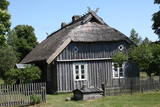 |
Koņuciems of Pape is one of the few seashore fishing villages in Latvia to have preserved an authentic environment to the present day. The Latvian Open-Air Ethnographic Museum has a branch here, “Vītolnieki”, and this is an authentic and ancient fisherman’s farm. +371-2926-2283. The sad fact is that some people have built modern buildings in the village, and it has now lost its earlier untouched charm. |
|
 10 days
|
From Riga the tour goes along the right bank of the river Daugava and crosses it over at Plavinas HES to Salaspils. Visit National Botanic Garden then continue along the left bank of Daugava. On the route there is a model of ancient wooden castle where you can walk about. . Then visit the Kingdom of Rabbits where their homes are made like a little castles too. Time to taste some wonderful home-made ice-cream at Skriveri and visit legendary Koknese castle ruins park. Next day visit ethnographic working farmstead where you can see wild horses and cows as well as various waterbirds in the pond. Then the route goes to private mini zoo "Ezerlejas" with some exotic animals, visit ceramics factory where you can see how the hand-made clay products are made from the beginning to the end, walk around Rauna medieval castles ruins. Cesis town with mighty medieval castle and pretty old town is the next on the route. At Ligatne walk nature trails where you can see local wild animals. At Sigulda kids would love to visit "Tarzans" adventure centre. There is also Olympic bobsled centre and two medieval castles located. From Sigulda the route goes towards the coast with a stop at elegant Birini Manor with large park where you can try horse ridding. Then you are at the sandy beach of Saulkrasti. Before returning to Riga you can visit a farm with goats and ponies to taste goats products and cuddle animals. |
|
 |
The idea of the centre is to strengthen health by using clean food, so here you can enjoy delicious meals from slightly processed, vitamin-rich foods. The centre mainly uses fresh products from the garden of the centre and local farms. The specially developed menu plans consist of delicious vegetable soups and stews, as well as various porridges. Healing cures include not only certain meals, but also treatments and workouts that must be ordered in advance. |
|
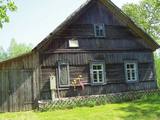 |
The House-Museum of the writer Michael Narics. Reveal the history of political repressions in the
USSR and Soviet Latvia; see creative works of the winners of competition organized by M. Narics Educational
Center.
Working hours: on request |
|
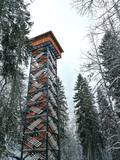 |
Dabas liegumā "Lielie Kangari" atrodas 33 metrus augsts skatu tornis, kura virsotnē atrodas platforma, no kuras paveras skats uz Kangaru ezeru un Lielkangaru purvu. Dabas liegumā izbūvēta arī nepilnu divu kilometru gara pastaigu taka ar tiltiņiem un skatu platformu pie ezera. Takas sākumā izvietotais veselības maršruts ikvienu apmeklētāju aicina kārtīgi izvingroties un izkustēties. Apmeklētāju informēšanai un izglītošanai visas takas garumā izvietoti arī informatīvie stendi ar fotogrāfijām, kas apvieno varenu stāstu un teiku kopumu par notikumiem, vietām, tēliem un parādībām dažādās apkārtnes vietās. |
|
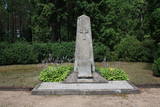 |
This is the largest cemetery of the brethren from the World War I period, and it is the final resting place for some 1,800 Latvian Riflemen, as well as some 2,000 soldiers who served in various Russian army units and were reinterred during the 1930s. There is a monument at the centre of the graveyard. |
|
 |
The farm offers to look at horses, ponies, rabbits, Brama hens and chickens. Children are offered to ride a small pony named Xavier either on horse back or in a small carriage. |
|
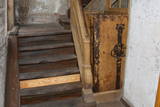 |
Находится на ул. Базницас, д. 17. Здание построено в XVII веке, как жилой дом кулдигского бургомистра. В 1701 году здесь гостил король Швеции Карл XII, который в передней оставил огромный сундук (2 х 2,5 м), на который после реставрации можно взглянуть и сегодня. |
|
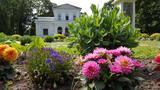 |
The Švekšnos Estate and its park are among the most beautiful venues of this type in Žemaitija. Alongside the estate is an impressive park, with two segments that are linked by a wide parade staircase that is decorated with vases and offers a lovely view of the lower terrace. On an island I the central pond of the park is a statue of the goddess Diana. A colourful sundial, a vase on a pedestal, a sculpture of St Mary, and a sculpture called "Angel of Freedom" are all found in the park. Other elements, including viewing areas, pathways and gates have also been restored. |
|
 |
In the workshop it is possible to learn about the process of creating and the usage of pottery of different historic periods, as well as other household goods. Archaeological pottery is presented. The Middle Ages man-carried clay bread oven, frying-pan, drinking cups, the pilgrims’ water bowls. All the works are handmade in the moulded ceramics style and burned in the clay kiln. |
|
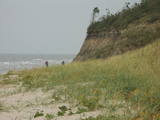 |
The Ziemupe nature restricted territory is on the shore of the Baltic Sea, and it protects a wide variety of coastline biotopes. The distinguished grey dunes are found here, as are various kinds of forest biotopes, some of them quite rare in Latvia. There are many protected plants and animals in the area, too. The Akmensrags lighthouse and several tourist accommodations, like camping Laikas who "Sējējs" award, are in the territory. On the sea shore not far from center of Ziemupe there is well-appointed parking area with information stands. |
|
|
|
Observatory which was built (1808. – 1810. g.) Southeast of Doma Hill is called pearl of Estonian's science. There's a museum inside. |
|
 |
On the left bank of the ancient Gauja River valley, between the Paparžu ravine and the ravine along which the Sigulda-Turaida road passes through the valley there are the ruins of a castle built by the Order of the Brethren of the Sword. Construction on the castle began in 1207, and three decades later, in 1236, the castle was rebuilt for the needs of the Livonian Order. The Sigulda Castle suffered much damage during wars in the late 16th and early 17th century. During the Great Northern War, it was burned down and never restored. What is there today is the south-western segment of the castle's convent building, as well as the tower of the main gate. Beyond that is the internal forecastle, where there is an open-air stage for the annual Sigulda Opera Music Festival and other public events. There are also impressive views of the ancient Gauja River valley, Krimulda and Turaida. Reconstruction of the ruins is currently ongoing, and after the work is completed a second tower on the left side of the stage will be available to visitors. The plan is to install crossings around the walls of the convent building. Presently the ruins are available on a 24/7 basis and free of charge, but after the restorations are completed in 2012, admission will be charged. |
|
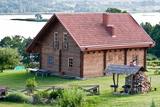 |
Atrodas ezera Vilkokšnio ezera krastā - attālā dabas nostūrī, kur smelties spēku un enerģiju. Pirts, guļamistabas ar koka smaržu, vasaras lapene, kamīns, rotaļlaukums, peldēšanās ezerā, makšķerēšana, sporta laukumi, laiva, ūdens velosipēdi, kalnu velosipēdi un kempings. Lauku sētas entnogrāfiskajā istabā tiek cepta mājas maize. Iepazīsieties ar senajiem piederumiem, maizes cepšanas tradīcijām un paražām.
|
|
 6 days
|
The tour presents UNESCO World Heritage Sites and the Intangible Cultural Heritage of Latvia and Estonia. Experience the famous traditions of song, national crafts, architecture and food of the unique Suiti and Seto ethnic groups. |
|
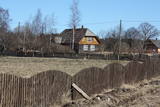 |
To the North-west from the Pitrags Baptist church (in the direction of the sea) is a fishing and farming homestead, Kurgati, which was established in the 1930s. This brought new building elements to the Liv Shore – a split roof end which was not typical of buildings in Liv villages. |
|


