
| No | Name | Description |
|---|---|---|
 |
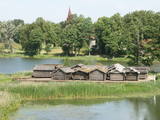
Meklējams Matsalu līča dienvidu krastā pie Kēmu ostas (Keemu sadam). Blakus sešus metrus augstajam metāla – koka tornim uzcelts neliels apmeklētāju centrs. Tāpat kā no Haeskas torņa, arī no šī paveras viena no izcilākajām Matsalu līča un tā piekrastes ainavām. Laba putnu vērošanas vieta migrāciju laikā. |
|
 |
This trail offers education about the forest for children of all ages, families with children, and friends of the environment. The trail is located in the Īle Parish of the Auce Administrative District, 2 km from the Pokaiņu forest. |
|
 6 days
|
This section of the Forest Trail leads through the entire Gauja National Park and gives an opportunity to see all the most beautiful places and sights of this national park of more than 100 km. Gauja National Park is the oldest and largest national park in Latvia. The ancient valley of the River Gauja is the deepest river valley in the Baltic states. The banks of the River Gauja reveal colourful sandstone outcrops, which are reflected in the water. The sights are most wonderful in springtime, when bird cherry trees are in full bloom, and in autumn, as the trees turn red and yellow. The ancient valley of the River Gauja has a distinctive terrain relief that can fluctuate by up to 80 m. The largest part of the road leads through forest paths, along the river, and exits the woods in Līgatne and Sigulda. Almost half of the park is covered by forest. Gauja National Park is known for the great diversity of specially protected forests, featuring herbaceous spruce forests, slope and ravine forests, as well as mixed broadleaf forests. |
|
 |
A place in the centre of Tartu where one can enjoy small and light fish & chips style meals made from the products of Lake Peipus. The small shop combines Peipus' area dining experiences with modern cuisine, using only the best local products. Very popular choices are fish & chips made from pike perch fillet, juicy burgers, as well as wraps. |
|
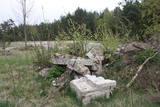 |
The former Soviet-era fuel base was part of the military facilities at that time. Fuel tanks from this site have been removed and no longer exist. |
|
 |
The Lake Castle of Āraiši is of pan-European importance. It is a reconstructed Lettigalian lake castle from the 9th or 10th century, and it is the only place in the Baltic States at which visitors can learn about how people lived more than 1,000 years ago. The castle offers various thematic events. |
|
 |
The craftsman uses wicker to produce chairs and tables, as well as wood to make household and practical objects. You can take a tour of the very neat farm, which features wooden sculptures. |
|
 3 days
|
This trip will allow you to visit a farm in Kurzeme and to experience the diversity of its output. Tasty and interesting! From Rīga, the road will lead you along the Gulf of Riga and through fishing villages which are full of the aroma of smoked fish. On the way to Talsi, you will visit an orchard and farm that produces apple chips. Talsi is known not just as the town on nine hills, but also as the home of the tasty "Talsi Wheel" brand of cheese. Also here is the Latvian Agriculture Museum with an exhibition about farming from the late 19th century to the present day. The symbol of Kuldīga is a red brick bridge across the Venta River, as well as the charming Old Town. Next you will visit the seashore to learn about fishing, fish smoking and bread baking traditions. Visit the unique steep shores of Jūrkalne. On the way back you will visit a winemaking facility and a farm where shiitake mushrooms are grown. You will also learn about the path of milk from a cow to finished dairy products and visit a farm at which people will tell you about the story of their family which dates back to the age of noblemen and baronial estate. |
|
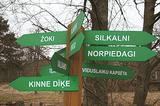 |
is seen as the newest village along the Livonian coastline. It was established during the 17th century. Košrags had 78 residents in 1826. The first reading school for Livonian children in the Dundaga seashore villages was opened at the Žoki homestead in 1832. One of the teachers was Nika Polmanis, who was the first Livonian to have completed a professional education. He also translated the Gospel of Matthew into the Eastern Livonian dialect. Košrags had a windmill, water mill and boat building facility. During the spring, job seekers from Saaremaa stopped here. A port was installed in 1932, and a breakwater to collect sea fertiliser followed in 1938. During the 1930s, Košrags was regularly visited by Finnish and Estonian linguists to study the folklore of the Livonians. The Norpiedagi homestead was built by Livonian activist Didriķis Volganskis (1884-1968). His son, Livonian cultural worker and pastor (in Finland) Edgars Vālgamā (Volganskis, 1912-2003) was born there. He translated the Andrejs Pumpurs epic "Lāčplēsis" into Finnish. Košrags today is a cultural monument of national importance. |
|
 |
The restaurant is situated in the centre of Rezekne city, alongside the Rēzekne University College in a building with vaulted cellars. The restaurant has an interesting interior design and its menu is developed according to the seasons of the year. Latvian cuisine: Cold soup, crepes, potato pancakes, roast pork, pork ribs, veal cakes, sautéed mutton, baked cod or trout. |
|
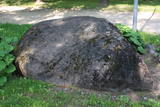 |
Atrodas Kalēju ielas malā. Savu popularitāti ieguvis ar nostāstu, ka Ziemeļu kara laikā pie tā pusdienojis Krievijas cars Pēteris I un Polijas valdnieks Augusts (Stiprais). |
|
 |
The wetland meadows that are around the Pededze River are the site of this 200 ha farm with some 350 red deer, other deer and wild boar. There are towers from which you can watch the graceful animals, and there are ponds for commercial fishing. Please contact the owner well in advance for a tour. |
|
 6 days
|
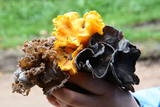
This is for people who enjoy forests, wildlife, local traditions and has a specific interest in the different species of funghi. Everyone could try their hand at mushrooming, identification and by the end of the day together with guide sort out the collected mushrooms. The tour passes several national parks and late back villages. The group will also visit to one of shitake mushroom growers for comparison reasons. |
|
 1 day
|
Ekskursijas laikā apmeklējiet dabas taku, kura izvijas augšup un lejup gar Pilsupes lejteces stāvajiem krastiem un atklāj skaistus skatus uz trīs balto smilšu atsegumiem, no kuriem vecākais ir 6000 gadu vecs. Pēc tam apmeklējiet Kubalu skolu - muzeju, kur redzēsiet, kādas izskatījās skolas 19 gs. Klasē Jūs sagaida senie skolas soli, tāfelītes, tinte un rakstāmspalva. Tālāk dodieties uz dabas parku, kurā izveidota Bišu taka. Iespēja kāpt kokā ar dzeiņa palīdzību, liet vaska sveces un iepazīt dažādos biškopības produktus. Ekskursijas noslēgumā dodieties uz mini zoo, kur ir iespēja apskatīt dažādus dzīvnieciņus - pundurkaziņas, punduraitiņas, mandarīnpīles. |
|
 |
The café is on the edge of the Jēkabpils-Rēzekne road (A12) in a lovely location by a pond where guests can fish for perch, pike, tench and carp. Eastern cuisine and fish dishes are offered. |
|
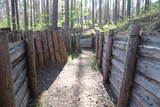 |
Ar Kara muzeja informatīvo atbalstu Garā kāpā pie Antiņiem ir rekonstruēta daļa latviešu strēlnieku nocietinājumu sistēmas. Aspkatāmas ierakumu pozīcijas un vairākas zemnīcas. Netālu atrodas bijusī un no dzelzsbetona veidotā medikamentu glabātuve. |
|
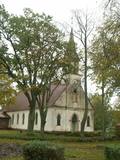 |
An ancient territory inhabited by Livs already since the 5th – 6th century. In 1226 Bishop Albert built a castle on the right bank of Salaca river estuary, which has not been preserved until now. Salacgriva development also (similar to Ainazi) has been associated with the establishment of the port in the turn of the 19th – 20th century. Salacgriva became an important handling and transport hubs of products manufactured in Northern Vidzeme (especially timber). During the Soviet period, in the Northern part of Salacgriva established the Fishermen Park with one of the best small town stadiums and open air stage. During that time, the products of fish processing plant "Brīvais vilnis" was well known in the territory of USSR - especially sprats. Salacgriva is one of the two places in Latvia, where the weirs are still used for lamprey fishing. |
|
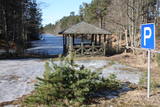 |
The Vecročupe river flows out of the artificial Vaide pond. It was created by blocking the Vaide and the Kukšupe rivers. This happened during the Soviet occupation, when forestry people decided to establish a fishing pond and an area for recreations. A wooden pergola has been installed at the pond, and there is an information stand, as well. On the northern shore of the pond is the Vaide cemetery, which dates back to 1928 and has interesting wooden crosses. |
|
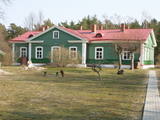 |
This is about 30 km long territory between the Baltic Sea and the Kolka-Ventspils road. It begins at the mouth of the Irbe River and ends at Ovišrags. The territory was mostly established so as to protect dry coniferous forests, grey dunes, damp areas among the dunes, other landscape features and plants and animals in the area. Distinctive landform - kangari and vigas - and grey dunes are Europe-wide significant habitat. Tourists love the sandy and quiet beaches of the area, as well as the Miķeļbāka and Ovīši lighthouses (it is possible to visit Oviši lighthouse and museum in it) and the Lutheran Church at Miķeltornis. There are also certain leftover elements of the Soviet military system, former narrow gauge railway (railway embankment, former train stations marked by memorial stones etc.) which unfortunately are not used as tourism resources. |
|
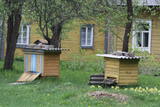 |
Ja mērķis ir savākt pilnvērtīgu etnogrāfisko ciemu fotokolekciju, ir jāapskata Strazdi (no lietuviešu valodas strazdai tulkojumā nozīmē strazds), kas ir pavisam neliela apdzīvota vieta Balošas (Baluošas) ezera ziemeļu krastā. Strazdi pirmoreiz rakstos minēti 1783. g. un ciema nosaukums cēlies no kādas mežziņu dzimtas uzvārda. |
|


