
| No | Name | Description |
|---|---|---|
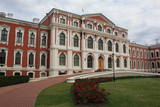 |
The Jelgava Castle stands between the Lielupe and Driksa rivers. The Baroque castle was designed by the well known Italian architect Francesco Bartolomeo Rastrelli, and this was the most important piece of early work that he did. The Latvian Agriculture University is housed in the castle today. A museum was established in 1968. +371-6300-5617. The socle story of the south-eastern wing has the graves of rulers from the Duchy of Courland – members of the Kettler and Byron dynasties, which ruled from 1569 to 1791. There are 18 restored sarcophagi here. |
|
 |
For the groups of gourmandes the owner offers to participiate in different culinary workshops (2-3 hours): „The sweet cake workshop”, „The untraditional seasonal vegetable foods workshop”, „Pizza workshop”, Preparing hemp butter”, etc. Those who don’t wish to cook themselves are offered a lazy countryside dinner in combination with watching the farm, the grapes garden and talks about countryside life. |
|
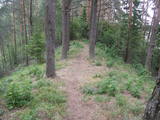 |
This is another so-called hill left behind by the Ice Age – five kilometres long with a height of between 15 and 30 metres and with high hillocks and steep hillsides. Te most distinct part of the hill can be found between Lake Pinti and Lake Šeški. The pine forests on the hillocks are a habitat with many rare and protected species. A trail has been established to tour Grebļa Hill, as well as Āža Hill and Kausu Hill, but it is recommended that visitors travel the trail in the company of a guide. The biological diversity of the area is made clear if one knows, for instance, that more than 500 kinds of butterflies have been found in the restricted territory.
|
|
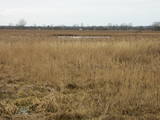 |
Most of this restricted area is made up of a shallow and eutrophic body of water in which many species of birds, including some that are rare and protected, nest. Specialists say that anywhere between 150 and 450 pairs of black-headed gulls nest in this area on a regular basis.
|
|
 |
Peaceful place in nature for great relaxation. Food is prepared from the local ingredients of Hiiumaa according to the preferences of guests. In addition, you can enjoy a genuine wood-heated sauna and bathing barrel, children's playground. |
|
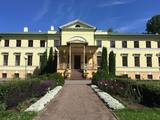 |
The Naukšēni People’s Museum, where we tell intelligent people about those who were born at the NAUKŠĒNI DISCO, arrived here and stayed here. We’ll look at how they talk, sing, think and love. |
|
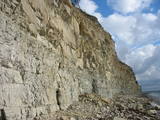 |
The highest and most beautiful wall of cliffs on Saaremaa Island (up to 21 m high), stretching along some 3 km. During strong winds from the W or NW, a part of the cliff is washed by the waves of the sea. The open face of the cliff has limestone, marls and dolomite, and there is a wealth of fossils at the base of the cliff – corals, stromatoporids, etc.
|
|
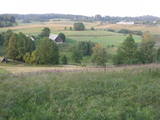 |
This restricted area protects the highest hillock in the Alūksne highlands – Dēliņkalns Hill – as well as the biotopes on its hillsides. The local landscape is also protected. Downhill ski trails are on the mountain, and its southern side offers lovely views.
|
|
 1 day
|
From Kaberneeme the route runs through a forest where you can see piles of stones carried here during the last ice-age. The trail soon climbs about 20 m up to the hiking trail, which runs on the old shore line of Lake Ancylus. The trail continues to the Linnamäe HES and a suspension bridge. Follow the trail over the ancient fortress hill of Linnamäe and continue on the right bank of the River Jägala, until reaching the Jägala waterfall. This is the highest natural waterfall in Estonia, more than 8 m high. The Suka bridge is about 500 metres up from the waterfall. After crossing the river, the trail passes through the Jägala waterfall park. Finally, the trail runs through the village of Koogi and arrives at Jõelähtme. |
|
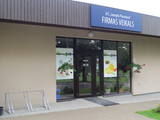 |
The Jaunpils Dairy was opened more than 100 years ago, in 1912, and it produces semi-hard and soft cheeses, cottage cheese, cream, desserts and other dairy products. Only milk from Latvian farmers is used, and the products are exported to more than 17 countries in the world. Products are also sold at the store that is adjacent to the company. |
|
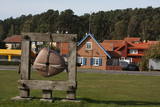 |
Old fishermen village, which was first mentioned in 1429. Before WW2 Juodkrante was popular resort in Europe and it still has its traditions nowadays. Village has an unique scenery with its wooden houses, promenade, Lutheran Church (1885), Lithuania's Art Museum Hall and much more. |
|
 |
The restaurant is situated on the premises of the hotel Kolonna Hotel Rezekne, which is situated in the very centre of Rezekne city, on the bank of the Rezekne River. The restaurant has an attractive interior design. A summer terrace offers a view of the promenade along the Rēzekne River. Guests are offered ancient Lettigalian dishes made from local ingredients. |
|
 |
Atrodas Rendā, pie tilta pār Abavu. Mazs, jauks krodziņš, kas atrodas vēsturiskā ēkā ar patīkamu interjeru. Piemērota maltītes ieturēšanas vieta ne tikai tiem, kas pārvietojas pa ceļu, bet arī Abavas laivotājiem. Strādā g.k. vasaras sezonā. |
|
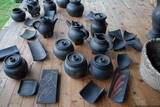 |
The attractive potter is a member of the “Potter School,” and he uses knowledge from his ancestors. The “Malny Wylky” workshop offers a look at traditional pottery work, including a foot-powered potter’s wheel and a firing pit that uses firewood and the smoke technique. You can examine and purchase the finished products. Vēsma, in turn, is an oil painter and will demonstrate her artworks. |
|
 2 days
|
This route leads through the Curves of Daugava nature park, which is an area that was once to be flooded for the construction of the Daugavpils hydroelectric power plant. The central artery in the park is the ancient Daugava River valley, and the specific here is eight grand curves with a length of 4-6 km. The highest banks of the river are at the so-called Daugava gate, with the mighty Ververi and Slutiški cliffs. More than ½ of the territory is forested for hiking, nature watching, berry picking and mushroom hunting. The Daugava River valley has one of the greatest diversities of flora -- >800 different kinds in all. This is also a multinational environment with Lettigalian, Lithuanian, Polish, Russian and Belarusian traditions and heritage. The Slutiški village, which is unique in Latvia, is popular among tourists. Route information from Latvijas Lauku forums |
|
 |
Öun Drinks makes refreshing lemonades and ciders from Estonian apple juice. You will also see the lemonade making process. You can taste and buy it to enjoy at home. |
|
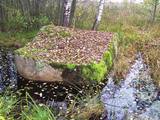 |
Platais Boulder (Wide boulder). You can find it in the rural municipality of Mākoņkalns not far from a
small meadow close to the boulder of Āžmugura. Both the boulders have their legends. Some say that the
boulder of Āžmugura is the part of Platais boulder and the rainwater from its cavity heals the warts.
|
|
 |
The former Ķemeri swimming facility used
to have a building of wooden bathtubs in the
19th century. The mud treatment facility which
is designed in the style of Classicism was
erected in 1924. The Ķemeri clinic was opened
here after World War II. A monument to Ivan
Pavlov, a distinguished Russian doctor and
physiologist is on the western end of the ruins,
and no one has taken much care of it, either.
|
|
 4 days
|
Салаца с точки зрения водного туризма является интересной рекой, на которой даже в период маловодья будут радовать береговые ландшафты и объекты осмотра, а также многообразие самой реки. Для похода на лодках самыми привлекетельными будут окрестности Мазсалацы и участок Мерниеки – Вецсалаца, где на карте видны топонимы, связанные с заколами. Заколы (лат. tacis) – бывшие места ловли миноги – это та уникальность, характерная только для Салацы на участке реки ниже впадения реки Иге. В наши дни о прежнем существовании заколов свидетельствуют топонимы – Гедерту тацис, Жвигулю тацис и др. Заколы для миног строили в местах, где река самая мелкая, самая узкая, более богата островами и стремнинами, поэтому топоним «тацис» означает также самые интересные обстоятельства для сплава. Сами заколы сохранились только в нижнем течении реки у Салацгривы. Ночлег в основном на стоянках для водных туристов (в палатках). Маршрут проходит по территории Северовидземского биосферного заповедника. Информация о маршруте от Latvijas Lauku forums |
|
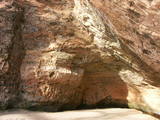 |
For more than a century now, the Gūtmaņa cave has been a popular tourist destination. It is the widest (12 m) and highest (up to 10 m) cave in Latvia. It is more of niche, actually, because its depth is just 18.8 metres. The cave is an interesting geological monument, as well as an important cultural and historical place with lots of legends, among which the most popular one centres on a woman called the rose of Turaida. It seems, however, that of the greatest historical values are the engravings on the walls and ceilings of the cave. The oldest date back to the late 17th century. A stream flows out of the cave, and it continues to shape it. People believe that the water from the stream has medicinal properties. Nearby there is Tourist Information Centre Gutmanala. Office hours: 01.05.-30.09. from 9.00 – 19.00; 01.10.-30.04. from 9.00 – 18.00. Prices for parking: 1 car EUR 2,50; 1 minibus EUR 5,00; 1 bus EUR 7,00. |
|


