
| No | Name | Description |
|---|---|---|
 |
The saloon is in the most popular pedestrian thoroughfare in Jūrmala. The wooden building is typical of the town, has a nice interior and offers Latvian cuisine. The saloon offers the largest selection of Latvian draft beers. Latvian cuisine: Lamprey chops, pike haché, potted lamb a la Courland, sautéed pork ribs, fried Baltic plaice, bread soup. |
|
 |
Die Ruinen der um 1500 gebauten eindrucksvollen Kirche, die man besichtigen kann. Das Gebäude wurde nach dem Luftangriff 1942 beschädigt. |
|
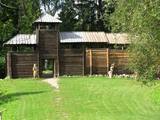 |
Kassinurme hills were formed during the last Ice Age, and an ancient stronghold and a sacred grove can be found in the hills. At the foot of the stronghold a stage has been built; a swing, tepees, a campfire place and a model of the stronghold are located in the forecourt. Nature, health and antiquities trails are located nearby. |
|
 |
The saloon is on the edge of the Murjāņi-Valka road (A3) in a two-story log building with a terrace. The interior design of Mazais Ansis fits the aura of a massive wooden structure and it is possible to look at old times’ instruments, household goods and harnesses. There is also a very valuable wooden wheel, which is one of the very few in Latvia. The saloon offers a sauna, a location for campfires and a children’s playground. It works with local farmers and manufacturers. Latvian cuisine: Valmiera salad, boiled tongue, grey peas, farmer’s breakfast, cold soup, filet of pike, roast lamb, grilled pork, stacked rye bread, strawberry crème with jam, rye bread, herbal teas. Special foods: Beef filet with potato pancakes. |
|
 |
A former manor barn, located by the lake in Raiskums, 8 km from Cēsis, where bread and beer is made. Offers beer brewed according to ancient traditions, bread and smoked meat prepared following the recipes of ancestors. Bread is cooked in a wood oven with natural sourdough. The special taste is obtained in the wood-fired beer brewing pot and old countryside bread making oven. Guided tour and tasting. |
|
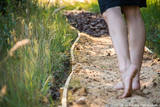 |
Enjoy nature with all of your senses in the Survilai village tourism farm, which is a Swiss village in the Jonavos district. Walk down paths barefoot! The paths are covered with pine cones, puddles, peat, clay, granite, smooth glass, pine needles, hay, an obstacle course, etc. The path is more than a kilometre long, and you will feel unbelievable and positive emotions, as well as an inflow of energy. |
|
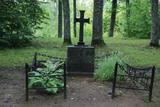 |
To the North of the Cesvaine Castle is a park that is crossed by the rapidly flowing Sūla River. The Cesvaine castle hill is on the northern bank of the river, is around 15 m high and is covered by trees today. The grave of the owner of the castle, Adolf von Wolff, is there. It is said that he wanted to have his casket dragged to the gravesite on a sled. He died during the summer, but that was done anyway. The park features a wide diversity of trees and bushes, some of which the owner brought home from his extensive travels. |
|
|
|
The town of Subate was first listed in documents in 1570, when Duke Gotthard Kettler of the Duchy of Courland sold the Subāte marketplace to Count G. Plater-Sieberg. When the Plater-Sieberg dynasty converted to Catholicism in the mid-17th century, Lutherans in Subate protested by moving to the eastern bank of Lake Subate. That was the property of the Prode Estate (only ruins remain at this time), which was owned by the Osten-Sacken dynasty. In 1685, the Osten-Sackens built a Lutheran church for the “refugees,” and Jaunsubate was established around it. Both parts of the town were merged again in 1894. During Latvia’s liberation battles in 1919, Subate was liberated by Lithuanians, at which time the town was divided up between Latvia and Lithuania (though the border between the two countries was set at the previous line in 1921). The historical centre of Subate was established between the 16th and the 19th century, and it includes four churches for various congregations and low wooden buildings which stretch along narrow and curvy streets. The town is on the shores of a sub-glacial depression with Great Lake Subate and Lesser Lake Subate therein. This provides the town with unusual landscapes for Latvia. |
|
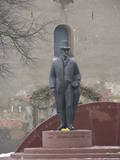 |
Opposite the tower of the Church of the Holy Trinity, the monument was designed by Arta Dumpe and commemorates Latvia’s first president, Jānis Čakste (1859-1927). It was consecrated on November 14, 2003, precisely 81 years after the statesman was elected to the important position. |
|
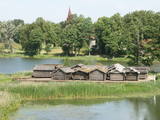 |
The Lake Castle of Āraiši is of pan-European importance. It is a reconstructed Lettigalian lake castle from the 9th or 10th century, and it is the only place in the Baltic States at which visitors can learn about how people lived more than 1,000 years ago. The castle offers various thematic events. |
|
 |
Atrodas ļoti skaistā vietā – Krimuldas muižas kompleksa teritorijā, vienā no muižas vēsturiskajām ēkām. Mājīgs interjers, mākslinieka J. Annmaņa apgleznotas sienas. Piedāvā turpat muižā darinātos mājas vīnus un „Muižas stipro”. Garšīgas tējas, uzkodas un siltie ēdieni. |
|
 |
The farm grows herbal tea plants such as blue dragon, purple cornflower, peppermint, and lavender, as well as other plants. It also offers cosmetics such as the Beāte line of facial creams, as well as cornflower eau-de-toilette. You can take an informative tour, taste delicious teas, and purchase the cosmetics. |
|
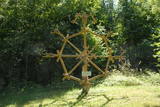 |
Folkloras taka "Jāņkalni" iepazīstina ar mūsu senču rakstiem, zīmēm un dievībām, kas ir mūsu folkloras mantojums. Folkloras takas (garums: apm. 1,5 km vai 2 stundas) mērķis ir arī iepazīstināšana ar senlatviešu ieražām, folkloru, kā arī tautu dainu izprašana. Piedāvā iziet Latvijas karti - labirintu ar 19 etnogrāfiskajiem novadiem. Gids Jums sniegs izsmeļošu stāstījumu un atbildes uz interesējošiem jautājumiem.
|
|
 |
The New Sigulda Castle was built between 1878 and 1881 for Prince Kropotkin. Its tower was extended in 1937. From 1923 until 1940, the building was known as the Writers Castle, and it was managed by the Latvian Press Association. During the Soviet era, a cardiology sanatorium was housed there. In 1993, the Sigulda City Council took over the castle, and since 2003 it has been home to the Sigulda Administrative District Council. The wooden residential building (mid-19th century) in which the Kropotkin family lived still survives, as do the granary (late 18th or early 19th century), the gardener's house (19th century), and the stone wall (19th century). The New Sigulda Castle is part of the historical centre of the Sigulda, Turaida and Krimulda complex, as are the ruins of the Sigulda Castle and the Krimulda Castle, the Krimulda Estate and the Turaida Castle. |
|
 |
This weekend home is in a lovely location near the reservoir of Rugāji. The owner breeds and processes fish and serves Lettigalian foods. He also works with local farmers and fishermen. |
|
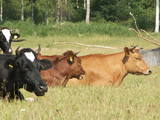 |
The farm grows peas, grits and beans, and it breeds cattle. Visitors can take a tour to learn about biodynamic agricultural techniques. |
|
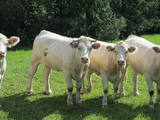 |
The farm produces vegetables, medicinal plants and honey. You can look at Charolais cattle and buy products. The lady of the house will talk about her experience in relation to her farm and biological farms that are in the neighbourhood. |
|
 |
Skaidrīte Bauze is one of Latvia's most famous mitten knitters, with more than 185 pairs of mittens in her collection to demonstrate the wide range of Latvian ornaments and colours. Visitors can look at the collection, listen to information about it, and look at a garden with many different plants and wooden sculptures that are the work of the owner of the farm, Haralds Bauze. |
|
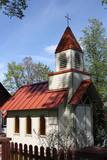 |
Preiļos, blakus viesu namam „Pie Pliča” (Raiņa bulvāris) ikviens var apskatīt un ieiet Latgales un Latvijas mazākajā dievnamā – kapelā. |
|
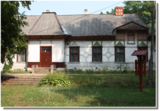 |
Zosna (Veczosna) Manor. The building is surrounded by a small park near the bank of Lake Rāzna.
There are 39 different species of trees and bushes. It was built in 1870 by the order of duke Goļicins. It is
one of the rare truss buildings in Latgale.
|
|


