
| No | Name | Description |
|---|---|---|
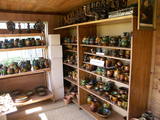 |
The workshop offers ceramics products. You can watch the potter at work and try your own hand at the craft. You are also welcome to attend the opening of the kiln. |
|
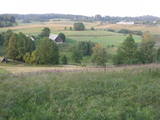 |
This restricted area protects the highest hillock in the Alūksne highlands – Dēliņkalns Hill – as well as the biotopes on its hillsides. The local landscape is also protected. Downhill ski trails are on the mountain, and its southern side offers lovely views.
|
|
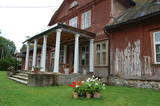 |
The mansion of Uue-Varbla Manor houses the local history museum which presents local life from the early 20th C and history of Varbla municipality. There is a handicraft workshop in the museum, while old tools and machinery are exhibited in the granary. The mansion in early Classicist style from 1797 is an attraction in itself. Traditional handicraft fairs are held in the grounds in July every summer. |
|
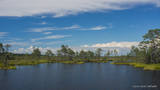 |
Durch das höchste Dünen-Massiv Estlands und den Moor führt der Lehr-Wanderweg. Blick vom Aussichtsturm bis auf die Insel Kihnu. |
|
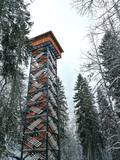 |
Dabas liegumā "Lielie Kangari" atrodas 33 metrus augsts skatu tornis, kura virsotnē atrodas platforma, no kuras paveras skats uz Kangaru ezeru un Lielkangaru purvu. Dabas liegumā izbūvēta arī nepilnu divu kilometru gara pastaigu taka ar tiltiņiem un skatu platformu pie ezera. Takas sākumā izvietotais veselības maršruts ikvienu apmeklētāju aicina kārtīgi izvingroties un izkustēties. Apmeklētāju informēšanai un izglītošanai visas takas garumā izvietoti arī informatīvie stendi ar fotogrāfijām, kas apvieno varenu stāstu un teiku kopumu par notikumiem, vietām, tēliem un parādībām dažādās apkārtnes vietās. |
|
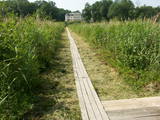 |
The best place to look at the restricted area of the Vīķi swamp and the Lielauce lake which is in the middle of that swamp is the Lielauce castle, where a wooden pathway stars. The pathway will lead visitors across the swampy shores of Lake Lielauce and deliver them at a boating area on the open part of the lake. The swamp itself is to the South-east of the lake. The restricted area is there to protect biotopes and species in the area. |
|
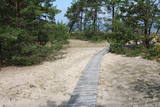 |
The trail (the length 1.2 km) introduces with the habitats of dunes and century-old pines, partly covered with sand. Biologists estimate that the oldest tree, the “mother of pines”, could be around 200 years old. Coastal pine forests serve as a barrier between the sea and land protecting inland areas from impact of the sea and winds. Felling coastal forests was forbidden by law already back in 1643, during the Duchy of Courland. Still due to economic activities, the seashore forests were often fell and fires occurred there occasionally. As a result, the sand which had for centuries been hold by trees, started drifting at Cape Kolka. In the 1930ies, there were about 142 hectares of sandy areas in the Slītere National Park, and 11.5 hectares of those were drifting sand. To stop drifting, the sand areas were carefully afforested. Afforestation was started before WW I and it was completed in the 1970ies. To plant new trees, first the sand had to be stopped. Just 26km to the south from Kolka there was one of the largest sand dunes in Latvia, 25km in length. Every year it devoured 0.3 hectares of land. The sand was stopped covering it with heather, twigs and branches of pines and junipers. Pine trees were planted between them. Today in Kolka, the old, low pine trees tell about the once drifting sand. After storms, when the water washes the bluff and tree roots are exposed, one can see that the tree trunks once have been covered with sand more than 1 meter high. The trees on the seacoast usually have crooked trunks and flag-shaped crowns formed under influence of persisting sea winds. Now these forests are designated biotope “Wooded dunes of the coast”. Stable white dunes (biotope 2120) do not form in Cape Kolka as they are washed by sea waters during spring and autumn storms. Embryonic dunes develop here (code 2120) with plants that usually grow in dunes. These plants have adapted well to poor soils, heat, drought, and the saline sea water. The Kolkasrags Pine Trail is in Slītere National Park. |
|
 |
Einer der ausgeprägten Kaps der lettischen Küste mit Niederungsauen und einem in 1875 gebauten Leuchtturm. |
|
 |
Lina, vilnas apģērbu šūšana, galdautu, dvieļu, jostu u.c. tekstilizstrādājumu šūšana. Tērpu darināšana nav tikai darbs, bet arī aicinājums. Tas palīdz izgatavot vissarežģītākās tērpu konstrukcijas. Nemitīgā zināšanu papildināšana kursos ļauj veiksmīgi dzīvot līdzi mainīgajām modes prasībām. Paralēli individuālajiem pasūtījumiem tiek izgatavoti gan apģērbi, gan citi šūtie izstrādājumi tirdzniecībai. |
|
|
|
In terms of territory, it is the most impressive dune range in the Baltics. This is the only place in the Baltics, where one can enjoy open dune sands that are still active and, under the influence of wind, form the so-called eolian relief forms. There are trails, wooded trails and a paved bikeway for the conveniences of visitors. In order to protect the dune, The Dunes of Curonian spit National Park has been established . |
|
 |
This site features a folklore trail to explain the content of ancient writings, symbols and folk songs. Visitors can learn about the importance of plants in human health, sing songs and play games. On offer are various lifetime rituals, including baptism and so on). There are fire and sauna rituals and annual festivals. Register in advance for a traditional meal. |
|
 |
Уютное кафе в центре Тукумса. Время работы: пн. – сб. с 10:00 до 18:00; вс.- закрыто. |
|
 |
The Iesalnieki-1 farm is in the Vietalva Parish in the Pļaviņas Administrative District. It grows rapeseed, barley, wheat and grasses on 180 ha of land. The farm is run by two brothers who manage more than 800 ha of land in all. |
|
 |
The café is in the centre of Lielvārde and offers a full feeding service, including breakfast, dinner, supper. Latvian cuisine: Cold soup, fresh cabbage soup, baked carp or catfish, steak haché, grey peas with bacon, pancakes. |
|
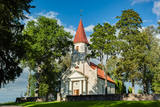 |
Pastāv uzskats, ka tieši Rubenē izveidojusies pirmā latviešu draudze. Baznīcas altārdaļa būvēta jau 14.gs., bet pati baznīca savu pašreizējo izskatu ieguvusi 1739. gadā.Būtiska baznīcas interjera sastāvdaļa ir Ķieģeļu muižas mantinieces Barbaras Helēnas fon Budbergas 1762. gadā dāvinātais kroņlukturis ar Krievijas impērijas divgalvaino ērgli un zaru ornamentiem uz bumbas. Baznīcā redzama arī zīme (1869. g.), kas ir veltīta pusgadsimtam kopš dzimtbūšanas atcelšanas. Pastāv vairākas teikas par Rubenes baznīcas nosaukuma rašanos. Viena no tām vēsta, ka, sargājot baznīcu no velna, tās sienā iemūrēta sieviete un vīrietis, kura vārds bijis Rubens. Baznīca esot nosaukta viņam par godu.Vēl viena versija vēsta, ka baznīcas nosaukums cēlies no rubeņa, kas sēdējis kādā no kokiem, kas vēlāk izmantots baznīcas celtniecībā. |
|
 |
Aiz Jodkrantes (Nidas virziens) ceļa labajā pusē ir izveidots autostāvlaukums un labiekārtota vieta, no kuras apskatāma Lietuvas (atrodamas ziņas, ka arī Eiropas) lielākā zivju gārņu Ardea cinerea un jūras kraukļu Phalacrocorax carbo kolonija, kur kopā varētu būt ~ 3000 putnu. Neaizmirstiet līdzi paņemt tālskati! |
|
 |
The pizzeria is situated in Talsi, not far from Talsu lake. Stender’s pizzeria with its nice comfortable setting offers special Stender’s pizzas which are baked according to the old traditions of pizza-making, incorporating the best of nowadays’ recognitions. Undoubtedly, it is impossible to do without pancakes and pots, as well as second-course dishes. Number of seating places:30 |
|
 |
"Piebalga medus" is located in Vecpiebalga region, turning off the highway Cēsis – Vecpiebalga – Madona (P30). Beekeeping, apitherapy and narration "About and around bees". Tasting and purchase of beekeeping products. A candlestick workshop is available for visitors. Especially with the fact that the apiary only with Latvian hives. |
|
 3 days
|
This is an easy 3-day route, suitable for any traveller ready to take some steps outside the capital and get into the woods. You will start the tour by taking a train from Rīga to Ķemeri. The walk will start in the Ķemeri resort park leading to the legendary sulphur spring and continue to the “Forest House” – the visitor’s centre of the Ķemeri National Park. The park is established for the protection of mainly wetlands – the shallow coast of the Gulf of Riga, the overgrown seaside lakes, the vast marshlands, mires (forests) and flood plans. Besides, there is the wooden plank Melnalkšņu swamp forest trail. Next, the Forest Trail takes one to the Lake Sloka, a shallow coastal lake with rich aquatic plants, sulphur springs and important migratory bird rest areas. On the banks of it, there is a 7 m high floating bird-watching tower. Further, the Forest Trail runs to the Gulf of Riga in the small fishermen village of Bigauņciems, where it joins with the Baltic Coastal Hiking Route (E9 European long distance path). From there on, the trail runs along the coast direction Jūrmala – the most popular resort town in Latvia with the widest sandy beaches. The tour ends in Ragakāpa Nature Park, which is established to preserve the dunes covered in old pine forests and natural diversity of the seaside. The Jūrmala Open-Air Museum is a place to get to know a traditional local fishermen’s farmstead. |
|
|
|
Located at the Lake Burtnieks southern shore, these are wetland meadows which are regularly flooded and which are important places for various birds, including the corn - crake, to nest. This is part on the environmentallyrestricted area which covers the meadows of Lake Burtnieks. |
|


