
| No | Name | Description |
|---|---|---|
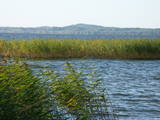 |
A beautiful part of the Rēzekne-Dagda-Krāslava road – along two km or so, you can see Lake Rāzna and Mākoņkalns hill, which is 10 km away on the other shore of the lake. |
|
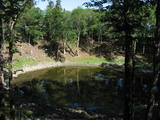 |
This is actually a group of nine craters, and some of them are as much as 100 m in diameter and 16 m in depth. This is the most visually expressive meteorite crater in the Baltic States and, indeed, in all of Europe. Remnants of the meteorite – some 2.5 kg in all – yielded iron and nickel. It is thought that this pan-Baltic natural catastrophe occurred 2,600 to 4,000 years ago. Kaali Visitor Centre comprises the meteoritics and limestone museum, a conference hall and a hotel.The museum exhibits genuine meteorite pieces amongst other items. The hotel has all modern conveniences, tasty food is provided at Kaali Tavern nearby. |
|
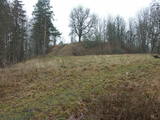 |
The Buse (Matkule) castle hill is near the Imula River. From the castle hill and from the opposite shore of the river, you can find one of the loveliest views of Kurzeme’s small rivers. Their appearance is best when trees and other flora are bare and the view is unimpeded. A wonderful view of the Imula valley is also seen on the road to the castle hill – near the Buse homestead.
|
|
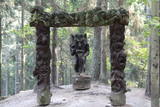 |
Eine große parabolische Düne mit einer Ausstellung der Holzskulpturen unter freiem Himmel, die der litauischen Mythologie gewidmet sind. Die Skulpturen haben litauische Meister der angewandten Kunst angefertigt. |
|
 |
Gallery Voronja is an art gallery where a high-quality international art programme is offered and every summer Onion Road is organised. The small garden café operates in the gallery every day with a menu inspired by local ingredients and additional flavours from the city environment. Customers can buy Voronja onion jam, chocolate sauce and other seasonal products.
|
|
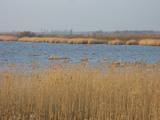 |
A shallow, eutrophic (more than 60% coverage), lagoon-type lake, which is a restricted area to protect the overgrowing lake and the damp meadows which surround it. There are some 60 species of nesting birds in the area. The system of dams on the southern shore of the lake can be used by visitors to look at the area.
|
|
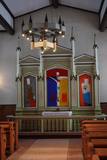 |
It is said that after a shipwreck near Cape Kolka, a rescued Danish tradesman financed the building of a church in Kolka in thanks for his rescue. There are several churches in Kolka which have changed their location. The stone worship house that can be seen today has foundations that were laid by the former owner of the Dundaga Estate, Karl Ludwig Ferdinant von der Osten-Zaken. The church was built at or near the site of an old wooden church which suffered much damage during the Crimean War. The work on the church was begun by builder Oto Zīverts in 1885 on the basis of a design by the architect T. Zeiler. During the Soviet era, the church was vandalised, and a warehouse was installed there. It is worth looking at the modernist altar painting by Helēna Heinrihsone. It is said that there is no similar painting in any other church. Before the painting was hung, a cross hung at its location. |
|
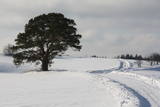 |
This is an unusually shaped pine which, according to legend, was planted by the king of Sweden during the Great Northern War.
|
|
 |
Atrodas skaistā vietā – pašā Daugavas krastā. Ēdina, klāj galdus, piedāvā braucienus ar kuģīti pa Daugavu. |
|
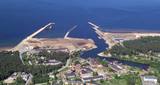 |
In the 19th century at the seaside of Skulte, a small village formed, which was inhabited by fishermen. The name “Zvejniekciems” (Fishermen’s village) arose from the population's main activity. In 1967 the Skulte part of Zvejniekciems was added to the Saulkrasti township. Nowadays Zvejniekciems is the home of Skulte Port, and the rocky beach of Zvejniekciems is located between the port and Saulkrasti Beach, while the village itself can be proud of the creative heritage left by the architect Marta Staņa (1913–1972). |
|
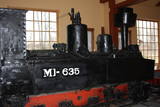 |
In 1916, during the German military occupation of Latvia, prisoners of war were put to work in installing narrow-gauge railroads via which the Germans exported Latvian timber. A narrow-gauge rail network was built through the forests and across the swamps of the Viesīte area. The track width was round 600 mm, and there was a total of 130 km of tracks to connect Viesīte (the central station) to Nereta, Aknīste, Jēkabpils and Daudzeva. The train was used after world War II to transport timber and passengers. The last trip along the line occurred on August 31, 1972.
You can tour the museum individually or with the assistance of a guide. You’ll see an Mi-635 locomotive, wagons for passengers and cargo, a platform to transport timber materials, and two trolleys.
|
|
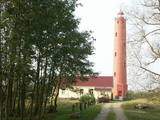 |
The lighthouse at Akmeņrags supported maritime navigation in Soviet times. Today it is controlled by the Latvian Maritime Administration. The lighthouse is open for visitors.
|
|
 |
A fish processing plant which has collapsed down to its foundations (it
ended operations in 1978)
|
|
 |
The craftsman uses wicker to produce chairs and tables, as well as wood to make household and practical objects. You can take a tour of the very neat farm, which features wooden sculptures. |
|
 |
Četrus kilometrus gara marķēta lokveida taka, kas ved pa lielāku meža masīvu, iepazīstina ne tikai ar augiem un dzīvniekiem, bet arī mežsaimniecības tradīcijām. Takas sākums atrodas pie nelielā Perejerves ciema, uz kuru paveras labs skats no tuvējā paugura. Pie autostāvlaukuma izveidota atpūtas un piknika vieta. |
|
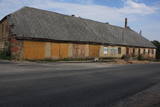 |
Atrodas Sakas un Liepājas ielas krustojumā. Ēka, kas šobrīd atrodas sliktā stāvoklī, celta 19. gs. vidū. |
|
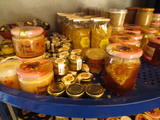 |
Old household where the owners are beekeepers. Upon request, provides an educational programme and visits for schools and events. |
|
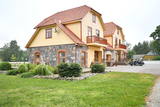 |
The dining room is located in the Kantküla former canteen premises, offering food from fresh, local ingredients. Dinner is served in buffet style, while in the summer season guests can also enjoy the a la carte menu or individually priced dishes. Accommodation and catering services are also provided. |
|
 |
Latvian blackhead sheep are in a clean environment at the Ances farm, which is in the Northern Vidzeme Biosphere Reserve near the border with Estonia. It is in the Naukšēni Parish, where chemical plant protection substances and mineral fertilisers have never been used intensively. The sheep roam freely during the winter and summer, with fencing to protect them against wolves and wild boar. The farm only uses female sheep born as twins or triplets, including animals for genetic resources. All of the sheep come from German blackhead sheep and are only mated with high-quality LT rams in January, February, August and September. |
|
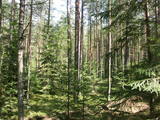 |
Ap 25 km gara un līdz 1,5 m plata vaļņveida reljefa forma Adzeles pacēluma dienvidu malā, kas apaugusi ar skujkoku mežu. Latvijā reti biotopi un nozīmīga daudzu aizsargājamu augu un dzīvnieku sugu dzīves vieta. Numerenes valni var ļoti labi "izjust", braucot pa Kārsavas - Tilžas ceļu. Dabas parkā atrodas slēpošanas kalns "Nūmerene".
|
|


