
| No | Name | Description |
|---|---|---|
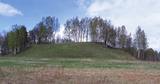 |
The castle hill of Spriņģi. It is located near Rēzekne town and it is
interesting with its peculiar shape of the ruins.Archeological monument of local significance.
|
|
 |
The cafe Baravika is situated in the centre of Rezekne city. It offers a wide variety of dishes. Working hours: Mon-Fri 8.30 līdz 18.00 |
|
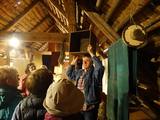 |
The museum at Egļava has an exhibition about forestry in Latvia before and after World War II. The exhibit features forestry tools and equipment, as well as textiles from the former Balvi District along with samples of ceramics and woodworking. The former forest ranger house has rooms to provide accommodations to guests. |
|
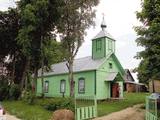 |
Uļjanova Old-Believers Prayer House was built in 1875. The house
is a modest building where everyone can come to confess. The Prayer House is not rich in decorations.
|
|
 |
Mācību drava "Kāre" piedāvā iepazīties ar bišu valstības noslēpumiem. Interesanta iepazīšanās ar brīnumiem un noslēpumiem bišu saimes dzīvē. Apmeklētājiem ir iespēja ietērpties speciālos aizsargtērpos un bitenieka vadībā iepazīties ar dzīvas bišu saimes smaržu. Veselībai un dzīvespriekam iespējams iegādāties - medu, bišu maizi, bet romantiskai noskaņai - smaržīgas bišu vaska svecītes. |
|
 |
This weekend home is in a lovely location near the reservoir of Rugāji. The owner breeds and processes fish and serves Lettigalian foods. He also works with local farmers and fishermen. |
|
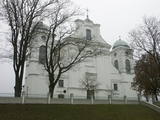 |
Dagda is mentioned in the historical sources of 17th century as a trader village. In 1772, Dagda district was included the Pskov province, but in 1802 - Vitebsk province. In 1905 widespread peasant unrest took place here, during which many important architectural monuments were destroyed. Town was not spared also by the two world wars. What's to see for the tourist here? In the centre of Dagda historical buildings - houses, built of red brick - the so-called "Jewish tradesmen houses" are preserved. Dagda is the only place in the Latvia, where every year is celebrated Anne's Day in the town's park! |
|
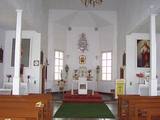 |
Holy Trinity Parish Catholic Church of Strūžāni was renovated
and sanctified in 1958. The church has no towers because they were not allowed in the time of the Soviet
Union.
|
|
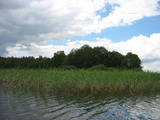 |
Of the many islands in Lake Rušons, ten are restricted natural areas so as to protect the broadleaf forests which are on the islands and the endangered plants found therein. An ancient cult location – the Rušons Sacrificial Rock – is found on Upursala island.
|
|
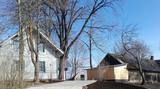 |
Guesthouse "Stikāni" is located in Rezekne district. The guesthouse has four comfortable rooms for two people and a dining room with an exit to the garden terrace. A knowledgeable guide will take you to the nature trail where you can learn about typical trees and bushes, popular and less known medicinal plants, nesting birds (during the summer) and impressive bird migration during the spring and autumn. |
|
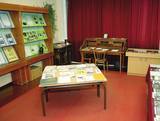 |
Local History Museum of Bērzgale was founded in 1988. There is
the memorial room of writer Antons Rupainis (1906 – 1976), the exposition of municipality history, its famous
people and cultural-historical traditions.
Working hours: Mon– Fri : 9.00 – 12.00,13.00 – 17.00, Sat., Sunday : on request |
|
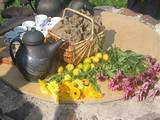 |
The Kurmīši farm grows medicinal plants in an ecologically pure and lovely nature park, "Curves of Daugava," which is part of the protected landscape area "Augšdaugava." Since 1994, the farm has produced approximately 40 types of medicinal plants so as to ensure the preservation of the farm. Enthusiasts and tourists can learn all about medicinal plants and how they are prepared. After the tour, you can taste and purchase Kurmīši herbal teas, which taste the best if you add honey from local beekeeping operations. Candles made of beeswax offer a special atmosphere. The farm has areas for relaxation and a facility where the candles are made. You can purchase a wide range of wax souvenirs and tour the beekeeping facility. The owner also offers guided tours of the arm. |
|
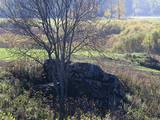 |
The Boulder of Purmaļi is the biggest boulder in Rēzekne district and one of the 20 biggest boulders in
Latvia. It is located on the escarpment surrounded by the trees and the bushes. Perimeter 18,5 m, height 3,2 m,
lenght 5,6 m, width 4,7, surface volume 30 m3.
|
|
 |
The restaurant is situated on the premises of the hotel Kolonna Hotel Rezekne, which is situated in the very centre of Rezekne city, on the bank of the Rezekne River. The restaurant has an attractive interior design. A summer terrace offers a view of the promenade along the Rēzekne River. Guests are offered ancient Lettigalian dishes made from local ingredients. |
|
 |
Produktu izgatavošana no ārstniecības augiem - tējas, sīrupi, augu pulveri, ziedes. Pakalpojumu piedāvājums - ekskursijas, radošās darbnīcas, meistarklases, pirts. |
|
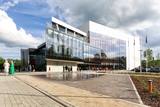 |
GORS, The Embassy of Latgale is located in the heart of Latgale region – Rezekne city. It is a place where the story of Latgale is both created and told. Cultural heritage and ancient values, traditions and creation, the language and events, the most significant global trends, art, culture, dance and songs converge here. A centre of culture, concert halls, film theatre, a place of residence for artists, an exhibition space for art, a restaurant for the enjoyment of life, a place for experiments with all the senses. |
|
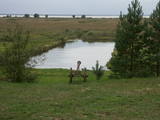 |
Along with the Nagļu ponds, these are Latvia’s largest fishing ponds. They were established on the flood-land peat areas of Lake Lubāns in the 1970s, when the hydrotechnical system of the lake was first established. The Lubāna-Gaigalava road bisects the Kvāpāni-Īdeņa ponds. There are three bird-watching towers on the dams of the ponds. The ponds are a major location for water bird nests, as well as places for migrating birds to rest. There are extensive bird-watching opportunities in the area.
|
|
 |
The Sutru Berry Garden is in the Sutru Parish in the Līvāni Administrative District. It grows blackberries in tunnels, which means that the berries ripen far more quickly than elsewhere in Latvia. You can purchase berries on site. |
|
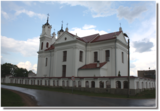 |
The Dviete Catholic Church is in the centre of the small village of Dviete. The white church can be seen from a distance. The first wooden church was built here in 1775 by the owner of the local estate, Count J.K. Wischling. Later the church was dismantled and brought the Zarinki cemetery. The Neo-Baroque Catholic church that is seen today has two towers, and its construction was financed by Count Kazimir Plater-Sieberg. The church was destroyed during World War I, and until it was rebuilt and consecrated, the granary of the Dviete Estate magazine, with its ridged roof, was used as a prayer house. It is on the side of the Dviete-Bebrene road and has recently been restored. In 1940, a stone fence was installed around the church with a tiled roof, and a building for the congregation was built in the 1970s. The church features a particularly ornate sacral Baroque interior, which is seen as the most ornate interior of its type in the former Daugavpils District. |
|
 |
Pirts rituāli, zāļu tējas, izglītojoša pastaiga dabā, siena viesnīca. |
|


