
| No | Name | Description |
|---|---|---|
 |
On the farmstead it is possible to look at sea-buckthorn plants, in August and September it is possible to take part in harvesting sea buck-thorns. The visitors will be told about sea- buckthorn, its growing and harvesting, its medical qualities and products. It is possible to see the production of sea-buckthorn products and try out the products themselves |
|
 |
The Ferris wheel that is in Sigulda is on the corner of Leona Paegles and Cēsu streets, and it is only open during the summer. If you ride the wheel, you can take lovely snapshots of the ancient Gauja River valley. |
|
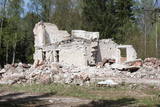 |
The communications facility in the forests of Bārta has been abandoned and is not being used other than for dismantling of buildings to obtain building materials.
|
|
 |
This garden on the banks of the Bērze River is known as a rock fairy tale and a miraculous garden. The garden has rocks of various forms and sizes, including milling stones, distance markers and border posts related to parishes. The exhibition is supplemented by decorative plants and compositions of plants that are the responsibility of the lady of the house. |
|
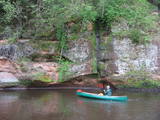 |
The Brasla River flows through a lovely valley that is approximately 300 m wide and up to 30 m deep. It is near the Inčukalns-Valka highway. The river has among the most beautiful rapids in the country, with mighty cliffs (the Brasla cliffs) that can be seen at nearly every curve in the river (except along the lowest reaches of the river). During the winter, various unusual frozen waterfalls can be seen in some of the cliffs, including the Krauļukalns cliff and the Jāņavārti cliff. On the left bank of the Brasla, opposite the Brasla fish farm, there are the Aņīte cliffs -- a series of sandstone cliffs that are 1 km long. The cliffs are between 2 and 35 m in height, and the sandstone cliffs are separated by ravines. On the right bank of the Brasla, there are major cliffs such as the Vāršavu cliff, the Kraukļukalns cliff, the Jāņavārti cliff, the Slūnu cliff, the Virtaka cliff and the Buļi cliff. How can you best learn about them? Boat down the river from the aforementioned highway or even from Straupe, which is further upstream. An alternative is hiking down the right bank of the river, though please take into account that the terrain is fairly extreme, and you are going to have to think about what to do when you arrive at the place where the Brasla River flows into the Gauja. |
|
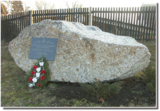 |
The memorial stone to Augusts Muižulis,a recipient of the Lāčplēsis Military Order, is placed in the Lapmežciems, at the edge of the road (P 128, Jūrmala-Talsi) at the marker for the 9th kilometre. A. Muižulis, (189 –1941) was a lieutenant colonel in the No. 4 Valmiera Infantry Brigade. The adjacent Tuteņi homestead is his native home. |
|
 8 days
|
The route brings you to Kaunas, multiple Lithuanian regional parks and allows to enjoy the landscapes of the river Nemunas. Kaunas is Lithuania’s second largest city. It is notable for its modernist architecture. The city is located at the confluence of the two largest Lithuanian rivers: Nemunas and Neris. Moving further from Lampėdžiai to Vilkija, the Forest Trail runs for two days along trails and small countryside gravel roads next to the right bank of the river Nemunas. This section is shaped by beautiful landscapes with views of the river, the waterfront meadows and small villages. Do not miss the ferry in Vilkija crossing over the river Nemunas, one of the few still in operation in the Baltic States. For the next two days from Vilkija, the Forest Trail runs through its most spectacular sections in the Dubysa Regional Park from Kirkšnovė to Šiluva with mounds on riverbanks and historical churches now and there. This regional park covers the impressive Dubysa river valley, which reaches a depth of 40 m and a width of up to 500 m. Be prepared for a rolling terrain. Next, the route will take you to the town of Šiluva – the Catholic pilgrimage site – and to the Kurtuvėnai Regional Park. It is among the most forested areas of Central Lithuania; thus, the regional park with its glaciated valleys is a wonderland of forests, waters and wetlands. The Forest Trail leads along small forest paths, tourist trails, beautiful tree alleys and wetlands. The walk ends in Šaukėnai village, from where the city of Šiauliai is easily reached. |
|
 |
The café, located between Talsi and Laidze, on the side of the Talsi-Upesgrīva highway (P127), offers traditional Eastern European lunch and dinner dishes. |
|
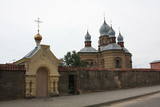 |
The Orthodox Church and Cloister of the Holy Spirit and the Orthodox Church of St Nicholas the Miracle Maker are found at Brīvības Street 200 in Jēkabpils. The Byzantine Church of the Holy Spirit was built between 1853 and 1886 to replace a wooden church which had been built in the latter half of the 17th century and burned down in 1773. Duke Jacob of the Duchy of Courland supplied the timber for the old church. The cloister was alongside the church. On Second Easter in 1903, the church caught on fire, and the only icon rescued was a painting of the Virgin Mary. The church suffered damage during World War I and was restored in 1933. Alongside the Church of the Holy Spirit is the oldest church in Jēkabpils – the oldest stone church in the city, which is named after St Nicholas the Miracle Maker and was erected in 1774. This is a very small church, just 17 x 19.5 m. The cloister of the Church of the Holy Spirit operates the church today, and it can be viewed from the inside. The stone fence that surrounds the complex is massive, but atypical of urban environments in Latvia.
|
|
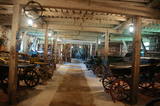 |
The museum is located in Pilkuse manor farm, exhibits on display are carts, carriages and sleighs along with accessories from horse collars to lap robes. Military, emergency and fire brigade carts are extraordinary and rare while a coach and a calash (barouche) are exhibits to be really proud of. Numerous agricultural tools and equipment also ensure hours of excitement and discovery in the museum. |
|
 |
В давние времена проспект Курмаяс был главной дорогой, ведущей на пляж. Вдоль проспекта стоят роскошные дома и виллы рубежа XIX – XX века, принадлежащие аристократам – обожателям моря и побережья. Здесь установлены отлитые в бронзе скульптуры из гимна Лиепаи «Город, в котором рождается ветер» - «Лодочник», «Янтарные латыши», «Ворона» и др. В конце проспекта возвышается памятник погибшим морякам и рыбакам (установлен в 1977 г.). Он символизирует женщину, которая ждет возвращения домой своего мужчины. На проспекте Курмаяс 16/18 находится Лиепайский историко-художественный музей. Музейный фонд (всего более 100 000 экспонатов)разместился в построенном в 1901 году в стиле эклектизма (с элементами готики) доме, который строился по эскизам берлинского архитектора Эрнеста фон Ине и проекту П. М. Берчи. В экспозиции представлена каменная стела – единственная подобного рода находка в странах Балтии с могильника под Гробиней (могильник Скандинавов). |
|
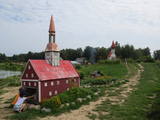 |
There are attractive and miniature structures and pastures here for 65 different types of rabbits. Children can look at the bunnies and form contacts with other animals such as goats and sheep. |
|
 |
The farm is located in a beautiful place, the food is delicious and the owners – very nice people. Guests are also provided with accommodation and a sauna. The farm grows and processes agricultural products. |
|
 |
The brewery is located in Upespils, Suntaži parish, Ogre district. IndieJānis Brewery is one person's foolishness, longing for life and cheerfulness, which is why the owner's main goal when brewing is to create a certain taste, regardless of the cost of the product. Beer can be purchased locally in brewery by prior contact, as well as in pubs - TAKA, Brevings, Zobens un Lemess, Vinilbārs, Alus Muiža, Miezis un kompānija, Valmiermuižas alus vēstniecība. |
|
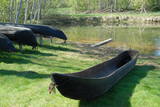 |
The Vienkoči Park features one-log objects manufactured by its originator. You can examine mock-ups of the Nurmiži Castle and other buildings including the Sand House, and you can also take part in thematic events. Men can produce equipment to drain birch juice from trees, wile women can try their hand at jewellery making from natural materials. People manufactured one-log objects during the Mesolithic Era, and one-log boats have been used since the 9th century (several of them can be seen at the park). |
|
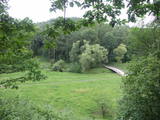 |
Svētkalnā atradusies krustnešu nocietinātā pils. Zemgaļiem to nebija pa spēkam ieņemt, tādēļ, nodedzinādami savu pili Tērvetes pilskalnā (1286. g.), tie aizgāja uz Raktes (Žagares) novadu Lietuvā. Kad Svētkalna nocietinājumi bija zaudējusi savu militāro nozīmi, krustneši to nojauca. 1701. g. Ziemeļu kara laikā Svētkalnā atradās zviedru armijas nocietinātā apmetne, no kā arī cēlies vietvārds. Domājams, ka pirms tam šajā vietā atradusies seno zemgaļu svētvieta. No Svētkalna paveras viena no skaistākajām un biežāk fotografētajām Tērvetes ainavām. |
|
 |
Pirtnieka pakalpojumi, dažādi pirts rituāli. Viesiem ir iespēja iegādāties produktus no ārstniecības augiem - tējas, sīrupus, ziedes, salātus; tāpat arī piedalīties radošajās meistarklasēs tinktūru, masāžas eļļu gatavošanā. Informatīvā lekcija par augiem un pirti, pirts rituāliem. Klusā meža ielokā pieejamas telts vietas, piedāvājumā arī kubla noma un pārvietojamās pirts mucas noma. |
|
 |
Latviskais pirts rituāls ozola ieskautā lauku pirtiņā. Pirts procedūrās tiek izmantoti dabīgi un pašgatavoti materiāli (augu un zaru slotiņas, skrubīši, lāvas paklājiņi, tējas u.tml.), skaņu instrumenti (sajūtu bunga, zvanga, lietus koki, zvaniņi u.c.), klūgu slotiņas, latviešu tautas dziesmas, labi un stipri vārdi. |
|
 |
The saloon is in the 250-year-old servants’ home of the Rundāle Castle, with a brick floor, pot-bellied stoves, a smokestack and other historical objects. Meals are served on antique dishes, and hot beverages are served in cups from the Kuzņecovs Factory. Latvian cuisine: Roast ham with eggs, potatoes with mushroom sauce, roast goose, crabs boiled with dill, pancakes with honey, bread soup with whipped cream, stacked bread, country teas, apple pie. Special foods: Pork shish kebab with oven-roasted potatoes. |
|
 |
The "Serpentīns" café is on the side of the Ventspils road (A10) and near the Strazde Lutheran Church. The lovely building has large windows. The café works with local farms and organises evenings of live music. Latvian cuisine: Oatmeal, potato pancakes, farmers’ omelettes, farmers’ breakfasts, baked cod, sautéed salmon, roast leg of pork, grilled pork with rhubarb sauce, hot rhubarb cobbler, Latvian beers. |
|


