
| No | Name | Description |
|---|---|---|
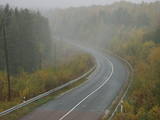 |
The tower is at the edge of the Dundaga-Mazirbe road, at the Šlītere Blue Hills. It offers a lovely view of lowland seashore forests, the local road, and a bit of the ancient shore of the Baltic ice sea.
|
|
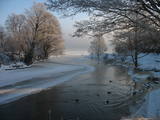 |
The Slocene River flows through Lake Valgums and Lake Mazezers before flowing into the western part of Lake Kaņieris. It is part of a branched and swampy delta in which there are seasonal restrictions aimed at protecting birds. The wetlands which are alongside the river are difficult to access in many places. Before the Starpiņupīte was dug between Lake Kaņieris and the Bay of Rīga (the water level is regulated with sluices), the water from the river flowed along what is now the Vecslocene River all the way to Sloka, where it ended at the Lielupe River. The Vecslocene can be used by canoe boats only when the water level is high and then from the Old Ķemeri road to the place where the river enters the Lielupe. Between Milzkalne and Lake Valgums, the river is not navigable because of many fallen trees. During the springtime, the estuary of the Starpiņupīte is a good place for bird watching. |
|
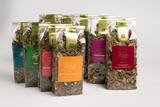 |
In the farm "Ozoliņi" organic tea is produced. With brand "Lauku tējas" tea has been sold in stores more than 17 years. Hostess is happy to share her knowledge through seminars and tea workshops. The farm is surrounded by forests and biologically valuable meadows where you can find up to 50 plants per square meter. |
|
 |
The factory produces milk candy “Gotiņa”, toffee, sherbet, marmalade and candy cream from natural ingredients. We obtain fresh milk from local farms; other ingredients for the production process are obtained in the surrounding area. Each piece of candy “Gotiņa” is hand-wrapped. |
|
 |
Aizaudzis un purvains ezers - Ļūbasts, ar grūti pieejamiem vai nepieejamiem krastiem. Dabas vērošanai šobrīd nepiemērota vieta. Galvenās aizsargājamās vērtības - dažādas putnu sugas, t.sk. dzērves un melnie zīriņi.
|
|
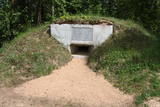 |
This testimony to World War II can be found in the Blīdene Parish. It is one of the very few objects of its type to still be in good condition.
|
|
 |
Cīravas muižas ūdensdzirnavas būvētas 1881. g., bet 20. gs. – pārveidotas. Šīs ir vienas no salīdzinoši retajām Latvijas ūdensdzirnavām, kas tādā apjomā saglabājušas vēsturiskos mehānismus. Apskatāmas no ārpuses. |
|
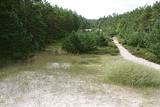 |
A shooting range which isn’t really there anymore, but it was once
used for training purposes by the Soviet military. Right now you will see
an overgrown area of land which stretches from the seashore to the
Kolka-Ventspils road. That’s where the shooting range was located.
|
|
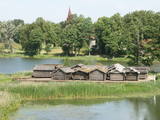 |
The Lake Castle of Āraiši is of pan-European importance. It is a reconstructed Lettigalian lake castle from the 9th or 10th century, and it is the only place in the Baltic States at which visitors can learn about how people lived more than 1,000 years ago. The castle offers various thematic events. |
|
 |
A small producer that grows strawberries on the farm, smokes and marinates fish Estonian style. Here, mead and house wine is also made, as well as various meat products. |
|
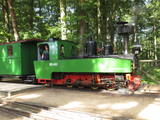 |
This little tram offers a great opportunity to return to history, when small trams were found all over Latvia. Until the 1960s, there was a narrow-gauge railroad that linked shoreline fishing villages along the shores of Northern Kurzeme. Only a few remnants of the old tracks can still be found in nature, and there are only a few train stations or parts thereof. Visitors to the Ventspils Open Air Museum can take the 1.4 km Circle Line or the 3 km Mountain Line. The locomotive was built in Germany in 1916, and the museum features a station building with all of its elements. |
|
 |
The saloon is opposite the Machinery Museum on the edge of Bauska. The nationally historical interior allows visitors to comfortably feel different than others. Latvian cuisine: Oatmeal, milk soup, pumpkin soup, cold beet soup, homemade steak haché, potato pancakes, crepes, bread soup. |
|
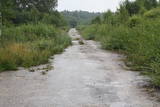 |
One of the largest tank bases in the Baltic War District was located during Soviet times just South of Gardene. The territory has largely been abandoned, and there are just a few remnants of the buildings that were once there. If you drive down the Dobele-Annenieki road, you will find a paved military road splitting off from it. It is still used today. The buildings and urban planning of Gardene are also of interest – during the Soviet era, soldiers and their families lived there.
|
|
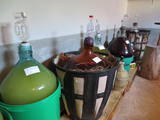 |
Tour groups with at least ten people can enjoy tastings of various homemade wines (23 types in all) that are made of fruits and berries – three types of wine each time. The owner will tell you about winemaking technologies and ways to drink and enjoy wine. |
|
 6 days
|
Onions, fish, villages that stretch out for several kilometres where the buildings are lined along the main street, ornate Old Believers' churches, small harbours with fishing boats and wooden houses, each painted in a different colour! Cafés, shops and a view of Lake Peipus, which looks more like a sea than a lake. This could be the description of this tour. This tour is a very interesting part of the Forest Trail, which will give you an opportunity to see and enjoy the Lake Peipsi region, the culture and lifestyle of local people as well as the nature. The tour will start in Tartu – Estonia’s second biggest city. You will go by bus from Tartu to Varnja where you will start to hike. During the tour you can visit Kostja’s onion farm, where the host welcomes guests and presents onion cultivation. It is also worth visiting the Chicory Museum in Kolkja to get acquainted with the history of chicory cultivation in row villages near Lake Peipus. You will also see Alatskivi Castle. In Avinurme we suggest visiting the Avinurme wooden handicraft centre and get acquainted with the local woodcraft, spend quality time in woodworking workshops and taste or even prepare yourself a selection of Estonian traditional foods. At the end of the tour you will return to Tartu by bus. |
|
 11 days
|
This tour of the Forest Trail covers the national parks of Dzūkija and Žemaitija and the Nemunas Loops Regional Park in Lithuania. The starting point of the route is Druskininkai, a popular SPA and mineral water resort on the banks of the river Nemunas. Here, we recommend dipping yourself in mineral water baths, enjoying the trip with the cable car over the river Nemunas, visiting the musical fountain, and walking along the river promenade. For the next two days from Druskininkai, the Forest Trail passes through the Dzūkija National Park to the town of Merkinė. In this most forested and unpopulated region in Lithuania you can enjoy hiking along solitary forest roads, visit ancient mounds and ethnographic villages, where the traditions of bee-keeping, crafts, mushrooms and berry harvesting are still kept alive. You will then head to Birštonas, one of the key resorts in Lithuania with its valuable mineral waters. The town finds itself in the Nemunas Loops Regional Park, which includes four large and one smaller loops of the river. The Forest Trail stretches from Birštonas through the entire Nemunas Loops Regional Park up till the town of Prienai. Next, hikers will get to Kaunas, the second largest city in Lithuania and its former capital city. Kaunas is notable for its modernist architecture. The catchment area of the river Nemunas and the river Neris is situated here. Heading on, from Lampėdžiai to Vilkija, the Forest Trail runs for two days along trails and small countryside gravel roads next to the right bank of the river Nemunas, also crossing resort territory of Kulautuva. This section is characteristic of beautiful riverscapes, waterfront meadows and small villages. For the final section, first you must get to the Žemaitija National Park, where the Forest Trail runs around the Lake Plateliai, which is the largest lake in the historic Samogitian region. Old pine and fir forests and mixed forests are among the most precious natural values of |
|
 |
The restaurant is in the Grand Hall of the restored Liepupe Estate. Ancient cooking traditions are merged with modern culinary methods. The restaurant works with local farmers and grows greens and herbs in its own garden. Guests are welcome to help with preparing foods on a wood-fired stove in the antique kitchen. Latvian cuisine: Rye bread canapé, a plate of Latvian cheeses, country salad with greens, grilled seasonal vegetables, estate stock, local fish dishes, baked port chop, baked herb-crusted mutton. |
|
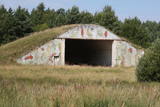 |
There are still some buildings, missile silos and an apartment building from the old No. 158 Zenith Missile Base at Ziemupe, but the territory has been abandoned and degraded.
|
|
 |
This company uses natural juices and other raw materials to produce blackberry, black currant, sea buckthorn and spinach glazes that are used to decorate handmade gingerbread. You can listen to stories, take part in thematic activities, bake your own gingerbread, and buy dough and finished cookies. |
|
 |
The café is in the market square of Vecpiebalga, opposite the Lutheran church. It works with local farmers and sells products from a local smokehouse. |
|


