
| No | Name | Description |
|---|---|---|
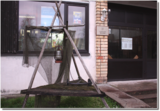 |
The Lapmežciems Museum features
information about the history of the local
parish, its school and its fishing industry.
There are also exhibits featuring World
War I battles near Klapkalnciems which
involved Finnish soldiers. The museum
also organises themebased exhibitions.
Alongside it is a memorial rock for the
politically repressed.
|
|
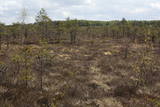 |
Territory established mainly for protection of bog myrtle and various bird species. An interesting fact is that bog myrtle or sweet gale is used as ingredient for making famous Riga Black Balsam. Brienamais purvs (wade bog) is hard to find and reach therefore it is not suitable for tourism.
|
|
 |
The farm shows traditional rural life activities, raising sheep and Estonian Blackhead sheep. A heritage trail on the farm takes in a sacred grove, ancient burial sites and fields, and we tell stories of ancient Estonians and history of the farm. Handicrafts are displayed and wool workshops are offered. |
|
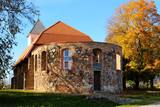 |
Dievnama mūri kā svētvieta glabā ne tikai svētuma starojumu, mierinājumu, bet arī smagus, rūgtus un iznīcinošus notikumus. Vairākkārt pārbūvēta, sagrauta, dedzināta, un tomēr atjaunota. |
|
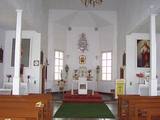 |
Holy Trinity Parish Catholic Church of Strūžāni was renovated
and sanctified in 1958. The church has no towers because they were not allowed in the time of the Soviet
Union.
|
|
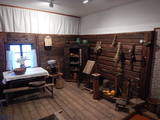 |
has a permanent exhibition that features a Suiti living room and kitchen and liturgical apparel worn by Catholic priests. In the exhibition hall there are changing exhibitions related to the history and present of the Suiti Women ethnographic ensemble. A special offer involves performances by Suiti women, Suiti men and Suiti bagpipe players. Also in the building are the Alsunga Tourism Information Centre, as well as ceramics and weaving workshops. Contact the museum in advance to arrange for performances and master's classes. |
|
 |
The Forest House (Meža māja) was built
in 1933, and this is one of the most
outstanding buildings in Latvia from the style
of National Romanticism. It used to house an
enormously popular restaurant, “Merry
Mosquito" (Jautrais ods). The restaurant was
popular among the spa’s guests, but also
among prominent people of the day. A
children’s sanatorium was installed here after
World War II for kids from all over the Soviet
Union. When the Ķemeri National Park was
established in 1997, the building became its
headquarters and today it is a modern visitors’
centre.
|
|
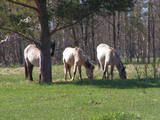 |
Für den Zweck der Bewirtschaftung der Niederungsauen des Pape-Sees und der Vermehrung der biologischen Vielfalt sind hier Konik-Wildpferde angesiedelt wurden. Die kann man mit einem örtlichen Guide kennenlernen. |
|
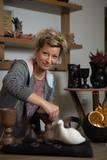 |
This is one of the few craftswomen in Latvia who does not use a potter’s wheel in her work. Instead she works in the “snail” or “sausage” technique that was typical of the Bronze Age. Her artworks are distinguished by a diversity of form and functionality. Children can attend master’s classes. You can take tours, take part in the opening of the kiln, and purchase fumigated ceramics products. |
|
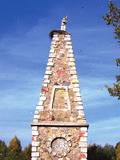 |
Monument „Carrier of the Cross”. Statue of Christ carrying His Cross is placed on a high pedestal of
the pyramid shape. The pedestal was built in 1828 by dean and writer Jāzeps Kirkillo from Rezekne. In 1918,
the monument was renovated. The new statue was placed in 1918. The monument was rebuilt once again
in 1990.
|
|
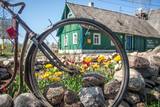 |
The guest house is located in Varnja Old Believers village and on the Onion Route - a destination on the shores of Lake Peipsi, the largest lake in Estonia and the trans-border lake of the European Union. It is about 45 km from Tartu. It offers the oppurtunity to experience authentic accommodation in a real home of an Old Believer family. Everything from the furnishing up to spoons and forks is as authentic as possible. The house has three rooms that can accommodate up to 10 people. Additional services: smoke sauna, Finnish sauna, plastic sauna, sauna in a tent, outdoor hot tub, boat rental, bicycle rental, camping, lake safari on a Karakat (wintertime only), boat house accomodation. |
|
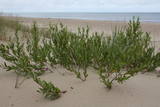 |
The territory is established in order to protect the dunes and the seashore habitats. There are beautiful beaches and wooded dunes, and the paved Klaipēda–Palanga bikeway trails through the park, which is worth travelling at full length. |
|
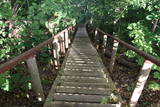 |
Because this circular trail is in a nature zone, it may only be traversed in the company of a guide from the Slītere Nature Park. A steep stairway that has been installed along the ancient shores of what was once a Baltic lake of ice will lead the visitor to a completely different world, one with fallen trees, broadleaf forests, an area in which underground streams create aboveground wetlands, a limy and grassy swamp (all of these are protected areas), remains of old-time reclamation ditches, and rotting fir stumps which are important in terms of the diversity of species and which have been in the region since a major windstorm in 1969. The trail is 1.2 km long and will take an hour to an hour-and-a-half to traverse. The trail begins at the Slītere lighthouse, where the SNP visitors’ centre is located (in tourist season).
|
|
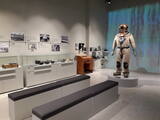 |
This exhibition features the Pļaviņas hydroelectric power plant as a unique architectural building with unique engineering elements. It is the largest producer of electricity in the Baltic States and one of the largest in
|
|
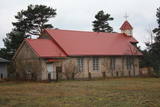 |
Atrodas ciema ziemeļdaļā. Neliela vienstāvu ēka ar svaigi nomainītu jumtu. Pēc vieniem avotiem celta 1883. gadā, citiem – pamatakmens ielikts 1933. g. 1. maijā. Tā tapusi pēc vietējo iedzīvotāju ziedojumiem uz Pirču māju zemes (saimnieks zemi atdevis dievnama celtniecībai). Baznīcas iekārta 2. pasaules kara laikā gāja bojā, tādēļ mūsdienās redzamā ir tapusi 20. gs. otrajā pusē. |
|
 |
The Ķemeri water tower was built in 1929
and used to be a reservoir for drinking and
mineral water. Until World War II, there was a
viewing platform at a height of 42 metres from
which one could see the surroundings of
Ķemeri.
|
|
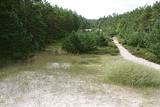 |
A shooting range which isn’t really there anymore, but it was once
used for training purposes by the Soviet military. Right now you will see
an overgrown area of land which stretches from the seashore to the
Kolka-Ventspils road. That’s where the shooting range was located.
|
|
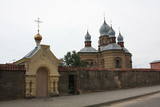 |
The Orthodox Church and Cloister of the Holy Spirit and the Orthodox Church of St Nicholas the Miracle Maker are found at Brīvības Street 200 in Jēkabpils. The Byzantine Church of the Holy Spirit was built between 1853 and 1886 to replace a wooden church which had been built in the latter half of the 17th century and burned down in 1773. Duke Jacob of the Duchy of Courland supplied the timber for the old church. The cloister was alongside the church. On Second Easter in 1903, the church caught on fire, and the only icon rescued was a painting of the Virgin Mary. The church suffered damage during World War I and was restored in 1933. Alongside the Church of the Holy Spirit is the oldest church in Jēkabpils – the oldest stone church in the city, which is named after St Nicholas the Miracle Maker and was erected in 1774. This is a very small church, just 17 x 19.5 m. The cloister of the Church of the Holy Spirit operates the church today, and it can be viewed from the inside. The stone fence that surrounds the complex is massive, but atypical of urban environments in Latvia.
|
|
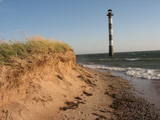 |
Harilaidas galā no jūras ūdens paceļas 26 m augstā Kīpsāres bāka – viena no neparastākajām Igaunijas bākām. Tā celta 1933. g., kad jūra no bākas atradās ~ 100 m attālumā. Krastu noskalošanas rezultātā tā tagad ir viļņu ieskauta. |
|
 |
Avinurme Wooden Handicrafts Centre in East-ViruCounty is a tourist centre that offers a chance to get acquainted with the local woodcraft, spend quality time in woodworking workshops and taste or even prepare your self a selection of Estonian traditional foods. Handicrafts Centre is waiting to surprise you and offer you many new and fun experiences. Avinurme is the most south-eastern parish of EastViruCounty. Due to location and nature conditions, Avinurme area has strong woodcraft and business traditions, which are based on knowledge passed on generatoin to generation. The main products have always been wooden vessels – different household items such as barrels, tubs, casks, wooden buckets, sauna wash tubes, wooden roof chips and furniture, particularly chairs. Wooden Handicrafts Centre you can test your dexterity in the many different workshops offered. Offers and packets to groups. This is also a tourist centre where you can get acquainted with local wood products. There is also a café serving dishes of Peipus region on special wood products, and home-made rye bread is also available here. |
|


