
| No | Name | Description |
|---|---|---|
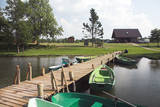 |
This centre offers recreation in a lovely venue on the banks of Lake Zvirgzdi without overnight accommodations. There is a lovely sandy beach for swimmers, as well as boating and fishing. Children can ride a water bike. Active leisure with a country sauna. There is a guesthouse with two rooms for eight people, as well as six camping trailers, 18 sites for tents, and an opportunity to rent a boat. |
|
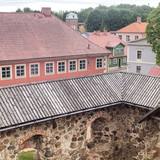 |
It is believed that at the Kezberkalnins of Limbazi has been Lemisele castle of Metsepole Liv district. It is also found in the reports that merchants travelled to this place from the sea by Svētupe and Dunezers until the 16th century. In 1223 Bishop Albert built a stone castle in Limbazi. Like Valmiera, Limbazi became the member of Hanseatic League. At the beginning of 16th century it economic role declined significantly since Svētupe and Dunezers became unusable for shipping. Between the 16th and 18th centuries, the town and its people suffered from wars, diseases and fires. As a result, the population reached its utmost fall - eight people. In the turn of 19th and 20th century and in the beginning of 20th century the economic life of the town was renewed. |
|
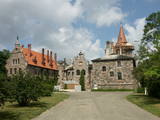 |
Cesvaine was first mentioned in written sources in 1209. For each traveller in Latvia, the town is associated with the family of Baron Woolf, who bought the Cesvaine estate in 1815. Cesvaine experienced the economic boom after establishment of Plavinas Gulbene railway. Town suffered significantly during the World War II. At the end of 2002, the Cesvaine Castle was struck by the tragedy - a fire, which damaged most of the castle. Cesvaine Castle is "recovering" by means of large public, state and local government support and still keeps the status as a significant tourism attraction in a scale of Vidzeme and Latvia. |
|
 |
Līga Reitere is a ventiņi story teller and a specialist in herbs, and in an old school classroom, she teaches penmanship and the ventiņi dialect. An informational tour is available, and visitors can purchase products and souvenirs from Kurzeme. |
|
 17 days
|
The tour introduces modern day life in rural Latvia, Estonia and Lithuania and includes visits to small farms raising livestock and producing delicious foods, and to ethnographic villages preserving the traditional lifestyle in a contemporary environment. The tour also involves sites of historical and cultural interest. The tour gives a look beyond the usual tourism sites to get to know the three Baltic states more deeply. It starts in the historic Latvian capital, Riga, followed by the Gauja National Park with its castles, manors and walking trails. Climb the tower of medieval Turaida Castle for amazing views over the valley and visit the ancient jewellery master in the castle of the charming town of Cesis. Across the border in Estonia, walk streets with elegant villas at Parnu sea resort before catching a ferry to Saaremma island. Ethnographic Koguva village, ancient churches and windmills are typical of the island, as is an embroidering tradition. Then it's off to Tallinn with its medieval Old Town and to the rocky landscapes of Lahemaa National Park with fishing villages and manors. Try Estonian national dishes at the pub in Altja. Driving back, stop at the university town of Tartu. In Latvia again, visit goat farms and a traditional black bread bakery. Then the tour heads towards the west coast with the cities of Liepaja and, across the border in Lithunaia, Klaipeda. Next is the incredible Curonian Spit. Before Vilnius, take a detour to Grutas Park with its bizarre Soviet statuary. Finish the journey at picturesque Trakai Castle in Lithuania and Rundale Palace in Latvia. |
|
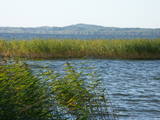 |
The eastern, southern and western shores of Lake Rāzna have roads which offer many lovely and unusual views of Latvia’s second largest lake and its surrounding landscape. Particularly lovely is the road between Foļvarkova and Vilkakrogs, which is part of the Rēzekne-Ezernieki road.
|
|
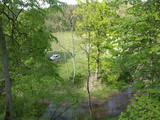 |
The viewing area is near the top of the Vilce castle hill, with a view of the Rukūze River valley, Zaķi meadow, and surrounding forests. This is an unusual landscape for the region of Zemgale. The Vilce baronial estate is nearby.
|
|
 1 day
|
This outing combines fine dining at one of the most beautiful estates in Latvia with an outdoor experience at a cranberry plantation tasting cranberry-based products. The Bīriņi Castle complex is part of Latvia’s national architectural heritage. The Neo-Gothic main castle building is surrounded by a picturesque park and buildings including the stables and the water tower, which showcase the country’s industrial heritage. The castle hotel is a very popular venue for wedding celebrations. The cranberry plantation in Laugas swamp at Gundegas Farm was started in 1989 as a research farm. Cranberries are well known for their refreshing taste and medicinal qualities. They are used both for culinary purposes and in traditional medicine. Today six types of cranberries are grown in Latvia. The cranberry plantation offers the opportunity for guests to ‘pick-your-own’ during the harvest in September. |
|
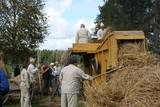 |
The farm museum presents the life and activities of Carl Robert Jakobson (an outstanding 19th C public person, writer and teacher) and his farmstead. Visitors can see cattle, sheep, horses and renovated outbuildings. They can also test their skills in farm jobs; Estonian food is available if booked in advance. |
|
 |
Das größte Wissenschaftszentrum Baltikums mit Möglichkeiten, mitzuarbeiten und zu experimentieren. Ein Planetarium. |
|
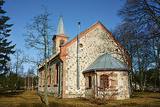 |
Kolka Evangelical Lutheran Church. A story has survived of one Danish trader saved in a shipwreck at Kolkasrags who in gratitude built a church in Kolka. The church had changed its location for three times in Kolka. The foundation of the church visible nowadays and built of boulders was laid by Karl Ludwig Ferdinand von der Osten-Zaken, the former owner of the Dundaga estate. It was built instead of the wooden church (or close to it) which was heavily damaged during the Crimean War. The first construction works were started in 1885 by the construction foreman Otto Sievert (Architect: T. Zeiler). In the Soviet time, the church was vandalized and it was used as a warehouse. It is worth to see the modern- style altarpiece |
|
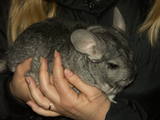 |
The owners breed chinchillas, which originated in the Andes in South America. They offer a tour and a story about the lives and growth of chinchillas. Animals and their pelts can be purchased. The lady of the house is also a painter. |
|
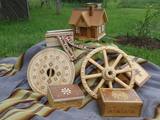 |
The workshop and “Dream Hut” exhibition hall at this venue offer a look at turned wood products such as candelabras, dishware, beer steins, vases, glasses, mortars and pestles, small boxes, wooden paintings, etc. You can commission and purchase products and watch the master at work. |
|
 |
You can learn about the lives of bees and buy honey made from all kinds of flowers, propolis, propolis blankets and wax candles. Apian therapy is offered here. This is an ancient method which involves a bed under which there are beehives. The bees create warmth, vibration and a biofield. |
|
 1 day
|
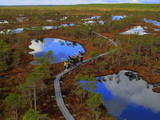
The Great Ķemeri Bog Boardwalk is located in Ķemeri National Park. The national park covers an area of 38,165 hectares. The Great Ķemeri Bog Boardwalk immerses visitors in the world of moss, small pine trees, deep pools, tiny dark lakes and the smell of wild rosemary. An astute visitor will notice the carnivorous sundew plant and a variety of birds – wood sandpipers, white wagtails and tree pipits – and will also be able to hear cranes further away. Those who prefer shorter strolls can take the small boardwalk loop (approx. 1.4 km), while those who choose the great loop (approx. 3.4 km) will be rewarded with the opportunity to climb to a viewing platform that offers a magnificent view of the bog from above. The Great Ķemeri Bog Boardwalk has become a popular place for landscape and wildlife photographers. The whole trail is laid to wooden boardwalk and therefore is fully accessible and can be walked without a professional guide. |
|
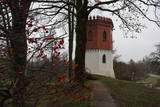 |
С XV века в Приекуле правил род баронов Корфов. Один из них – Иоганн Альберт Корф (1697 - 1766.) был президентом Петербургской Академии наук (1734 - 1740 гг.), дипломатом и литератором, который занимался исследованием истории Курземе. Приекульский замок находится на западе от улицы Айзпуте, на берегу реки Вирга. Первоначально дворец господской усадьбы построили в XVIII веке, а в конце XIX века велись большие работы по перестройке здания (проект Пауля Макса Берчи). В здании находится Приекульская средняя школа. Примерно в 100 м к востоку от господской усадьбы возвышается смотровая башня усадьбы (построена в конце XIX века), над которой развевается государственный флаг Латвии. |
|
 |
Centre stage on the a la carte menu of the restaurant is devoted to premium quality game meat dishes. Fish lovers will enjoy just caught Siberian sturgeon in the Sangaste Loss pond, ensuring that ingredients are always fresh. Ancient cooking techniques, such as baking on a bonfire in natural smoke, are honoured. |
|
 |
Handicraft house Heltermaa is a local Hiiumaa grocery and handicraft shop, open during the summer season. The selection is very wide, starting from ceramic dishes and ending with Hiiumaa lemonade. |
|
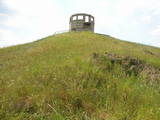 |
This unique territory covers more than 24,400 hectares, and the Soviet military used it as an aviation training centre. The history of the base dates back to 1951, when four kolkhozes were shut down, roads were closed, and several hundred farms and homes were simply moved elsewhere. A civilian presence at the base was restored only in 1993, when several new roads were installed. If you want to get a bird’s eye view of the base and its forests, you have to climb a high, manmade hillock from which commanders watched manoeuvres. We do not recommend that you wander off from the roads!
|
|
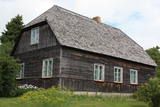 |
The museum was established in 1973 and has been in the Kalna Ziedi homestead since 1989. The permanent exhibition is in a building that was erected in 1989 on the foundations of the former home, while the warehouse (1990) was built on the foundations of a cattle shed. The exhibition hall (2000) was built where a granary once stood. The only part of the former farm that remains in place is the cellar, but the placement of the buildings is typical for the layout of a farm in Vidzeme. The collection of the museum speaks to the history of the administrative district, beginning with information about the Stone Age. The open-air exhibition features beehives with marks of belonging, as well as rare round crosses that are monuments to Medieval cemeteries. 100 metres to the Northeast from the museum is the Kalna Ziedi castle hill, while 200 metres to the south are the remains of a sacrificial oak stump that was destroyed in 1994. The location is on the edge of the reservoir of the Pļaviņas hydroelectric power plant and offers a broad view of the plant’s dam and the town of Pļaviņas.
|
|


