
| No | Name | Description |
|---|---|---|
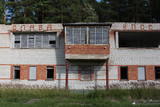 |
The firing range at Skujnieki was once used for summer sports, as well as training in the use of firearms. The Defence Ministry still uses the facility from time to time. The central building of the facility was built in 1982, and its façade is decorated with text in the Russian language: “Слава КПСС” (“All Honour to the Soviet Communist Party).
|
|
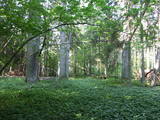 |
This is a fairly unique territory in Latvia – a vast forest of oak trees (many of them very large, indeed), linden trees, elms and various other deciduous trees. In the company of a forest guide, the visitor can walk through a small part of the forest, learning about the inhabitants of the area and their importance. This is an environmentally protected zone.
|
|
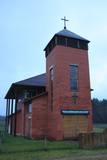 |
Atrodas 2,5 km no Bārtas centra, Bārtas upes labajā krastā. Mūsdienīgais dievnams tapis 2002. gadā (arhitekte: A. Siliņa). |
|
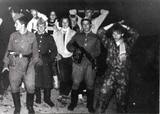 |
The Soviet Border Guard arrived at Lapmežciems (its border with Ragaciems) in the mid-1960s and left in 1991. Some 50 military personnel were stationed here. The military personnel and local residents organised various events and celebrations. The only thing that worried locals was a radar which was said to cause various problems. The zenith missiles were dismantled and taken away in 1991. An apartment building is still on what was then the military base. |
|
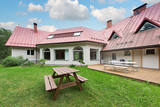 |
Conference and recreation center "Zvīguļi" is located in the territory of Gauja National Park, 10 km from Sigulda - with picturesque and untouched nature on one side and Sigulda highway (A2) on the other. From the inner courtyard there is a forest, from which, walking along a relief, nature-created and well-groomed path, you will reach the bank of the river Gauja in 15 minutes. It offers accommodation in rooms of different comfort or in a common room. There is a spacious and modern kitchen. The guest house also has a quadruple Finnish sauna. If necessary, catering will be provided by our partners. Active leisure opportunities nearby - toboggan run, bicycle rental, fishing, boating, quad and motorcycle track, horse riding. |
|
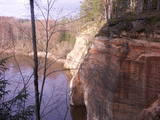 |
The viewing area on the Ērgļi (Ērģeles) cliffs offers an impressive view of Latvia’s most monolith sandstone cliffs (up to 22 metres high) – this is the highest location in the Gauja River valley. Please be very careful and don’t go anywhere near the edge of the cliff!
|
|
 |
This institution offers a look at characteristic rituals that relate to environmental transformation, as well as at ancient Baltic faiths. Family and calendar celebrations are held here, including weddings, hen parties, consecration, mid-winter activities, etc. Some of these are pagan festivals. The educational programmes are meant for adults. |
|
 11 days
|
To start the tour you take a train from Riga to Liepaja, a city with white sandy beaches and a lively cafe culture. The route goes through suburbs of Liepaja to the former millitary town where you see the Orthodox cathederal, old naval fortifications, former barracks and an imposing military prison which is now a tourism site. Pavilosta is a small seaside town and a favourite with windsurfers. Next the route follows the picturesque coastline, including steep banks at Jurkalne and finishes at the well-maintained town of Ventspils. Then along to fishing villages that are home to the tiny Finno-Ugric ethnic group, the Livs. At Cape Kolka the Baltic Sea meets the Gulf of Riga. Here, sampling the local smoked fish is a must. Further on, the route crosses three different types of sea shore – the stony beach at Kaltene, a sandy one at Upesgriva and coastal meadows at Engure. Finish with the trails at Kemeri National Park and return to Riga from the popular resort town of Jūrmala. |
|
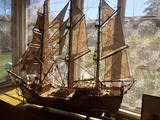 |
Laimonis and Ilga Veidemanis lived in Roja 20 or 30 years ago. They were deaf and loved to produce models of sailing ships of various sizes. This was based on a dream about the big ships of their ancestors and the wide seas upon which the couple could not sail. The models are very precise, designed with much care and love. The couple never learned the secrets of ship models, but their collection has been inherited by Laimonis’ granddaughter, who wants to display the wonderful collection and her grandfather’s careful work to the public. The hostess welcomes visitors and tells her story about how the models were produced. (Source: Roja TIC) |
|
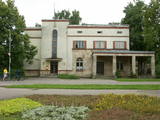 |
The building was erected during the first period of Latvian independence, and it maintained its functions for a long time. The building is located at Tukuma Street 30. Beginning in 1940, the post office had an automated telephone central. The Postal Service no longer uses it, and the building can only be viewed from the outside. |
|
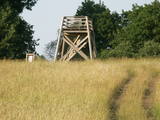 |
Here the visitor will find an ecological tourism trail in the ancient Embūte valley. The hills around Embūte date back to the Ice Age. There are valleys and forests of many fallen trees which are protected habitats. The visitor will learn about important natural and cultural monuments – the Embūte castle hill, as well as the ruins of a baronial estate, a castle and a church. The Courlandian chieftain Indulis died in the region. The visitor can view the Devil’s Dam, along with meadows, a viewing tower, etc. There are bicycler routes in the region. The site is located in the Embūte nature park. |
|
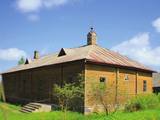 |
St. Alois Roman Catholic church of Ostrone (Ustroņu) was built
in 1935 in the time of dean B. Valpitrs CCM (Congregation Clericorum
Marianorum).
|
|
 2 days
|
A scenic and tradition-rich stretch of the Forest Trail symbolised by the onion. Onions were brought to the region by Old Believers in the 17th century. Ladies and gentlemen selling home-made onion strings on the roadside have become somewhat of a business card of the villages. The villages on the twenty-four kilometre stretch of road between Varnja and Kallaste are connected by the tourist route called Onion Road. The landscape is decorated by colourful wooden houses, small fish shops and a restaurant where you can enjoy tea made in the samovar, true to the traditions of Old Believers. You can visit the Kostja’s onion farm, where the host welcomes the guests and shows them onion cultivation. It is also worth visiting the Chicory Museum in Kolkja to get acquainted with the history of chicory cultivation in row villages near Lake Peipus. At the end of the trail you will reach Alatskivi, where the famous Alatskivi Castle is located. |
|
 |
The handicraft house at Heltermaa harbour is located in the former 18th C tavern, here you can buy local handicrafts and participate in a large number of workshops (making soaps, felting, printing with plants and blocks etc). Open only in summer. |
|
 |
A fish processing plant which has collapsed down to its foundations (it
ended operations in 1978)
|
|
 |
Baltijas valstīs lielākie brāļu kapi, kur izveidots (1974. - 1984. g.) piemiņas memoriāls (tēlniece P. Zaļkalne, arhitekti A. Zoldners, E. Salguss un dendrologs A. Lasis) 8 ha platībā. Šeit apglabāti ~ 23 000 cīņās par Kurzemes cietoksni jeb Kurzemes katlu (1945. g. pavasaris) kritušie Sarkanās armijas karavīri. Memoriāla centrā novietots12 m augsts Mātes - dzimtenes tēls, bet uz granīta plāksnēm iegravēti kritušo vārdi, starp kuriem ir atrodami arī daudzi mūsu zemes un kaimiņvalstu dēlu vārdi un uzvārdi. |
|
 |
Rankas Dairy was established in 1996 and manufactured some 80 dairy processing products, including cheese, cottage cheese, cream, fermented dairy products, desserts, etc. This is one of five companies in Latvia that is allowed to manufacture one of the EU’s guaranteed traditional characteristics product, “Summer Solstice” cheese. The products are available at the “Rīmaļnieks” store that is alongside the dairy. |
|
 |
The farm "Veckūkuri" in Jērcēni parish of Strenči district is included in the top of the most productive herds in Latvia. "Veckūri" is a milk processor that produces non-traditional dairy products from the milk obtained on its farm. The farm is also ranked among the companies that have been awarded the State Export Council awards “Latvian Export Product 2015”. |
|
 |
The Ķemeri school was built in 1934 (architect
Kārlis Cināts). It is one of the few school buildings in
Latvia to have preserved an historically valuable interior
and exterior, including allegorical images on the façade.
|
|
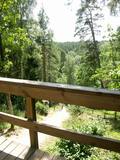 |
This is one of the most lovely and expressive castle hills in Latvia, with a very fine view of territory all the way to Lithuania. According to Ernests Brastiņš, a researcher of castle hills in Latvia, this was the site of the Semigalian Sidrabene castle. There are no improvements in the area.
|
|


