
| No | Name | Description |
|---|---|---|
 |
Jaunpils ūdensdzirnavas ir industriālā tūrisma apskates objekts, kurā ir saglabājusies dzirnavu iekārta, kas darbojusies 20. gs. 20.−30. gados, kā arī hidrotehniskās būves un ūdenskrātuve. Šobrīd dzirnavās ir izveidota ekspozīcija par pašām dzirnavām, malšanas procesu un graudkopību. |
|
 |
The farm grows apples, pears and medicinal plants such as peppermint, marigold, etc. The owners also collect wild medicinal plants. An interesting tour is available, and you can purchase products at the farm or at the Latvian Eco Product Store at Barona Street 45-47 in Rīga. |
|
 |
Lake Salājs is full of bays and islands. Alongside Lake Little Solojs, which is next to Lake Salājs, is the Milka castle hill and a leisure facility there. This is a beautiful area, and it is protected for environmental purposes. |
|
 |
Atrodas Ķekavā, autoceļa Rīga – Grenctāle (A 7) malā. Iekārtots vēsturiskā ēkā ar atbilstošu koka interjeru. Piedāvā maltītes visām ēdienreizēm, organizē muzikālus vakarus. |
|
 |
Together with Valga on Estonian side - a peculiar frontier twin town. |
|
 |
One of the rare guides in Latgale who sings Lettigalian songs during the tour. This is an interesting, attractive and educational tale about historical events related to the Preiļi Estate and the surrounding town. |
|
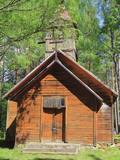 |
Krupenišku Old-Believer Prayer House was built in 1908. The autor of the
design is engineer I. Ivanov. At present the church is in bad tehnical condition.
|
|
 |
The Švekšnos Estate and its park are among the most beautiful venues of this type in Žemaitija. Alongside the estate is an impressive park, with two segments that are linked by a wide parade staircase that is decorated with vases and offers a lovely view of the lower terrace. On an island I the central pond of the park is a statue of the goddess Diana. A colourful sundial, a vase on a pedestal, a sculpture of St Mary, and a sculpture called "Angel of Freedom" are all found in the park. Other elements, including viewing areas, pathways and gates have also been restored. |
|
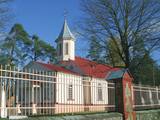 |
St. Cross Honouring Roman Catholic Church of Malta (Rozentova) is national architectural
monument. The church has a promiment „St. Mary Magdalene beside the Cross of Jesus” and three big
altars. The wooden log building was constructed in 1780. It was sanctified in 1782.
|
|
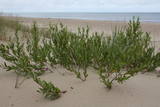 |
The territory is established in order to protect the dunes and the seashore habitats. There are beautiful beaches and wooded dunes, and the paved Klaipēda–Palanga bikeway trails through the park, which is worth travelling at full length. |
|
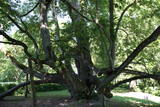 |
This is Latvia’s largest small-leaved lime tree (Tilia cordata). Some of its mighty branches are held up by supports. There are large holes in the trunk that have been covered up to prevent water entering the holes and causing even more rot. Just like many other trees of this size, this was a sacred tree in the past
|
|
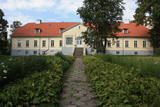 |
Находится ~ в 1 км на восток от центра Априки. Дворец господской усадьбы (стиль барокко) строился с 1742 по 1745 гг., а башня неоготического стиля как пристройка возводилась в конце XIX века. На фронтоне главного фасада дворца выполнен рельеф из песчаника с гербом родов баронов Остен – Сакенов и Корфов, который является самым роскошным элементом среди подобного рода имений Латвии. В здании сохранились и первоначальные элементы интерьера (осматриваются в сопровождении гида) – дверные створки, расписанная голландская печь, оконные дубовые ставни, коробки, чеканные металлические детали и паркет. В комплекс господской усадьбы входит дом управляющего, дом прислуги, хозяйственные постройки и парк. С 1920 года во дворце господской усадьбы действует школа и устроен музей края, который непременно следует посетить! Сейчас в музее выставлена коллекция этикеток производимого в Латвии хлеба. В 1901 году господскую усадьбу приобрел Карл Густав Маннергейм (1867 - 1951), который был президентом государства Финляндии и легендарным автором системы фортификации линий Маннергейма - Зимняя война (1939 - 1940). |
|
 7 days
|
During this tour you experience the different ways of using milk either for edible products or body treatments. From Riga, through historic sea and spa resort Jurmala, the route goes to goats farms where you taste cheeses as well as exclusive ice-cream from goats milk. Then visit Dundaga Castle and try local diary products there. At Roja experience local traditions having fishermen meal and attractions Then the route goes along unspoiled seaside beaches of Cape Kolka to well maintained town of Ventspils from where it turns inland to the picturesque Kuldiga with well preserved wooden architecture. Further on enjoy beautiful Milk Manor where you could experience lavish spa treatments based on milk. There is also Milk Museum located where you can follow the milk route from a cow to the tables, also possible to try some old fashioned practical jobs like butter making. Further on the tour turns sweet. Visit candy factory in Saldus where traditional hand-made toffees are made. Then on menu is ice-cream at Druva. Next - sightseeing at Jelgava which used to be the main seat of the Duke of Courland. Visit cheese producer at Eleja and before returning to Riga visit splendid Rundale Palace which is regarded as a beautiful pearl of the Baltics. |
|
 |
The Lejenieki homestead is 1.1 km north of Bangas. Vilis Plūdons (1874-1940) was an outstanding Latvian poet, a representative of the style of National Romanticism, and a schoolteacher. His real name was Vilis Lejnieks, and he was born in at the Lejenieki homestead in the Bauska region. His father was Jānis Lejnieks. As a boy, Vilis was enchanted by fairy tales told by his granny and by folk songs that she sang. Plūdons is buried nearby in the family cemetery. Lejenieki offers an exhibition about the poet’s life and work. The local sauna features sculptures of rabbits, thus recalling Plūdons’ poem, “Rabbit Sauna.” |
|
 |
The bistro is in the centre of Jelgava and offers fresh canapés, cakes, pierogi, cookies and other baked goods. It works with local producers of ingredients. Latvian cuisine: Bacon pierogi, potato pancakes, wheat-potato porridge with bacon sauce, whipped fool with milk. Grey peas with bacon during the season of the Winter Solstice. Special foods: The “Duke’s Sail” – oven-roasted pork with caramelised sauerkraut, roast vegetables, lingonberry sauce and horseradish. |
|
 |
he wetland meadows that are around the Pededze River are the site of this 200 ha farm with some 350 red deer, other deer and wild boar. There are towers from which you can watch the graceful animals, and there are ponds for commercial fishing. Please contact the owner well in advance for a tour. |
|
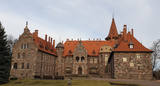 |
The Cesvaine Castle is one of Latvia’s most beautiful castles. Built in the style of Eclecticism, it is said to have been presented by its owner, Adolf von Wulff, to his wife. The castle was built between 1893 and 1896. On the banks of the Sūla River alongside the castle is the Cesvaine Park, including the afforested Cesvaine castle hill. The Cesvaine castle roof reconstruction is complete! Visitors may tour the castle accompanied by a Cesvaine Tourism Centre guide. Restoration of the castle interior will ccontinue throughout 2020. Periodic closure of the castle can be expected. Please phone in advance to arrange a visit T. +371 26172637. For more information visit www.cesvaine.lv |
|
 |
Церковь строилась с 1909 по 1913 год. Качество красного кирпича, используемого в строительстве храма, было плохим, поэтому с 1939 года заменено около 60 000 кирпичей! Храм считается одним из самых внушительных сакральных строений Латвии. В строительстве церкви применены декоративные элементы неоготического стиля, а в интерьере - алтарь, кафедра, хоры органа, молитвенные скамейкии изготовленные в наши дни исповедальни созданы в готических формах. Орган строился в 1931 году. Храм пострадал во время Первой мировой войны и был восстановлен в 1921 году. Осмотр церкви рекомендуется проводить в сопровождении гида. |
|
 |
The café is alongside the Rēzekne castle hill and the “Zeimuļs” creative services centre of Eastern Latvia (built in September 2012). A lovely interior design and a look at historical objects form Rēzekne are part of the café. It is named after the Rositten fortress that was built here by the master of the Livonian Order in the 13th century. Meals are offered throughout the day, and various foods and baked goods are for sale. |
|
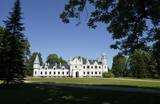 |
The Castle was restored recently and now exhibits life and history of a noble family on three floors. Tour guides have numerous stories and legends to tell, visitors can make their personal castle souvenirs. |
|


