
| No | Name | Description |
|---|---|---|
 |
Apmeklētāju centrā var iegūt noderīgu informāciju un iepazīt ekspozīciju par Karulas augstienes veidošanās vēsturi, ezeru iemītniekiem un šejienes novada kultūrvēsturiskajām tradīcijām. Apmeklētāju grupas semināru zālē var noskatīties izzinošu prezentāciju. |
|
 |
The Lithuanian Pomiculture and Gardening Institute became a national scholarly institute in 1992. It engages in scholarly studies, as well as experimental manufacturing. The institute produces Lithuanian fruits and vegetables that are used to manufacture high-quality, natural and healthy products. |
|
 7 days
|
Ventspils is one of the most afluent Latvian towns with excellent infrstructure, well- restored Old town and Livonian Order Castle, clean and well equipped white sandy beaches, promenade, arty fountains, flower sculptures, manicured parks and various attractions.Whole town is family oriented but kids particularly enjoy the Blue Flag beach with different swings, climbing and sliding options as well as Kids Town with activity zones for different age groups. A short trip by "Mazbanitis", the narrow-gauge steam engine is a special attraction for kids as well as adults. Walking and cycling routes as well as trip on the tourist boat give a good chance to explore the town and coast. Water pleasures can be fully enjoyed at indoor or outdoor acqua parks. We suggest two self-drive excursions in vicinity featuring scenic sea coast, traditional fishing villages where smoked fish can be bought from fishermen, Slitere National Park with beautiful view from its lighthouse, charming Kuldiga with its wooden arhitecture. Driving there is easy since roads are rather empty. |
|
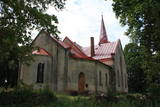 |
A bit less than one kilometre from the Aizkraukle castle hill, the church can be seen from the Rīga-Daugavpils highway (A6). The church was built in 1688 on the steep banks of the
|
|
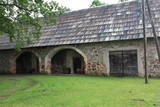 |
The road leading to this estate is reminiscent of a narrow mountain road with a deep river valley alongside it. The estate used to be known as the Libe Estate, and the buildings that are seen there now belonged to a nobleman, Magnuss. The mansion has a Neo-Gothic glass tower which is known as an architectural curio among specialists. The Sarkaņi Parish Council sits in the mansion. The granary is the work of a local enthusiast, Andris Trečaks, who has collected a series of ancient objects. Outside the granary is a very broad view of the “lower” Lubāna flatlands, resembling a painting with an empty frame. |
|
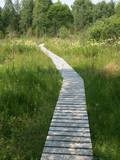 |
This small restricted area protects the Swedish juniper and the lime meadows in which it grows. There is a marked circular trail which allows visitors to study one of the few but excellent stands of juniper in Latvia. The bushes are 50 to 70 years old, and all around them are interesting habitats, plants and animals. Natural stands of juniper in the Baltic States are the result of farm work such as reaping, chopping, etc., as well as of herding of sheep and other livestock. A small part of the area is still “managed” by sheep. Unfortunately many junipers have died because of overgrowing of territory. |
|
 |
Located in the Mežotne Castle, the saloon offers fine and tasty dishes and beverages. Tours of the ornate castle are available, and the location has one of the loveliest English-style landscape parks in Latvia. Latvian cuisine: Potato pancakes, rolled marinated herring, trout with potatoes in their jackets, blood sausage with lingonberry sauce, grey peas with bacon, stacked rye bread with cranberry jam and whipped cream. Special foods: “Bauska Thaler” – pork in the form of a thaler with a sauce made with Bauska beer. |
|
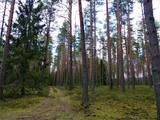 |
Ķekavas novada Daugmales pagastā atrodas pastaigām un dabas baudīšanai piemērots mežs, kurā baudīt dabas daudzveidību. |
|
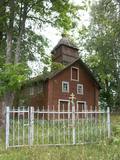 |
This small wooden church with fragments of a metal gate is on the side of the road in the village of Ruduški. It is not open to visitors on a daily basis. |
|
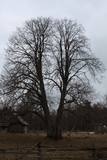 |
An impressive two-trunk tree at the Nigliņi homestead, this is one of the most impressive trees on the Liv Shore. The Liv language teacher Zoja Sīle was born here. The Medieval Old Cemetery Hill – once used as burial grounds – is nearby. |
|
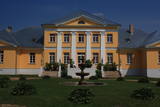 |
This estate is an unexpected surprise in this place and date. Work on the castle began in themed-18th century, and it was rebuilt one century later. During the first half of the 20th century the castle hosted an elementary school, and during the Soviet occupation it was an apartment building. Today the castle has been reborn in terms of form and content in the direct and indirect sense. The Mountain Holiness Community works here. During the summer, there are children's camps and other events. The old stairs, window shutters and brass door hinges are all original. A church is being built on the site. The Renaissance-style garden can be visited. Contact the estate in advance for a tour of the interior of the castle an church in the company of local residents who will tell you all about the history of the estate and its garden. 300 m to the south-west of the estate is the Brukna Castle Hill, which is hard to see in situ and even harder to access. |
|
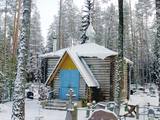 |
All Saints Orthodox Church of Malta (Rozentova) was built in
1928. It is the wooden log building with double window frames and a
dome. Facades are decorated with the motive of the sun.
|
|
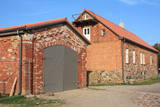 |
Found on the right bank of the Saka River at Dzintaru Street 1, the museum is in the first red brick and fieldstone building in Pāvilosta. It was built in 1879 for ship pilots. The museum focuses on the history of the local region, particularly in terms of fishing and seafaring. Among the exhibits are stone and bone axes, bronze brooches and belts, as well as a unique honey press, all of which have been found in the Saka Parish. Alongside the museum is a boathouse with larger exhibits. A mansard that was opened in 2012 is a site for exhibitions and thematic events. The museum’s phone number is +371-6349-8276. Make sure that you also visit the oldest part of Pāvilosta – Āķgals, which is a typical coastline village from the 19th and early 20th century. |
|
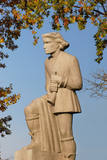 |
Another monument designed by Kārlis Zemdega, this one was installed in 1937 and was initially known as a monument to soldiers who liberated and fell in Rūjiena. The monument survived the Soviet era only because a statue of Lenin that was across the street was on a high pedestal and thus overshadowed the monument to the trumpeter of Talava. |
|
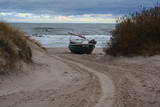 |
Ceļa, kas ved uz jūru – galā, redzami Latvijas piekrastei samērā reti skati. Ja palaimējas, šeit var novērot vietējos zvejniekus darbībā, kas joprojām iet zvejā. Krasta kāpās aplūkojamas vecas, pamestas un arī sagrieztas zvejas liellaivas un dažādi mūsdienu zvejniecībā izmantojami „darba rīki”. |
|
 |
This is a bakery that offers traditional Lithuanian sweets, including honey buns. You can learn all about how those are produced. |
|
 |
Der Stützpunkt des Livländischen Ordens. Der Bau der Burg war eine Strafe für Ortsbewohner. Die Burg wurde nach dem Befehl des Dänischen Königs Frederik der II 1576 vernichtet. |
|
 |
Baltijā lielākās HES celtniecību uzsāka 1961. g., bet pabeidza 1966. g. Tajā uzstādīto 10 hidroagregātu projektētā jauda bija 825 MW. Pļaviņu HES tiek uzskatīta par unikālu, jo pirmoreiz HES būvniecības praksē tā konstrukcija tika balstīta uz mālsmilts un smilšmālu gruntīm ar maksimālo spiedienaugstumu - 40 m! Pļaviņu HES ēka ir apvienota ar ūdens pārgāzi, zem kuras atrodas Latvijas garākais tunelis - Enerģētiķu iela. 20. gs. deviņdesmitajos gados Pļaviņu HES rekonstruēja un tagad tās jauda ir sasniegusi 870 MW. Apmeklētāji var iepazīt mašīnzāli, skatu laukumus un HES maketu. |
|
 |
The farm offers educational programmes about the specifics of growing hemp, as well as about hemp products. During the programme, visitors are treated to products grown at the farm. |
|
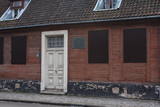 |
Находится на ул. Кунгу, д. 24.Одно из старейших зданий города - деревянный сруб с черепичной крышей, построенный во второй половине XVII века и прозванный в народе гостиницей мадам Хойер. Здесь в 1697 году во время путешествия «Великого посольства» в западную Европу останавливался (инкогнито) русский царь Петр I. Находящееся по соседству здание на ул. Кунгу, д. 26, является вторым старейшим жилым зданием Лиепаи (1699 г.) – жилой дом бургомистра города. Во время Северной войны здесь останавливался король Швеции Карл XII. Оба здания подлежат осмотру только снаружи. |
|


