
| No | Name | Description |
|---|---|---|
 |
Atrodas uz Imulas upes un celtas 19. gs. sākumā. Uz dzirnavu vārtu staba redzama tēlnieces D. Ezergailes veidota pūce. Pūces dzirnavās savulaik uzņēma pazīstamo latviešu mākslas filmu Likteņdzirnas.
|
|
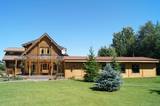 |
The “Aizvēji” guest house is located only 50 km from Riga and 200 m from the sandy shore of Vidzeme seaside, in a quiet and beautifully landscaped environment. It is a party and leisure complex with a tennis court that provides catering for events. The log house has two banquet halls and several cosy rooms. The summer café is located in a separate building from the guest house. |
|
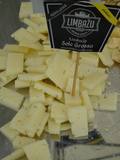 |
The Limbažu Cheese factory has more than 90 years of experience with dairy processing. It only uses milk from local farmers in Vidzeme, while the dairy processing technologies have been brought in from Switzerland. Limbažu Cheese exports 95% of its output. Alongside the company and on the other side of the street from the ruins of the Limbaži castle is a little store where the company’s products can be bought. |
|
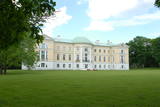 |
This beautiful castle (1797-1802) is seen as the most brilliant example of Classicism in Latvian architecture. It, like the Eleja Castle, was designed by the architect of the royal court in Russia, Giacomo Antonio Domenico Quarenghi and the architect Johann Georg Adam Berlitz. The ornate interior was unique for Kurzeme at the time when the castle was built. Empress Catherine II gifted the castle to Charlotte von Lieven (1742-1828) after Charlotte served as governess for the empress’ grandchildren. An agricultural school operated in the building from 1921 until 1941, and it was very much damaged and pillaged during World War II. Restoration began later, when the Mežotne experimental selection station was housed in it. The lovely building houses a hotel and can be toured. Around the castle, which is on the banks of the Lielupe River, there is one of the most beautiful English-type gardens in Latvia – perfect for a stroll. |
|
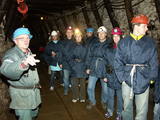 |
Gas mixture is the main raw material for Estonia’s energy and chemical industries, and it is extracted in our day from open quarries or underground shafts. This layer was established during the Ordovician Period between 450 and 480 million years ago, and it is made up of the remnants of plants and animals from that age. In the Kohtla-Nõmme suburb, there is a shaft which can be toured in the company of a guide who will tell you that this is the only layer of its kind in the Baltic States. He will tell you about how the gas mixture has been extracted over the course of history.
|
|
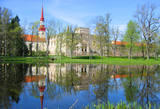 |
The Castle was built beside the Põltsamaa River in the 13th C and became the residence of Duke Magnus, King of Livonia in the 16th C. In the castle yard you find the tourist information centre, local history museum, wine cellar, Estonian Press Museum, art gallery, ceramic and handicraft workshop. |
|
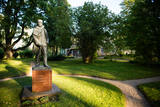 |
The memorial museum for Edvards Veidenbaums (1867-1892) was established at his homestead, “Kalači.” The great poet and translator lived there from the age of five and also died there. Alongside the museum is an exhibition hall that offers thematic exhibitions. A monument designed by the sculptor Laimonis Blumbergs is in the garden of the museum and was installed in 1961. There is also a granary in which Veidenbaums lived during the summer. The poet was buried in the local Liepa cemetery. |
|
 10 days
|
The tour takes through all three Baltic States – Lithuania, Latvia and Estonia. The route visits the capital cities and some of the most attractive cities and towns in Mid - Baltics. The tour starts in Vilnius, the capital city of Lithuania. Kaunas is the second largest Lithuanian city, standing at the confluence of the Nemunas and Neris Rivers. Riga, the capital city of Latvia, offers a variety of cultural experiences and entertainment. Sigulda is famous for its landscapes and medieval castles. Cēsis is one of the most charming towns in Latvia with many attractions ranging from medieval heritage to nice restaurants, exhibitions and festivals. Valmiera offers art galleries, museums, nature trails and Valmiermuža beer from the famous local brewery. Tartu in Estonia is a university town, with some very popular tourist attractions such as the interactive AHHAA science centre, the largest in Baltic countries. Finish the tour in Tallinn – the capital city of Estonia. Tourist information centres in cities and towns will help you with maps, information on sights, attractions and guided tours, food, shopping and public transport. |
|
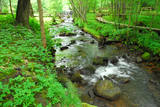 |
A pathway of wooden trails and little bridges, featuring the most beautiful part of the Ieriķupīte river, with several waterfalls, an old windmill, a unique millwheel, and various areas of obstacles for active people in the company of a guide.
|
|
|
|
Atrodas Inciema centrā. Piedāvā maltīti visām ēdienreizēm. Lielas porcijas, garšīgs ēdiens. Iecienīta tuvākas un plašākas apkaimes maltītes ieturēšanas vieta. Klāj galdus. |
|
 4 days
|
The route leads through beautiful flower gardens of Kurzeme and Žemaitija. The largest in Latvia collection of Dwarf Bearded Iris is found in Kandava. Mierkalni is the largest daylily garden in Eastern Europe, with more than 1000 varieties. The owner also produces fruit and berry wines. In the Talsi Hillocks Nature Park there is the Kurzemnieki apple growing and processing apples (dried apples, apple chips, juices). It also grows Roman snails. The Upmaļi environmental and health farm produces teas, herbs, plant oils, special balms, cosmetics, plant-based soaps, etc., under the brand name AnnA Bermans. Latvia’s oldest magnolia, 50 years old, is found at Sauleskalni arboretum. Over 100 varieties of peonia are grown in Ziedoņi peony garden. The owners of Maras Manor offer stories of historical German manors in the area. Milk Estate Berghof houses a milk museum. Exotics flower and tree cultivars are found in Māra Lindes dendrological gardens. Turaidas farm produces herbal teas and sacks thereof as souvenirs or gifts, using lemon balm, raspberry, tansy, alchemilla, Plantago major and linden. In Nīca village, 7 decorative gardens maintaining the local gardening tradition are open for visitors. Rucava arboretum displays a collection of magnolias. The largest Japanese garden in Europe (16 ha) is a home to collection of traditional aromatic plants and vegetables. Palanga Manor housing the Amber Museum and Birutė Park is one of the best-preserved manor complexes in Lithuania. Kretinga Manor Park is one of the oldest surviving 16th–18th century manor parks in Lithuania. Klaipėda University Botanical Garden has a coastal ethnographic garden with flower arrangements characteristic of this area. Klaipeda, the most popular seaside resort town in Lithuania. The Sea Museum and Dolphinarium are among the most famous attractions there. Šilutė Manor has two parks – an English landscape park with walking paths and the forest park known as Varnamiškis, or “Crows’ Forest”. Pakalnė is a unique traditional fisherman’s homestead with garden plants typical of the Lithuania Minor region. |
|
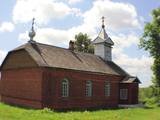 |
Bоrisovas St. Nikolay Old-Believers Prayer House was built in the period of 1911 – 1921 . The different feature of the Prayer House is a brick building placed on the hill. The bell of the temple was specially
ordered and brought from St. Petersburg. The bell has a very soft sound.
|
|
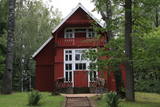 |
This is a homestead that is three km from the centre of Vecpiebalga and is in a lovely place – the Incēni hill. There is a museum here featuring the author of the legendary fairy tale “Pussy’s Mill” by Kārlis Skalbe (1879-1945). The poet and prose writer built the building in 1926 and spent summers there from that year until 1944. The museum was opened in 1987. The western slope of Vaktskalns hill right alongside the museum offers a lovely view of Lake Alauksts. The cremated remains of Skalbe and his wife, Lizete, were reinterred at the location in 1992 from Sweden, where the poet died. There is a unique monument to them in the form of a stone boat. |
|
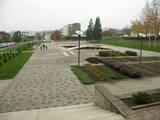 |
Madona is probably the only town in Latvia, in whose area a lake settlement was located around the 9th century. Its residues are preserved in the northern part of Salas Lake (Baznicezers) under water. Until the end of 19th century, a small estate with the same name (Madona) was located in place, where present town is located, Latvians called the place Bizi. In 1898 construction of narrow gauge railway between Stukmani (Plavinas) and Valka was started. The development of railway helped the development of the town. Today Madona is well maintained Vidzeme town with its own charm typical for small town. Interestingly that it can also be considered as one of the most highly placed towns in relief of Latvia. |
|
 |
Rankas Dairy was established in 1996 and manufactured some 80 dairy processing products, including cheese, cottage cheese, cream, fermented dairy products, desserts, etc. This is one of five companies in Latvia that is allowed to manufacture one of the EU’s guaranteed traditional characteristics product, “Summer Solstice” cheese. The products are available at the “Rīmaļnieks” store that is alongside the dairy. |
|
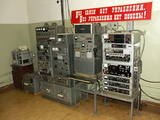 |
This extremely secret bunker was one of the most important facilities in Soviet Latvia in the event of a nuclear attack. Under the code name of “Rest Home,” the bunker is nine metres under the ground at the Līgatne Rehabilitation Centre, and it would have been the place where Soviet Latvian government officials would have gone in the event of an attack. The status of a secret object was lifted only in 2003. The underground installation has been preserved fully.
|
|
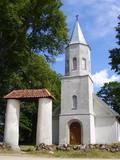 |
Renda is a very old town, first mentioned in historical sources in 1230. During the 13th century, Renda was one of the centres of the ancient Courlandian land of Vanema. When Courland was split up in 1235, Renda was taken over by the German Order, and local residents were forcibly drafted into its military. During the age of the Duchy of Courland (1562-1795), the region flourished despite wars, the bubonic plague and other problems, particularly during the rule of Duke Jacob (1642-1682). During the 17th century, Renda became something of a manufacturing centre, churning out timber products, with local lime kilns, watermills, flax weaving facilities, a glass factory and a boiling house for saltpetre and soap. Wine, perfumes and barrels were produced in Renda, as was cast iron for nails and many other things. The court at the Jelgava Castle loved the sour wines from Renda. All of this was destroyed during the Great Northern War (1700-1721). During the 19th century, a chemicals factory was built on the site of the burned Renda castle, and nearby was one of the largest leather tanning plants in Kurzeme, along with a manufacturing facility for turpentine. Cultural life began to develop in parallel to this. Renda suffered much during the two world wars and the subsequent Soviet repressions. The so-called Courelian Battalion of partisans went into the forests after the occupation to continue their struggle against the Soviet regime. Renda today is a small and quiet village with the Lielrenda Estate, a local church, the “devil’s boat” at the Abava River, and the Īvande waterfalls. |
|
 |
Wooden slat weaving workshop is located in Jelgava county, Sesava parish. Craftswoman is making different type of wooden slat baskets and basketry from pine, linden, aspen and black alder. There are several different categories of baskets, available in different sizes - picknick baskets, baskets for berry and mushroom picking, trays, baskets for firewood, laundry baskets, onion / garlic baskets, baskets for kids, and diverse baskets for daily use. Various inscriptions and drawings are also made on the weavings. They also accept orders for individual orders. In the workshop it is possible to see the wooden slat basket weaving process as well as have the opportunity to learn to make your own basket. |
|
 |
Viena no augstākajām Latvijas celtnēm ar vienu no augstākajiem skatu laukumiem (65 m). Paveras izcila Vecrīgas un Rīgas ainava, kā arī Daugavas (līdz Rīgas HES dambim) un Pārdaugavas skati. Labi redzami blakus esošie Rīgas centrāltirgus paviljoni. |
|
 |
"Dobele Agra S.I.A." ir moderns, nākotnes perspektīvā domājošs lauksaimniecības uzņēmums Latvijā. "Dobele Agra S.I.A.", kas atrodas netālu no Dobeles - Krimūnās, kā viens no lielākajiem aramzemes apstrādātājiem Latvijā pašlaik apstrādā apmēram 5 800 ha lauksaimniecības zemes Dobeles un Jelgavas rajonos. Uzņēmums specializējas graudaugu audzēšanā pārdošanai vietējos un starptautiskajos tirgos, tādējādi gadā tiek saražotas apmēram 20 00 - 25 000 tonnas graudaugu, no kuriem lielākā daļa ir kvieši mieži, rapsis un pākšaugi. Pārsvarā tiek audzētas ziemas šķirnes. |
|


