
| No | Name | Description |
|---|---|---|
 |
The saloon is located near the Kuldīga ring road. This is a slow-serve saloon with foods cooked on alder wood on the basis of the slow food principle. The saloon offers “meals in the garden”. Latvian cuisine: Bean salad, sprats with cottage cheese, oatmeal with smoked meat, false goose, pike-perch sautéed in cream, cod with onions and tomatoes, potted mutton, beef with onions, hunter’s style pig liver, potted sautéed vegetables, hot dumpling soup with blackberries, wild berries with whipped cream, apples caramelised in honey, cottage cheese desserts. |
|
 |
You can learn about the lives of bees and buy honey made from all kinds of flowers, propolis, propolis blankets and wax candles. Apian therapy is offered here. This is an ancient method which involves a bed under which there are beehives. The bees create warmth, vibration and a biofield. |
|
 |
A gift shop in the old town of Cēsis near Rose Square, in the building of the former hotel "Baltischer Hof". The shop is named after the hotel's former owner, Karlīne. It is possible to buy gifts, handicraft items, souvenirs, as well as delicious homemade products, homemade wines and spirits here. |
|
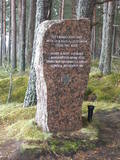 |
Around 6 km in length and an isolated route stretching between Ragaciems and Klapkalnciems where, as stories about olden days tell, robbers used to attack travelers. Around 1.5 km before Klapkalnciems (going from the side of Ragaciems), in the dune by the sea there is installed a commemorational stone dedicated to the Finnish jaeger battles. It was installed on December 09, 1997. The stone has "travelled" from the south-eastern part of Finland where in 1940 it served as an anti-tank defense. In the monument, there are engraved the words, "Here during World War I, from August 1916 to December fought the Finnish yeagers". In turn, in Klapkalnciems there is installed a commemorational stone in the place where there are buried five Finnish soldiers. |
|
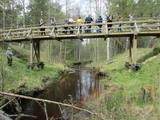 |
A bridge for pedestrians and bicyclists, which is on the border of the Slītere National Park. |
|
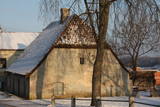 |
This little building is on the left bank of the Venta River beyond the ancient brick bridge. It is located at Pils Street 4. The hut was built in 1735, using rocks from the damaged castle of the duke, and it was built on a terrace that is the last fragment of the walls that surrounded the castle. Also known as the Hangman’s hut, the building was rebuilt during the 19th century. It can only be viewed from the outside. |
|
 |
Restaurant Agnese takes you on a culinary tour around the world. Local fruits of nature and produce by farmers are prepared with love, highlighting the value of Latvian flavours. The menu also includes several globally recognised recipes. |
|
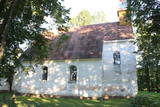 |
The Zasa Lutheran Church is in the northern part of the Zasa park, was built in 1750, and is a small Lutheran church. The organ, which was produced by the distinguished organ builder Andrejs Sūnākslis, was recently restored. The graves of German soldiers who fell during World War I are near the church. |
|
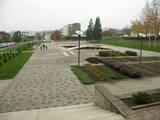 |
Madona is probably the only town in Latvia, in whose area a lake settlement was located around the 9th century. Its residues are preserved in the northern part of Salas Lake (Baznicezers) under water. Until the end of 19th century, a small estate with the same name (Madona) was located in place, where present town is located, Latvians called the place Bizi. In 1898 construction of narrow gauge railway between Stukmani (Plavinas) and Valka was started. The development of railway helped the development of the town. Today Madona is well maintained Vidzeme town with its own charm typical for small town. Interestingly that it can also be considered as one of the most highly placed towns in relief of Latvia. |
|
 |
In mid-summer, the farm features the beautiful blooms of rapeseed and flax. A special facility for pressing rapeseed and flax seed oil is on site. You can watch the oil pressing process and purchase some of the resulting oil.
|
|
 1 day
|
One of the most beautiful sections of the Baltic Coastal Hiking Route in Matsalu National Park, which leads through the agricultural lands and coastal meadows located near Matsalu Bay, where thousands of migrating cranes and geese gather in autumn. There are excellent birdwatching sites with towers near Haeska village (coastal meadows, shallow coves, small islets, cattle pastures) and at Cape Puise (coastal meadows with pastures, shoals). The most panoramic views of the sea and strings of islands can be seen in the surroundings of Põgari-Sassi and Puise nina |
|
 |
Jauns Zoo un izklaides vieta netālu no Siguldas, pie ceļa Turaida - Ragana. Tiks atvērts 2022. gada maijā. |
|
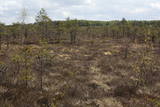 |
Territory established mainly for protection of bog myrtle and various bird species. An interesting fact is that bog myrtle or sweet gale is used as ingredient for making famous Riga Black Balsam. Brienamais purvs (wade bog) is hard to find and reach therefore it is not suitable for tourism.
|
|
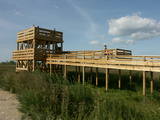 |
This is the only viewing platform in Latvia which is wheelchair-accessible. From the second level, you can see much of the restricted territory – areas of reeds, some wetlands, dunes and the estuary of the Daugava River. This is a good location for bird-watching.
|
|
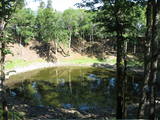 |
Eins der eindrücksvollen Meteoritenkraterfelder Europas. Der Hauptkrater ist 22 m tief, Durchmesser – 110 m. Der ungefähre Zeitraum des Meteoriteneinschlags liegt ung. 7500-Jahre zurück. |
|
 |
"Gusts Apinis" is located in Vidzeme highlands, Amata region. The company is unique in that it grows non-traditional crops in Latvia: quinoa, amaranth, millet, lentils, etc. Produces flour and pasta (buckwheat, buckwheat-quinoa) from grown products. |
|
|
|
Atrodas Kokneses tūrisma centra telpās (1905. gada ielā 7). 160 cm garais un 120 cm augstais makets ir Vittingenas (Vācija) dāvinājums Koknesei, atzīmējot 10 gadu sadraudzības jubileju. Šāda Kokneses pils izskatījās ap 1701. gadu. |
|
|
|
Ap 9 km garā taka (vienā virzienā) sākas Skaņākalna dabas parkā (Mazsalacā) un beidzas pie Ramatas. Tā iepazīstina ar Salacas ielejas dabas parka nozīmīgākajām vērtībām – smilšakmens atsegumiem (Skaņaiskalns, Dauģēnu klintis u.c.), alām, nozīmīgu izmēru laukakmeņiem u.c. Taka marķēta. Tajā izvietoti informācijas stendi, norādes. Jāpadomā par loģistiku – kā nokļūt sākuma punktā. |
|
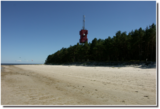 |
Cape Ragaciems – a promontory from
the western shore of the Bay of Rīga which
ends with a shallow and rocky submarine
shallows reaching several hundred metres
into the sea. The Ragaciems Lighthouse is
at the tip of the cape
|
|
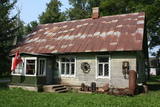 |
The brothers Imants and Ivars Novožilovs have spent more than 10 years collecting local evidence of World War II – weapons, wrecks of armoured vehicles, the everyday objects of soldiers, etc., and they have now opened an exhibition of those items at the former headquarters of the local parish council.
|
|


