
| No | Name | Description |
|---|---|---|
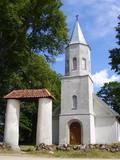 |
Renda is a very old town, first mentioned in historical sources in 1230. During the 13th century, Renda was one of the centres of the ancient Courlandian land of Vanema. When Courland was split up in 1235, Renda was taken over by the German Order, and local residents were forcibly drafted into its military. During the age of the Duchy of Courland (1562-1795), the region flourished despite wars, the bubonic plague and other problems, particularly during the rule of Duke Jacob (1642-1682). During the 17th century, Renda became something of a manufacturing centre, churning out timber products, with local lime kilns, watermills, flax weaving facilities, a glass factory and a boiling house for saltpetre and soap. Wine, perfumes and barrels were produced in Renda, as was cast iron for nails and many other things. The court at the Jelgava Castle loved the sour wines from Renda. All of this was destroyed during the Great Northern War (1700-1721). During the 19th century, a chemicals factory was built on the site of the burned Renda castle, and nearby was one of the largest leather tanning plants in Kurzeme, along with a manufacturing facility for turpentine. Cultural life began to develop in parallel to this. Renda suffered much during the two world wars and the subsequent Soviet repressions. The so-called Courelian Battalion of partisans went into the forests after the occupation to continue their struggle against the Soviet regime. Renda today is a small and quiet village with the Lielrenda Estate, a local church, the “devil’s boat” at the Abava River, and the Īvande waterfalls. |
|
 |
Evidence found at Dievukalns tells that Baltic tribes lived at this place 3,000 years ago the, but in 7th and 9th here at the Daugava Livs tribes settled. Bishop of Riga built stone castle at the bank of the river Daugava (first mentioned in the 1229), whose ruins you can see today as well. Lielvarde is an inspiration for such people of cultural awakening time as Andrejs Pumpurs (1841-1902) and Auseklis (1850-1879). During World War I (almost three years Daugava served as front line) Lielvarde was completely destroyed. After the World War II, here, as well as elsewhere in the Latvian territory, begins the establishment of collective farms. During this time Lielvarde became known for another symbol - "Lacplesa" beer. Today Lielvarde is a favourite of travellers, who have chosen to make their route along the right bank of the Daugava. |
|
 |
Bioloģiskā saimniecība nodarbojas ar Irbeņu ogu audzēšanu un dažādu to produktu ražošanā kā pulverus, sulas, tinktūras, eļļas, sejas maskas un kapsulas. Irbene ir vērtīgs ārstniecības augs, kur izmantojamas ir pilnīgi visas tā daļas – lapas, ogas, sēklas, stumbrs, miza, sakne un ziedi. |
|
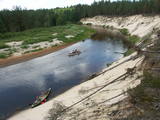 |
This comparatively large territory is found to the South of the Irbe River and Stende River, and it is unique with more or less virginal forests and dunes. The Irbe River has a system of ancient tributaries, and the Dižpurvs swamp is parallel to the shoreline. The Irbe has become a popular river for water tourism in recent years, but the tourist infrastructure on its banks remains insufficient. Territory has good road connections and has potential for nature education activities. |
|
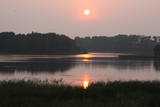 |
Also known as Lake Jēsis or Lake Iesis, this is the lake in Latvia which has the largest number of islands. Many literary sources and encyclopaedias in the 20th century claimed that there were 69 islands in the lake, but that was an exaggeration, because apparently the authors took sandbars overgrown with reeds and other plants to be islands. The true number is approximately two times lesser. The largest number of islands can be found in the north-eastern part of the lake. The largest one is Lielā Lāča (Big Bear) Island (45 ha). A farm was on the island at one time. The islands and the oak trees that are on the shores of the lake – the Piļoru and Pahatnīku stands of trees – are in a restricted environmental reserve. |
|
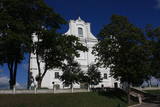 |
The first wooden Catholic church in Dagda was built in 1705, while the church that is seen today was built in the Baroque style during the latter half of the 18th century, the work financed by a local nobleman. Important interior elements include the altar, the pulpit, the organ, a monument to the Hilsen dynasty, etc. To the North of the church is historical Dagda itself, with typical red brick buildings from the early 20th century that are known as the former homes of Jewish merchants.
|
|
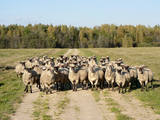 |
The farm, which has been developed around the servants’ home of the former Ķempēni Estate, breeds more than 200 Latvian dark-headed sheep. Visitors can purchase meat, wool and skins, also taking part in informational tours with tastings of various foods, as well as catching and tasting trout (this is available only to those who spend the night at the venue). |
|
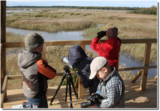 |
Kaņieris is a seriously overgrown and
shallow seaside lake. Its water level was
adjusted several times during the 20th
century so as to obtain agricultural lands.
The lake has 14 islands, among which nine
are natural and the rest are artificial and
aimed at attracting nesting water birds.
Lake Kaņieris has one of the richest
diversities of birds in Latvia. An
ornithological nature reserve was
established here in 1964. In 1989, the lake
was placed on the list of major birding
locations in Europe, and in 1995 it was put
on the list of the Ramsar Convention. At
the southeastern shore of the lake is a
boating facility (only rented boats are
permitted on the lake). A bird-watching
tower was erected on the Riekstu
peninsula in 2009
|
|
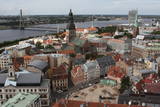 |
St Peter’s is one of the oldest historical monuments in the Baltic States, and it is also the best place from which to survey the historical centre of Rīga, which is part of the UNESCO list of world cultural heritage. You can see the central part of Old Rīga, City Hall Square, the Pārdaugava region on the opposite side of the river, and even – during clear weather – the Bay of Rīga. The tower of the church is 123 metres high, but the viewing location is at a height of 72 metres.
|
|
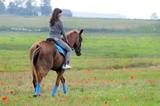 |
Schoolchildren up to the 6th grade are offered tours during which they can learn about animals, feed them and pet them. Older students will learn about the evolution and biology of horses, as well as about work with horses. Easy hikes are offered to tourists. |
|
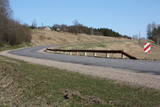 |
Beautiful views are accessible from the Sabile castle hill (steps, a location for relaxation), Upurkalns Hill (no improvements) and Briņķpedvāle, which part of the Pedvāle Open-Air Art Museum. There are also the Drubaži nature trails. The road between Kandava and Sabile which runs along the right bank of the Abava and the Aizdzire-Kalnmuiža road which runs on the left bank of the Abava also offer beautiful landscapes.
|
|
 |
Established: 1959
60 coniferous and 350 deciduous trees
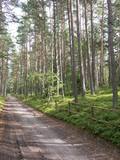
Brief description: Between the Tukums-Kolka road, the Lāčupīte stream and the sea, Igors Mednis has planted a series of foreign trees and shrubs. He has conducted experiments to see how different foreign plants adapt to different conditions. The best time to visit is in May and June, when the rhododendrons are in bloom.
|
|
 |
Ogu un augļu dārzs, dažādu ievārījumu, sulu, sīrupu ražošana un tirdzniecība.
|
|
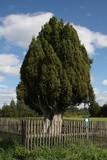 |
This is the thickest common juniper (Juniperus communis) in Latvia and the Baltic States. It stands in the middle of a field and looks wonderful. The tree is sometimes known as the Rieteklis juniper, because the Latvian poet Rieteklis (Jūlijs Eduars Balodis, 1856-1940) like to sit under it.
|
|
 |
Atrodas 1905. gada ielā 6. Sinagoga tika celta 1875. g. – Krievijas cara Aleksandra II valdīšanas laikā. Pēc 2. pasaules kara tajā atradās graudu noliktava, kinoteātris, kafejnīca un visbeidzot – naktsklubs. No 2003. gada to vairs neizmantoja. Pirms gada tika pabeigts vērienīgs projekts - sinagogas un lūgšanu nama atjaunošana, kurā izveidots sabiedrībai pieejams kultūras un informācijas centrs un pārcelta Kuldīgas novada bibliotēka. |
|
 |
"Karpyne" has an excellent restaurant which offers both various fish dishes as well as other foods. Here there's a lot to do inside and outside, for example, inside is bowling alley, swimming pool, gym and outside - outdoor swimming pool and a tennis court, there's a possibility to fish too. Seminars and celebrations can be organised here. |
|
 |
Ilze Kupča bakes cakes in Mārupe, preserving her grandmother’s traditions. She has received several awards in various competitions in Latvia. She makes cakes and zephirs from natural products, which are either purchased from Latvian farmers or home producers, grown by herself, or even picked in the forests. Individual orders are accepted. Rye delicacies: blackcurrant and apple zephirs with rye breadcrumbs, lingonberry and caramel cake with rye bread. |
|
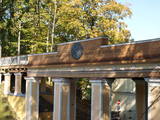 |
Vom 19. Jh. ist der Domberg ein offentlicher Park mit Pfaden, Gehwegen, Brücken (Engelsbrücke, Teufelsbrücke) und den Denkmälern für die Wissenschaftler der Tartu Universität. Hier befinden sich die Domkirche, das Anatomicum, das Observatorium u.a. interessante Objekte. |
|
 2 days
|
This tour combines culinary experiences with visiting popular tourist attractions in southern Estonia. You will visit Võru and Rõuge, enjoy the southern Estonian landscape in Haanja Nature Park from the top of Suur Munamägi, the highest hill in the Baltics, and will be sincerely welcomed in Setomaa, the land of Setos - an ethnic and linguistic minority carrying on their unique heritage traditions. Setomaa has been inhabited for about 8,400 years, which makes it one of the oldest human settlements in Estonia. On this tour, you will taste Estonian wines made from locally grown berries and fruit, visit a goat farm offering superb goat’s cheese, and will be served a hearty country meal in a rural homestead. The itinerary starts and ends in Tartu, but it can be extended to/from Tallinn and Riga. |
|
 3 days
|
Маршрут предусмотрен для опытных туристов, кому нравиться объединять наплюдения за природой с познанием культурной среды и истории. Это путешествие по самой впечатляющей речной долине в Балтии – древней долине Гауи. Маршрут начинается в Сигулде, которую с давних пор называют «Видземской Швейцарией». В окрестностях Сигулды открываются одни из красивейших пейзажей в Латвии. Маршрут пересекает глубокие овраги многих притоков Гауи и открывает внушительные в масштабах Балтии обнажения песчаника девонского периода. Природные тропы Лигатне – это единственное место в Латвии, где в условиях, максимально приближенных к естественной жизни в природе – в широких вольерах – можно увидеть разные виды диких животных. Поселок бумажной фабрики Лигатне – это великолепный пример индустриального наследия европейского масштаба со своеобразной средой поселка 19-го – 20-го веков. Цесисский средневековый замок – это мощная крепость средневековой Ливонии с современным центром для посетителей. Конечный пункт маршрута в Валмиере, одном из старейших городов Латвии. Информация о маршруте от Latvijas Lauku forums |
|


