
| No | Name | Description |
|---|---|---|
 |
The owners grow shitake mushrooms and offer tours with information about how mushrooms are grown and what their nutritional properties are. Mushrooms can be bought, and consultations are available. The owners also offer other types of biological farm produce, as well as honey. |
|
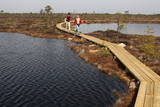 |
The word “Soomaa” means “land of the swamps” in Estonian. There are several major swamps in this area, along with rivers, lowland meadows, wetland forests, and other biotopes that are of key importance in terms of the diversity of species. Major floods occur here in the spring, which is known by locals as the “fifth season''. The fifth season is the best time to explore the landscape of Soomaa. |
|
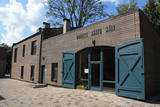 |
The Dobele Crafts House is to the East of Market Square at Baznīcas Street 8 in Dobele. Enthusiasts use it to preserve ancient traditions from the Zemgale region. Workshops to teach crafts are organised here five days a week. |
|
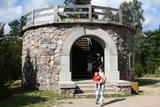 |
The tower is on one side of the range of hills known as Grantskalni (a continuation of the Blue hills of Ogre), and it offers a broad view of the Daugava River valley and the Pārogre residential district. The dendrology park that is nearby is worth a visit, because it is rich with different kinds of plants.
|
|
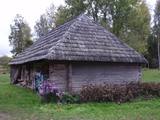 |
This is the home of singer and oral tradition keeper Lidija Jansone, who is a holder of the Latvian Order of Tree Stars and a fierce defender of the cultural heritage of the Suiti people. She will tell you about her community’s history and traditions and about the special bourdon singing of the Suiti. Lidija will also talk about how beer was once brewed by our ancestors for various celebrations. |
|
 |
This venue organises seminars, courses and activities related to Latvian holidays and family celebrations. There are master’s classes about culinary heritage in
|
|
 |
Atrodas sporta un atpūtas kompleksā „Trīssaliņas”. No torņa paveras pievilcīga apkaimes ainava, kas īpaši skaista ir pieneņu ziedēšanas laikā. |
|
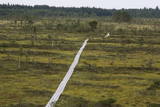 |
The tower is in the western part of the Vasenieki swamp, and an interesting nature trail with information stands and pathways was recently established there. The tower offers a look at unique swampland – visitors can survey the entire swamp. Wear proper footwear when it is damp outside!
|
|
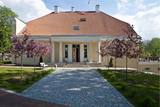 |
The restoration of Kau Manor, which was originally constructed before 1241, was inspired by the colourful history of the manor, and the imagination makes it stand out from the other manors. Kau Manor has won the 2016 World Boutique Hotel Award in the category of the World’s Most Inspired Design Hotel. |
|
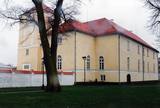 |
The Castle of the Livonian Order in Ventspils was first listed in documents in the late 13th century, and despite damaging wars, it has maintained its essence as a castle to this very day and only with minimal changes. The castle is also known as the oldest Medieval fortress in Latvia. Today it is home to a modern museum. |
|
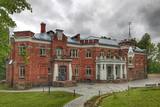 |
The construction of the state began in the early 20th century. The mansion was built of bricks and fieldstones between 1905 and 1911 in the styles of Historicism and Art Nouveau. The estate was owned by engineer and professor Stanislav Kerbedz from St Petersburg, the first Russian engineer to develop principles for the architectonic aspects of bridges. These were used during the latter half of the 19th century, and Kerbedz led the construction of the Nikolayev bridge across the Neva River in St Petersburg. Kerbedz’s wife, Yevgenia, was well known as a lover of art, and she brought various art objects to the estate from Italy. The Lūznava Estate was a popular place for gatherings of artists during the summers. Among those to visit was the distinguished Lithuanian painter and composer Mikalojus Čiurlionis. The estate is surrounded by a 23.7 ha landscape park with a system of ponds. Near the estate is a statue of the Madonna, which was carved by an unknown Italian artist. The statue was damaged and thrown into a pond during World War II, but it was restored in 1991. Reconstruction of the main building of the estate was complete in 2015, and today it is a modern and international centre for environmental education and the arts. |
|
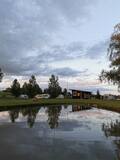 |
Lakeside Sigulda is a quiet camping and recreation area on the territory of Lake Matinu. Offers relaxation, overnight stays near nature and picnic options in a quiet environment. Travelers with campers, caravans, as well as those staying in tents can stay overnight in the camping area. In addition, a well-equipped glamping tent for 2 people has also been created. Showers, toilets, outdoor kitchen, picnic areas, grills, internet and electricity connection are available for camping guests. SUP boards are available for active recreation. |
|
 1 day
|
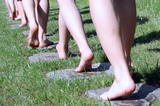
The Barefoot Path begins at the Valguma Pasaule Recreation Centre by Lake Valgums, which is surrounded by forest. The recreation centre includes a hotel and restaurant, and offers nature-based services such as the Barefoot Path and other walking trails. The Barefoot Path is a 2.6 km long trail through the natural environment, along which visitors walk barefoot and experience a variety of surfaces including pine cones, glass balls, small stones and shingles of various shapes, moss, fine sand, clay, river water, turf, gravel, reeds, chipped wood, pinewood logs, wooden poles and millstones. Walking barefoot has a number of positive health effects: it strengthens the immune system; it improves blood circulation and stabilises blood pressure; it strengthens the leg and foot muscles, joints and ligaments; and it enhances relaxation, and aids mental and physiological stability. The walk is led by an English-speaking guide. Before the walk, visitors receive a briefing. It is recommended that visitors wear comfortable outdoor clothing, appropriate for the weather. After walking the barefoot path, visitors usually feel energised, strong and happy. The walk finishes with a relaxing herbal foot bath. |
|
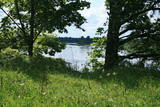 |
This location is important in terms of Latvia’s history, because during the 12th and 13th century, this was the administrative and spiritual centre of the Lettigalian tribe, with the ruler of Jersika being Visvaldis. The castle stood on the shore of the Daugava at a height of 18 m, and this was a mighty castle hill. The flat part of the hill measured 100 x 75 m, and it was surrounded by a barrier and a defensive wall made of logs. People entered the castle via guarded gates beyond which there were residential and household buildings, as well as a small church. Archaeologists have found the remnants of log buildings, as well as many antiquities from the 10th to the 13th century that speak to extensive trade relations with other parts of Europe, including ancient Russia. In 1209, the forces of Bishop Albert fooled the people in the castle and sacked it and the ancient town that was around it. Visvaldis’ family was taken hostage, and so the Lettigalian ruler was forced to become a vassal of the bishop. The castle hill is privately owned, so please contact the owner before planning a visit. |
|
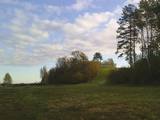 |
Īdeņa Castle mound is located near Lake Lubāns. A beautiful view
to the lake and to the marshy meadows. The place was inhabited from
the 11th century.
|
|
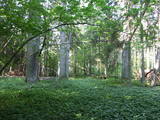 |
This is a fairly unique territory in Latvia – a vast forest of oak trees (many of them very large, indeed), linden trees, elms and various other deciduous trees. In the company of a forest guide, the visitor can walk through a small part of the forest, learning about the inhabitants of the area and their importance. This is an environmentally protected zone.
|
|
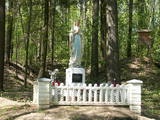 |
The castle hill of Milka is situated near Lake Sālaja and River Malta; 27m above the lake level. Local
businessman cleaned the hill and placed the statue of Mother of God there. It is a a symbol of Latgalian
strong faith into God and Virgin Mary.
|
|
 |
Café Pärnamäed is located near the highway Via Baltica 10 km from Pärnu, in the direction to Riga; it specialises in baking pastries, white bread and rye bread without preservatives, and also offers products from various small manufacturers. In the café you can also enjoy soups, main courses and desserts. |
|
 |
Atrodas Vecpiebalgas centrā pie Inešu ceļa. Vieta, kas jāapmeklē katram savas valsts patriotam, jo šeit atdusas leģendārā romāna "Mērnieku laiki" autori - brāļi Reinis un Matīss Kaudzītes, sabiedriskais darbinieks un valodnieks Atis Kronvalds u.c. Kapos apskatāmi brāļu Kaudzīšu un A. Kronvalda pieminekļi. Tos atrast palīdzēs izvietotās kartes un norādes. |
|
 |
Atrodas Rendā, pie tilta pār Abavu. Mazs, jauks krodziņš, kas atrodas vēsturiskā ēkā ar patīkamu interjeru. Piemērota maltītes ieturēšanas vieta ne tikai tiem, kas pārvietojas pa ceļu, bet arī Abavas laivotājiem. Strādā g.k. vasaras sezonā. |
|


