
| No | Name | Description |
|---|---|---|
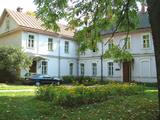 |
Veitko Manor was built in 1832. From 1993, there are hostels of
Latgale Craft School.
|
|
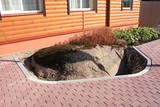 |
The rock is along the main street of Krāslava and is found at Augusta Street 12. After major reconstruction of the city’s infrastructure, the rock was successfully integrated into the surrounding landscape. The rock is 2.8 m long, 2.2 m wide and 700 cm high. It once served as a border stone for the village of Krāslava. It was placed there in 1729 to commemorate the day when the noble Plater dynasty bought Krāslava. The dynasty’s seal is engraved in the side of the rock along with the date when it was installed. Legend has it that Polish King Augustus II dined at the rock after a hunt, and that is why it is known as Augustus’ Rock. |
|
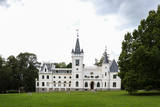 |
The castle was built during the first half of the 19th century in Tudor Neo-Gothic forms. The first owner of the castle was Baron Johann Gottlieb von Wolff. During the 1870s and 1880s it was rebuilt in the style of French Neo-Renaissance. The castle was burned down during the 1905 Revolution, but it was restored with certain elements of Art Nouveau forms. Tours are available of the interior of the building. |
|
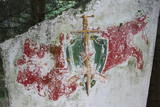 |
The coast guard facility is not used at this time. Still there is a monument, a border post, and lavatories with wooden toilet paper holders. A good view of the facility can be seen from the high barrier along its southern edge.
|
|
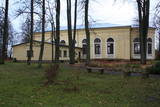 |
Dievnams celts (1851. g.) un vēlāk (1876. g.) paplašināts. Tas tika sagrauts 2. Pasaules kara laikā un pēcāk atjaunots. Līdz Latvijas neatkarības atgūšanai to izmantoja par skolas sporta zāli. Pēc draudzes darbības atsākšanas (1989. g.) sākās arī baznīcas un ar to saistīto tradīciju atdzimšana. Apskatāma no iekšpuses. |
|
 |
The owners have made sure that everyone can buy fresh and processed fishery products from local producers. During the summer, on the terrace, you can listen to Mazupīte's water, enjoy freshly grilled fish, as well as enjoy particularly delicious cakes, coffee and ice cream. |
|
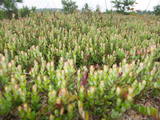 |
This is a diverse territory in terms of biotopes and landscapes, and the restricted area was established to protect nesting and migrating birds in the area. One part of the swamp has a cranberry farm – one of the first artificially established farms of its type in Latvia.
|
|
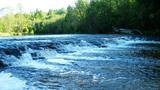 |
35 m wide and 0.5 m high, the
|
|
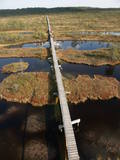 |
This reserve was set up to protect local swamps and surrounding wetlands. Please note that before you can visit the reserve, you must register with the local administration and visitor centre in the village of Tooma.
|
|
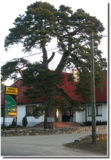 |
The Great Pine of Bigauņciems outside
the Dižpriede café,
|
|
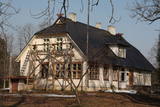 |
Several of the buildings of the Šlītere Semi-Estate have survived to the present day – the servants' house (late 19th century), the pump house (mid-19th century), the smokehouse (mid-19th century), the cattle barn, etc. A forestry building was built here in 1936 and renovated in 2010. Since the end of 2009, the administration of the Slītere National Park has been housed here. Today the building also houses the Kurzeme regional branch of the Environmental Protection Board. Opposite the building are two yews, and there is a productive ivy which has covered the northern side of the servants' house. The common yew and the Baltic ivy are symbols of Šlītere, and you can see and photograph them here without "bothering" them in their natural environment. The pump house contains a well that is unique in Latvia – it is 34 m deep, which is nearly the height of the Blue Hills of Šlītere. It reportedly was active until the 1970s and delivered water to the forestry system. A fragment of the stone well can be seen as a part of the wall of the pump house. The semi-estate is surrounded by small elements of a park, including an impressive alley of elm trees. Locals says that pre-war Latvian President Kārlis Ulmanis spent the night at the building once while on a hunt. |
|
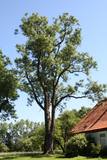 |
A very beautiful and expressive tree, it is found on the land of what was once the Vīceži Semi-estate.
|
|
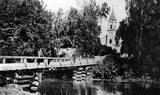 |
On the right bank of the River Pēterupe is one of the historical areas of Saulkrasti – Pēterupe Village. It is believed that the village began to form around a chapel during the so-called Swedish or Catholic times. The chapel was named after the Apostle St. Peter, and therefore the river and the village also carries his name. Pēterupe Village can be considered the oldest village in the Saulkrasti region. The oldest witnesses of the origin of Pēterupe Village are: Rectory, Pēterupe Evangelical Lutheran Church, Outpatient Clinic and the wooden buildings in the old village centre. |
|
 |
Atrodas Rīgas – Daugavpils autoceļa (A 6) 118. kilometrā. |
|
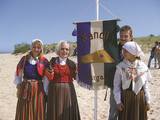 |
In a document from 1387, the village is named Minor Irva. Until the mid-20th century, Mazirbe was the largest Livonian village on the coast of Kurzeme. It was a fishing village and a centre for fishing. The village had a church, school, pharmacy, forestry company, several stores, a post and telegraph office, train station, barber shop, bakery and photo workshop, as well as a brick kiln. During the 1930s, a local fishing co-operative built a fish processing plant here. The Livonian Association was established here in 1923, and the Livonian People's Centre was opened in 1939. Oppoite the centre is the Stūrīši homestead (the home of the Taizel dynasty), where you can learn about everyday household objects and, by ordering it advance, taste local foods. The first chairmen of the Livonian Association, Kārlis Stalte and Māritņš Lepste, lived in Mazirbe. Cultural worker Kārlis Stalte (1870-1978) spent man years as the verger and organist of a church in Mazirbe. Mārtiņš Lepste was a Livonian language teacher in the 1930s. The former Maritime School building can be viewed from the outside. Some 2,000 students attended the school between 1894 and 1914. During Soviet years, the army had a base here. |
|
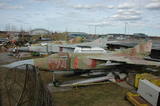 |
The largest collection in Europe of Soviet aviation and military equipment is on the territory of the Rīga International Airport and is open to visitors. The collection was assembled over the course of 40 years.
|
|
 |
Atrodas Daugavas prospektā 10, starp Rīgas – Daugavpils šoseju (A 6) un Kalēju ielu. Dievnams celts laikā no 1931. - 1933. g. (arhitekts: Pēteris Kundziņš). Padomju gados tajā bija izvietota Latvijas Valsts bibliotēkas grāmatu glabātava. Pateicoties draudzes aktivitātēm 1989. g., ēku atjaunoja. Tagad tā kalpo savam pamatmērķim. |
|
 |
The Peipsi barge is a type of sailing ship specially adapted to Lake Peipsi and Emajõgi River conditions, and originates from the 14th C. Jõmmu was the first barge launched in 2006 following a 50-year gap. The Emajõgi River Barge Association runs varied trips on the Emajõgi River and Lake Peipsi. Little fans of barges can learn about old crafts and shipbuilding at the barge yard. |
|
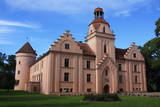 |
This convent-type castle was built in the mid-13th century by the bishopric of Piltene. Annexes were added in the 16th and 19th centuries to create a typical internal courtyard. The Neo-Gothic forms of the castle’s façade date back to the 1830s. From the 16th century to the 1920, the castle was owned by the noble Behr family. After it was burned down during the 1905 Revolution, the castle was rebuilt in two years’ time. The castle is known for ghost stories, tales of elf weddings, and stains of blood in the Red Room that are supposedly the result of a murder. A fireplace was built to hide the stains, but they reappeared. Since the privatisation of the castle, the interior has been restored with halls and cellars that are decorated with elements that are typical to the castle. Its rooms and viewing tower are open to the public. In the park, visitors will find the Alley of Love and the elf oak tree. |
|
 |
The owners grow shitake mushrooms and offer tours with information about how mushrooms are grown and what their nutritional properties are. Mushrooms can be bought, and consultations are available. The owners also offer other types of biological farm produce, as well as honey. |
|


