
| No | Name | Description |
|---|---|---|
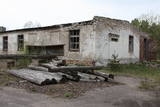 |
The zenith missile base at Rucava is in the forests of the Baltic coastline. The facility is owned by the regional local government and is not used at this time.
|
|
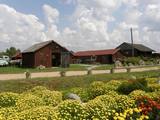 |
We offer a private collection of ancient tools, household items and technologies which we began to assemble in 2002. Right now we have more than 5,000 objects of cultural and historical objects on display, as well as a lovely garden with countless compositions of colourful flowers, fountains, an Eastern meditation bridge, ponds, a pergola, leafy areas, etc. The garden covers more than 2 ha, and it is located 1 km from Lazdukalns. |
|
 |
This is an unusual farm, one with no electricity (its owners use candle lanterns and petroleum lamps), with all work done by hand. Visitors can watch the milking of goats, the subsequent handling of milk, and the production of cheese. They can help to harness horses, try out sleds on wheels, and work with a scythe and a sickle. Livestock raised in the Latvian countryside can be viewed. |
|
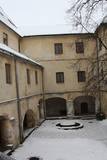 |
Jaunpils development is linked to the Livonian Order's castle, which until now has hardly changed its building volume and appearance. From 1561 until 1919 it belonged to the barons Reki family. In 1905 the castle was burned down, but later it was reconstructed under the supervision of architect V. Bockslaff. Substantial castle restoration work began during the sixties of 20th century. Now in the castle is a museum, but gourmets can taste medieval dishes at the castle tavern. |
|
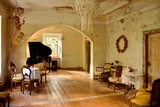 |
Iespējams apskatīt Kroņvircavas muižas kompleksu, kas bija pēdējā Kurzemes un Zemgales hercoga Pētera Bīrona lauku īpašums ar pili. To pēc hercoga pasūtījuma 1776. - 1785. gadā būvēja galma arhitekts Severīns Jensens. No hercoga pils līdz mūsdienām saglabājies vienīgi ziemeļaustrumu korpuss un virtuve kā atsevišķa ēka. Vispilnīgāk no muižas kompleksa ēkām saglabājušās Kavalieru māja, Pārvaldnieka māja, kurā tagad vietu radis projekts “Muižas istabas”, klēts-magazīna, stallis. Kroņvircavas muižas apbūve ir Valsts aizsardzības objekts. Pili ieskāva liels baroka stila parks ar ūdens parteru, kas kā muižas dārzs sākts ierīkot 1693. gadā. Šobrīd “Muižas istabās” saimnieko ģimene, kas vēlas saglabāt autentiskās mājas vērtības, iedzīvināt džezu uz “Muižas istabu” improvizētās skatuves, izstādīt mākslinieku darbus un svinēt svētkus. Aicinām apmeklēt vēsturiskā un kultūras mantojuma interesentus dzīvās mūzikas pavadījumā atklāt Vircavas bagāto vēsturi, ģimenes piedzīvojumus ar 250 gadīgo namu un sajust īpašo atmosfēru, ko novērtējuši daudzi mūsu apmeklētāji. |
|
 |
2012. gadā tika izveidots ģimenes uzņēmums "Bioorganic earthworm compost", kurš nodarbojas ar organiskā mēslojuma - sliekkomposta jeb biohumusa ražošanu. Ir izveidota moderna sliekkomposta ražotne, kura ir viena no lielākajām Baltijas valstīs. Pieaugot cilvēku interesei par zaļo saimniekošanu un iespējami kvalitatīvāku ekoproduktu iegūšanas iespējām, tiek piedāvātas ekskursijas pa ražotni, lai parādītu, kā tiek ražots viens no visefektīvākajiem organiskajiem mēslojumiem - sliekkomposts. |
|
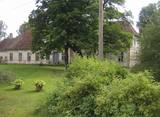 |
The historical centre of the Tāšu Estate is in the Ālande (Telse) River Valley near Lake Tāši. The current estate was built by the von Korff dynasty, and the mansion dates back to 1734. Inside there are valuable Baroque fireplaces, the main entrance portal made of sandstone from Gotland, the original stone floor in the hall, parquet and wall panels. The front door, windows, stairs and other details were installed in the early 19th century |
|
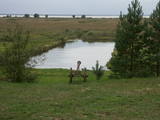 |
Along with the Nagļu ponds, these are Latvia’s largest fishing ponds. They were established on the flood-land peat areas of Lake Lubāns in the 1970s, when the hydrotechnical system of the lake was first established. The Lubāna-Gaigalava road bisects the Kvāpāni-Īdeņa ponds. There are three bird-watching towers on the dams of the ponds. The ponds are a major location for water bird nests, as well as places for migrating birds to rest. There are extensive bird-watching opportunities in the area.
|
|
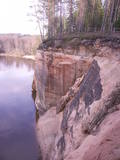 |
These sandstone cliffs were once known as the Pieškalni or Pieškaļi cliffs. They are around 7 km to the North from the centre of Cēsis. These are the most monolithic sandstone cliffs in the Baltic States – around 700 m long (with some 330 m along the Gauja River) and a maximum height of 22 m. There is a viewing area which offers a grand view of the Gauja River valley. Water tourists will boat up to the majestic wall of the cliff and will be surprised at what they see! The name of the cliffs, Ērģeles, is the word for "pipe organ" in Latvian, and the name was supposedly given to the cliffs because of the echoes which can be heard there – they reputedly sound like an organ. Hikers and boaters must be very careful when in this area – please make sure that you are safe! Please note, too, that the infrastructure of the cliff is scheduled to be renovated in 2012. |
|
 |
Liellopu izsoļu nams ir vienīgais liellopu izsoļu nams Baltijā. Izsoles tiek rīkotas gaļas šķirņu jaunlopiem - buļļiem un telēm vecumā līdz 12 mēnešiem, regulāri - divas reizes mēnesī. Katru mēnesi izsolēs piedalās vairāk kā 2000 Latvijā audzēti jaunlopi. |
|
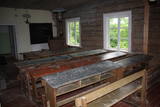 |
The Old School of Druviena is alongside the Druviena-Liezēre road. The historical school building became home to a museum in 1964. The school is closely linked to the great Latvian writer Jānis Poruks (1871-1911), and a memorial room to him has been installed in the building. On the second floor, you can look at a classroom, sit on an old-time school bench and try to imagine yourself as a schoolchild long ago. Interesting exhibits include boxes in which children brought food from home – the same ones which were used by two of Poruks’ most popular characters, Cibiņš and Buņģis. |
|
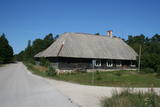 |
A school that was moved from Žocene was here during the 1850s, and it is alongside the Ģipka church. In 1938, a company from Dundaga opened a shop here to sell goods of basic necessity. (Source: Roja TIC) |
|
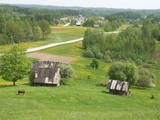 |
One of the most distinct sub-glacial depressions in Latvia, with 11 lakes of various sizes and depths. This is a magnificently lovely territory, with particularly good views from the Drusku castle hill. On a clear day, one can even see the Hanja highlands of Estonia. The restricted territory was set up to protect boreal and hillside forests I the area.
|
|
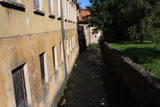 |
This is a unique small town in a certain sense, and it is the only one in the Baltic States which has remained in place since the 17th and 18th century. The town is around the small Alekšupīte River, and in some places the stream runs along the walls of the buildings. Because of this fact and the many bridges that are in town, Kuldīga has become known as “the Venice of Latvia.” Baznīcas, Liepājas, Kalna and other streets are full of interesting cultural monuments. |
|
 |
Одна из самых красивых набережных Латвии. Расположена в северной части Старого города Вентспилса. Началом набережной на улице Остас в восточной ее части служит «Тиргоню дарзс» (здесь же Вентспилсский ТИЦ) и Юракменс. Набережная украшена скульптурами коров, памятниками, фонтанами и цветочными композициями. До середины прошлого столетия на улице Остас находились склады - амбары, часть из которых сохранилась. Напротив замка Ливонского ордена установлен памятник Кришьянису Валдемару. У пристани стоит кораблик «Герцог Екаб». |
|
 |
The owners are in the process of renewing a more than a hundred-year-old wooden barn, where they plan to organize creative workshops for young people, with the participation of a blacksmith, carpenter and other craftsmen. The owner teaches how to plat a paling. There is a possibility to get to know farm animals – rabbits, chickens, ducks, goats, etc. The house of useful arts is going to be opened in May 2014 |
|
 |
On 14 June 1991, this sign sculpted by Zezostrs Ķēde in memory of the repressions of 1941 and 1949 was unveiled in the garden of Pēterupe Church. |
|
|
|
The zenith missile brigade and its communications headquarters were used for the provision, planning and co-ordination of radio communications. The object is all but abandoned, but it is owned by the Latvian Repatriation Centre and the Christian Mission.
|
|
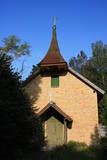 |
Atrodas Labraga – Apriķu ceļa malā. Kāds nostāsts vēsta, ka to 1896. gadā cēlis vietējais muižkungs, kurš vēlējies, lai viņa meitas laulības notiktu baznīcā. Dievnamā atrodas altārglezna "Kristus pie krusta un Sv. Marija Magdalēna", kas gleznota 19. gadsimtā (autors T. Šprengels). |
|
 2 days
|
Here you will learn about home-based manufacturers, farms, companies and others in Kurzeme that produce various dairy products such as milk, yogurt, cottage cheese, cheese, ice cream, etc. Begin in Tukums, which offers lots of interesting foods and beverages. Then cross the ancient Abava River valley, which is one of the most beautiful river valleys in Latvia. The route leads to Wine Hill in Sabile and then Talsi, the “city of nine hillocks.” Further on you will find Dundaga and its legendary castle, pass through large and lonely forests on your way to Ventspils, and then continue along the shore of the Baltic sea to Medze. From there, travel back into the centre of Kurzeme, through Aizpute and Kazdanga, which is known for its own castle. Visit Latvia’s first shiitake mushroom farm at Garīkas, the Milk Estate and the Milk Museum. Further on will be Saldus with its tasty treats, then Džūkste, and then back to Tukums, where we started. |
|


