
| No | Name | Description |
|---|---|---|
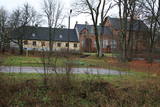 |
Виргская господская усадьба как лен была передана вассалу Ливонского ордена Конраду Нолду. До наших дней сохранился дворец господской усадьбы «Виргас», в котором с 1935 года до наших дней разместилась школа. Во дворце находятся три двери, украшенные красивой резьбой по дереву, с гербами рода Нолдов и портреты баронов. В бывшей клети господской усадьбы в 1983 г. обустроен Дом традиций - теперь Дом культуры. Господскую усадьбу окружает парк, в котором находится место могилы барона Нолда и баронессы с памятником. В центре Вирги установлен сапог Карла XII с двумя направленными друг от друга пушками и ядрами, которые вещают о временах Северной войны, когда в Вирге в 1701 г. был лагерь шведского войска. |
|
 |
Gallery Voronja is an art gallery where a high-quality international art programme is offered and every summer Onion Road is organised. The small garden café operates in the gallery every day with a menu inspired by local ingredients and additional flavours from the city environment. Customers can buy Voronja onion jam, chocolate sauce and other seasonal products.
|
|
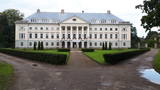 |
Work on the park began in end of 18th century, when it was a landscape park with trails for strolling and a system of pathways, benches and bridges. The 196-ha park is one of the largest estate parks in Latvia, and in dendrological terms it is one of the richest ones, with more than 200 varieties of trees and bushes, including 127 foreign ones. The park encircles the village of Kazdanga, including the Kazdanga Castle and the territory to its north, where you will find the burying grounds of the Manteuffel family. These were established at the very beginning of the 20th century, but the work was interrupted by World War I. The park features leisure areas and decorative elements. The castle was built around 1800 by the European-level architect Johann Gregor Berlitz after a design by architect Giacomo Quarenghi. The ensemble included a Cavalier House, a granary, a residential home, a stable, a bridge across the valley and other structures. An agricultural school was opened in the castle in 1924. Today it is the Kazdanga Museum, with the local Tourism Information Centre.. |
|
 |
Biškopības produktu ražošana - medus, ziedputekšņi, bišu maize, propoliss, bišu māšu peru pieniņš. Bišu māšu selekcija, bišu saimes. |
|
 |
Avinurme Wooden Handicrafts Centre in East-ViruCounty is a tourist centre that offers a chance to get acquainted with the local woodcraft, spend quality time in woodworking workshops and taste or even prepare your self a selection of Estonian traditional foods. Handicrafts Centre is waiting to surprise you and offer you many new and fun experiences. Avinurme is the most south-eastern parish of EastViruCounty. Due to location and nature conditions, Avinurme area has strong woodcraft and business traditions, which are based on knowledge passed on generatoin to generation. The main products have always been wooden vessels – different household items such as barrels, tubs, casks, wooden buckets, sauna wash tubes, wooden roof chips and furniture, particularly chairs. Wooden Handicrafts Centre you can test your dexterity in the many different workshops offered. Offers and packets to groups. This is also a tourist centre where you can get acquainted with local wood products. There is also a café serving dishes of Peipus region on special wood products, and home-made rye bread is also available here. |
|
 1 day
|
Ekskursijas laikā apmeklējiet dabas taku, kura izvijas augšup un lejup gar Pilsupes lejteces stāvajiem krastiem un atklāj skaistus skatus uz trīs balto smilšu atsegumiem, no kuriem vecākais ir 6000 gadu vecs. Pēc tam apmeklējiet Kubalu skolu - muzeju, kur redzēsiet, kādas izskatījās skolas 19 gs. Klasē Jūs sagaida senie skolas soli, tāfelītes, tinte un rakstāmspalva. Tālāk dodieties uz dabas parku, kurā izveidota Bišu taka. Iespēja kāpt kokā ar dzeiņa palīdzību, liet vaska sveces un iepazīt dažādos biškopības produktus. Ekskursijas noslēgumā dodieties uz mini zoo, kur ir iespēja apskatīt dažādus dzīvnieciņus - pundurkaziņas, punduraitiņas, mandarīnpīles. |
|
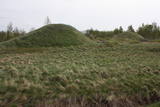 |
The air defence radar facilities at the Liepāja airport in Cimdenieki are gone now, although the man-made terrain in the area remains interesting today.
|
|
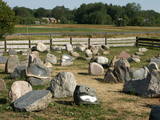 |
The craftsman produces gravestones, commemorative plaques and stone sculptures on the basis of orders from clients. He is prepared to tell you about a stonemason’s work and demonstrate his skills. |
|
 |
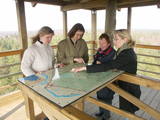
This is a comparatively large lake (3 km long and 1.3 km wide). It is shallow (no more than 1.1 m deep) and is classified as a seashore lake. The Vecslocene River flows through it. At the southern end, there is a narrow stream which connects Lake Sloka with Aklo Lake – a shallow and small lake with a dolomite bed at some locations. The best view of Lake Sloka can be seen from the bird watching tower on its north-western shore. This is the only floating bird watching tower in Latvia. Alongside it is the beginning of the 3 km Lake Sloka hiking trail, which passes through the flooded wetlands of the lower reaches of the Vēršupīte. An information stand can be found on the shore of Lake Sloka by the car park. Beyond it is a sulphurous spring. |
|
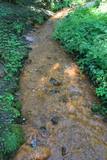 |
The Saltupju sacred stream is 1.3 km to the Northwest of the centre of Aknīste, near the small valley of the Dienvidsusēja River. The stream has been known as a source for medical treatments since antiquity. It is said that streams which flow to the East always have medicinal water, particularly on Easter morning for those who rinse their eyes in it. The water contains iron compounds, which is seen in the brown sediment (the result of iron bacteria). Alongside the stream is a stone with a small indentation, and it is thought to have been a cult stone long ago. A sacred linden tree grows at the edge of the valley. The stream can be seen with good reason as one of the most outstanding streams in all of Latvia. |
|
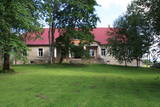 |
Lodes muižas ēkas izvietojušās t.s. Lodes – Taurenes subglaciālās iegultnes (cauri tek Gauja) austrumu nogāzē. Muižas apbūve tapusi 19. gs. pirmajā pusē, bet kungu māju (klasicisma stils) cēla 1815. g. Pēdējie īpašnieki, kas šeit saimniekoja (līdz 1939. g.) – bija Šmidtu dzimta. Mūsdienās muižas pilī vasarās dzīvo LU Ģeogrāfijas un Zemes zinātņu fakultātes studenti, kuriem šeit ir lauku prakšu norises vieta. Kungu māja apskatāma no ārpuses. |
|
 |
Ložmetējkalns Hill is one of the highest locations at the Long Dune. There is a monument to heroic Latvian riflemen who suffered great losses here during the Christmas battles of late 1916. There is a great view of forests all the way to Jūrmala, as well as of the Maztīrelis swamp, where the embankment of the former narrow-gauge railroad is very evident. This is part of a memorial park to commemorate the Christmas battles. You can visit the Mangaļi museum, the restored “German Rampart,” monuments and other objects.
|
|
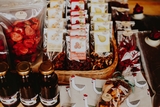 |
The farmwoman grows vegetables and fruits to produce tasty preserves, syrups, jams, chutneys and dried fruit. You can taste and purchase the products, go on a tour of an escargot farm, and taste escargots cooked in the Burgundy style. Children’s camps can be organised. |
|
 |
Mulgi Kõrts (tavern) in Abja-Paluoja, the centre of Mulgi area, has a cosy atmosphere, local dishes and swift service. The tavern is in a house over 100 years old. |
|
 10 days
|
Autumn is a peak bird migration time when huge flocks frequently cross the sky above your head. Cranes perform impressive displays in the fields. There are still some dragonflies and butterflies to see, plus wild animals including wild boar, deer and beaver. The landscape acquires its beautiful autumn colours while we people can enjoy oursleves gathering the wild autumn harvest - mushrooms, cranberries, cowberries and much more. From Riga the tour goes along the Vidzeme sea coast with areas of Devonian sandstone, coastal meadows and numerous places to watching wading birds. At Salacgriva you visit the traditonal lamprey weirs and can taste them grilled. The tour goes to Seda bog, which is an important nesting site for water birds. Here you might see several types of geese, swans and cranes as well as some mammals and dragonflies. Then the route goes to natural coniferous forests at Mežole with great biological diversity. Next the tour focuses on mushrooms and berries in the Gauja National Park which also provides great views of the river valley with some steep Devonian banks with several medieval castles and manors perched on top. Then the tour goes back to Riga and on to two important national parks. Ķemeri National Park has a Black Alder trail through wet forest, ideal for spotting woodpeckers. In contrast the Big Heath trail passes though a landscape of raised and transit bog and sulphurous springs. At Slītere National Park you have a wildlife day visiting a beaver lodge, tracking variousforestanimals and possibly seeing some of them. Cape Kolka offers excellent costal migration action. The tour goes along the steep sea coast of Jurkalne, stops at Ventspils town for lunch with a bracing walk along its breakwater, then turns inland towards Riga. On the way there are stops at the Abava ancient valley and Sabile wine hill. |
|
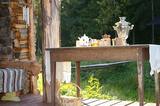 |
Trips run by Mooska Farm are a wonderful chance to learn about the rich cultural heritage of Võru County, such as the smoke sauna, the tradition of smoking meat in sauna in winter or cooking it in a stone-lined hole in the ground. Scenic walks to Vällamägi hill teach you how people in this area perceive and communicate with the great outdoors; orienteering games, Nordic walking and snowshoeing tours are also on offer. The best size for a group is up to 12 persons. |
|
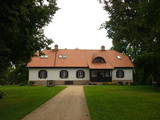 |
The Berķenele semi-estate is a historical monument of national importance, known as the place where the distinguished Latvian author and politician Rainis (1865-1929) spent his childhood. The house was restored in 1995, and since 1996 it has been the Rainis house in Berķenele. Rainis recorded his childhood impressions in a poetry collection called "Five Sketch Notebooks from Dagda." Today the managers of the house offer tours, creative workshops and exhibitions. Visitors can don the clothing worn by the lord and his servants. Around the house is a large orchard, featuring a programme called "Route of Apples." The house also has a lovely landscape that is interesting to see. |
|
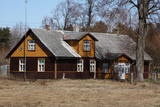 |
This set of buildings represents a homestead for a fisherman and a farmer. The house was built in 1926, and the ancillary buildings all date back to the first half of the 20th century. The homestead can be seen from the road. |
|
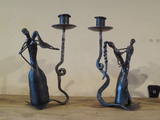 |
The smithy produces fencing, gates, wind gauges, chandeliers, household products and souvenirs. The craftsman will be happy to tell you about his work and to demonstrate his skills. |
|
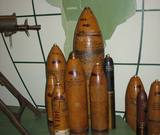 |
The museum is in Gunpowder Tower, which was an important component in the Medieval fortifications system of Rīga. The basic subject of the museum is Latvia’s military and political history, and exhibits are related to these subjects.
|
|


