
| No | Name | Description |
|---|---|---|
 10 days
|
This grand hiking tour includes some of the best and most beautiful parts of the Forest Trail in Latvia and Estonia. Hikes in the forest trails and villages are combined with trips and excursions in cities, as well as other popular tourist sights in both countries. You will get a detailed impression about the forest diversity and most popular national parks in Latvia and Estonia. You will start the tour in Riga, where you will enjoy the beautiful Old Town included in the UNESCO and Art Nouveau District. Then you will drive to Sigulda and see the most scenic ancient valley of the River Gauja, visit Turaida Museum Reserve, hike in Gauja National Park till the historic Ligatne papermill village. Further on you will visit the famous Lake Āraiši Castle, hike on the Cirulisi nature trails and see the beautiful medieval town of Cesis. On the way to Estonia you will stop at the Sietiņiezis big sandstone cliff to have picturesque views of the River Gauja. Then you will stay in Estonia’s second biggest city – Tartu, and visit the recently opened Estonian National Museum. Further on you will drive to Alutaguse National Park and hike along the picturesque Kurtna landscape reserve among the bright coniferous forests ornamented by the mirror surfaces of its many lakes. At the end of the tour you will hike in Estonia’s oldest national park – Lahemaa, which means the “land of bays” in Estonian. The Forest Trail goes along the bays and peninsulas of Lahemaa National Park, introducing the hikers to its most significant natural and cultural heritage. The forests are rich with blueberries and mushrooms in autumn and the air is very clean. This tour will end with sightseeing in Tallinn, Estonia’s capital city, with the Old Town also included in UNESCO. |
|
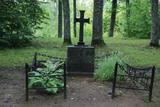 |
To the North of the Cesvaine Castle is a park that is crossed by the rapidly flowing Sūla River. The Cesvaine castle hill is on the northern bank of the river, is around 15 m high and is covered by trees today. The grave of the owner of the castle, Adolf von Wolff, is there. It is said that he wanted to have his casket dragged to the gravesite on a sled. He died during the summer, but that was done anyway. The park features a wide diversity of trees and bushes, some of which the owner brought home from his extensive travels. |
|
 10 days
|
During this trip you will visit the workshops of craftspeople, farms that breed horses, as well as various destinations where you can enjoy country goodies. Ancient skills are now a modern application. First you will stop in Ikšķile, and at the very beginning of the trip, you will visit a cellar that stores birch juice wine and taste sparkling wine. In Skrīveri, you will be surprised by the transformation of milk. A cosy café on the main street of the small town offers outstanding homemade ice cream featuring strawberry, anchovy and horseradish flavours. In Koknese, you can supplement your wardrobe with a new leather belt, bag or stylish leather jewellery. A farm that grows hemp will offer a small tour, as well as hemp delicacies. The work of black ceramics masters in Latgale fits into modern interiors. The Aglona Bread Museum offers a chance for visitors to bake their own loaf of bread. The visit to the next farm will allow you to add tasty cheese that has been made from milk from Latvian brown cows. The last stop in Latvia will be Daugavpils, which features an art centre featuring the work of the globally known abstractionist Mark Rothko, as well as the Daugavpils fortress, that was built in the 19th century and is an impressive military building. This is one of the most popular tourist destinations. From there you will travel to Lithuania, where you will visit several traditional farms. The Ilzenbergo Dvaras estate has a bio-dynamic farm. You will taste Lithuania's national sweets which are called šakotis. You will visit the town of Anykščiai, which offers a hike along a trail that is above the trees. A horse museum offers a look at old farm equipment. Next you will visit farms that will inform you about traditional Lithuanian cuisine and the work of potters. The Dubingiu horse farm offers horseback rides. At the conclusion of the tour you will visit the unique Trakai lake castle (14th and 15th century), as well as Vilnius. |
|
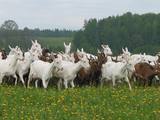 |
This is one of the largest goat farms in Latvia, with approximately 160 pedigree goats (Alp, Anglo, German White Noble and other breeds), as well as pigs for breeding purposes. You can take a tour and help in herding the goats. Kid goats can be seen in the spring. You can taste various kinds of cheese, ice-cream made from goat milk and watch how the goats are milked (around 5:00 PM every day). You can also taste and purchase canned meat. No preservatives are ever added to the farm’s products. |
|
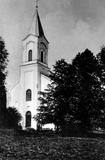 |
The first building of the church was built in 1641. The fourth building of the church was only built in 1856 – during the times of Pastor Johann Wilhelm Knierim. Its altar painting – The Crucified Christ (Golgotha) was painted in 1856 by Jozeps Millers, who was influenced by the altar piece in Munich Louis Church created by his teacher Peter Cornelius. An epitaph of Baroness Auguste Amalija von Pistohlkros, the sister of the owner of Bīriņi Manor and the patroness of the church, was immured in the memorial wall. Construction of the tower was completed on 11 June 1856, as evidenced by a memorial plaque on the wall of the church with an inscription “Erbaut von August Pistolkors 1856”. The church was consecrated in 1864. And a year later an organ by Martin Company with 8 registers, which was extended to 14 registers in 1903, was installed in the church. Unfortunately, the organ was destroyed in WW2. Saulkrasti (Pēterupe) Evangelical Lutheran Church survived both World War 2 and the Soviet period. The Soviet era was one of the most difficult times for the church, because many churches in the area were destroyed, pastors were discharged and the congregation fell apart. The Pēterupe congregation remained. As an architectural monument the church was lucky enough to undergo roof repairs of the tower even during Soviet times. Funds were granted by the Chairlady of the Executive Committee Ņina Manzūrova. |
|
 |
Xранилище старинных предметов находится на втором этаже здания Туристического информационного центра в Нице. Здесь представлен более чем столетний народный костюм Ницы со всеми неотъемлемыми принадлежностями - юбкой, корсажем, кафтаном и шапкой с «ушками». В ницанском сундуке для приданого хранятся работы местных рукодельниц, которые продолжают местные ремесленнические традиции. Посетители могут ознакомиться с ницанскими одеялами, платками, скатертями и другими пригодными в хозяйстве вещами, а также с рукавицами и носками. |
|
|
|
Eine Asstellung der Steine unter freiem Himmel, eingerichtet vom litauischen Ärzt Intas Vaclovas (1925 – 2007). Ein Museum der einzigartigen Steine. |
|
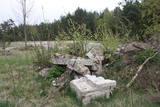 |
The former Soviet-era fuel base was part of the military facilities at that time. Fuel tanks from this site have been removed and no longer exist. |
|
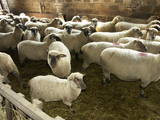 |
The farm has vast meadows along the banks of the Aiviekste River, with some 400 head of blackhead sheep – the largest herd of its type in Latvia. You can tour the far and purchase pedigree sheep, meat, wool, pelts and vegetables. |
|
 14 days
|
A panoramic tour of Lithuania and Latvia with highlights of nature experiences in the National parks and nature reserves. A variety of landscapes, nature attraction sites, birds and wild animals, forests and seashore. The tour also offers some cultural and historical insights. Baltic States are lucky to have plenty of untouched natural territories. During the Cambrian, Silurian and Devonian eras, the territory of the current Baltic States was often covered by seawater, which is why there are places where lots of geological evidence can be found about these periods in history. These are manifested not just in fossils and various geological objects, but also in the unique landscape. For example, The Gauja River basin is an outstanding locations for Devonian cliffs and caves. Other interesting elements of the terrain relate to the development of the Baltic Sea in the past – the Baltic Ice Sea and the Littorine Sea. That is well presented at he landscape of hillocks and valleys in the Slītere National Park. Many forests and bogs have remained virtually untouched as biotopes here. The Ķemeri, Slītere national parks were all established to protect wetlands. Rivers in the Baltic States have not been straightened and dense areas of buildings are not common. There are two “lands of lakes” in the Baltic States – Latgale and Augštaitija. The Baltic States are at the crossroads of the living areas of many different plants and animals, and that is why “northern,” “southern,” “western” and “eastern” species can all be found here. Some national parks have been established to protect distinctive local cultural heritage. |
|
|
|
Bērzes upes labajā krastā, vietā, kur tagad paceļas Dobeles pilsdrupas, jau 1. gadu tūkstotī p. m. ē. atradās zemgaļu apmetne un vēlāk – koka pils. Gandrīz simts gadus pils izturēja vairākus krustnešu uzbrukumus un aplenkumus, un tikai 1289. g., kad vācieši bija pilnībā izpostījuši apvidu un tālāka pretošanās kļuva bezcerīga, zemgaļi paši nodedzināja savu koka pili un neuzvarēti aizgāja uz Lietuvu. 700 gadus vēlāk, 1989. gadā, godinot zemgaļu cilšu piemiņu, bijušās senpilsētas vietā tika atklāta piemiņas zīme, ko veidojis mākslinieks Mārtiņš Zaurs. Akmenī iecirsts teksts: “Zini, no šīs vietas pirms 700 gadiem zemgaļi aizgāja lepni un brīvi”, kā arī dzejnieka Viļa Plūdoņa vārdi : “Mēs svešā malā ejam, bet sirds mums paliek te”. |
|
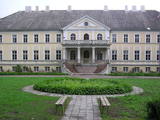 |
The Rudbārži Estate was built at the request of Baroness Thea von Firks from the aristocratic dynasty. After a reconstruction in 1883, the building became an ornate example of Mannerism and Renaissance architecture, with decorative finishing and a larger size. On December 15, 1905, the building was torched by revolutionaries. The restoration began three years later under the leadership of architect L. Reinier. The castle has a holiday hall with two marble fireplaces, the parquet in some of the rooms dates back to the early 20th century, and the outdoor doors have metal engravings. The castle was reconstructed in 1938. It housed a German field hospital during World War II, while after the war it housed a school for forestry workers. In 1962, the Rudbārži school moved into the building, which is now named after Oskars Kalpaks. A commemorative plaque outside the building is devoted to the Kalpaks battalion. During Latvia’s liberation battles, on January 22, 1919, the Bolsheviks occupied Skrunda, and seven days later, Kalpaks’ battalion attacked from the direction of the Rudbārži Estate. After a three-hour battle, the victory was won, with the battalion taking over a strategic line near the banks of the Venta River. This was the first victory for Kalpaks’ men after many retreats, and that inspired the rest of the liberation battles. |
|
 |
This location is on the north-eastern shore of Lake Rāzna. The lad of the house offers Lettigalian foods, interactive activities to learn about the surrounding environment, as well as guide services. |
|
 |
Iespēja iepazīties ar mājas vīna gatavošanas procesu, un kopā ar Krimuldas muižas vīndari izzināt mājas vīna gatavošanas noslēpumus un degustēt vīnu, kas pagatavots no dažādām ogām. Vīna īstā garša vislabāk atklājas, klausoties stāstus par muižas dzīvi! |
|
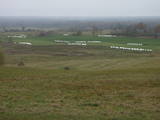 |
Elka Hill is one of the highest surfaces in the western part of the Vidzeme highlands, and it offers a lovely and broad view to the North. There is a small parking lot, a TV and radio tower, and the place where the Gauja River is thought to originate.
|
|
 |
Lõosilma farm is only 10 km away from Pärnu; it is engaged in the cultivation and processing of agricultural products. Delicious canned food is prepared from the vegetables in the farmhouse kitchen, and many of the products have gained national taste titles. The farm has camper parking powered by solar energy. |
|
 |
Territory is not attractive for a visitor without environmental knowledge and is very hard to find and reach through swampy forests on the North from Riva village. Area is not intended and appropriate for visits.
|
|
 |
The New Sigulda Castle was built between 1878 and 1881 for Prince Kropotkin. Its tower was extended in 1937. From 1923 until 1940, the building was known as the Writers Castle, and it was managed by the Latvian Press Association. During the Soviet era, a cardiology sanatorium was housed there. In 1993, the Sigulda City Council took over the castle, and since 2003 it has been home to the Sigulda Administrative District Council. The wooden residential building (mid-19th century) in which the Kropotkin family lived still survives, as do the granary (late 18th or early 19th century), the gardener's house (19th century), and the stone wall (19th century). The New Sigulda Castle is part of the historical centre of the Sigulda, Turaida and Krimulda complex, as are the ruins of the Sigulda Castle and the Krimulda Castle, the Krimulda Estate and the Turaida Castle. |
|
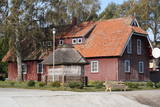 |
Ein ehemaliges Fischerdorf am Ufer des Kurischen Haffs. Aufgrund der Wanderdünen hat seinen Standort mehrmals seit dem Anfang des 19.Jh. geändert. Holzbebauung mit einheitlichem Stil und Traditionen. |
|
|
|
Kaļķis is a populated area where
dolomite is still extracted from quarries in
the region (Kalnciems2 is one such
quarry). Some of the quarries are flooded.
|
|


