
| No | Name | Description |
|---|---|---|
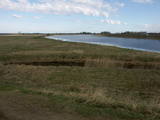 |
One of the most important locations for migrating water birds in terms of rest and feeding in Latvia is the Svēte flood-land, which overflows in the spring time, along with the Svēte polder. It has been calculated that when circumstances are good, tens of thousands of birds can be seen in the area – swans, geese, corn-crakes, pintails, predatory birds, plover-type birds, etc. |
|
 |
Izteiksmīgs zemesrags, kas klāts ar
dažāda lieluma laukakmeņiem.
|
|
 |
The farm is located near Sangaste rukikula, amidst wild nature. At the farm you can enjoy delicious food, catch fish, go to the sauna, and spend the night. Both lovers of active recreation and people simply looking for a pleasant way to spend time will find suitable activities. |
|
 |
Handicraft house Heltermaa is a local Hiiumaa grocery and handicraft shop, open during the summer season. The selection is very wide, starting from ceramic dishes and ending with Hiiumaa lemonade. |
|
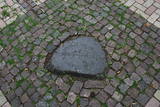 |
The Strūves Park is toward the northwest of Jēkabpils, on the left bank of the Daugava, and opposite the Ādamsona (Krustpils) island. The park was established in the 19th century as a place where the city’s residents could relax and hold celebrations. It can be said with absolute certainty that this is a place of global importance, because the park contains a memorial stone to Professor Friedrich Georg Wilhelm Struwe (1793-1864) from the University of Tartu. He was an astronomer and geodesist. The stone is at a place where Struwe completed his land survey of the Vidzeme Province of the Russian Empire. The meridian location which Struwe identified (and other points related to those locations are found in many other European countries) is on the UNESCO list of world heritage. |
|
 |
The café is along the Rīga-Ventspils highway (A10). A summer terrace is available during the season. Latvian cuisine: Beef tongue salad, chilled soup, stock with dumplings, “little farmer,” pork ribs, potato pancakes and crepes, whipped fool. Special foods: Kharcho a la “Pie Jānis”. |
|
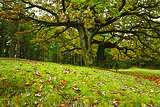 |
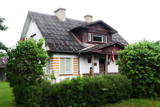
was first mentioned in written form in 1582. A census in 1736 found two farms, Lekši and Žonaki. A census in 1935 found that there were 106 people in Vaide, including 40 Livonians, 60 Latvians and a few Estonians and Germans. In 1939, there were 21 homesteads in the village. Nika Polmanis (1823-1903) was born at the Lāži homestead. He was the first educated Livonian and lived in the region for all his life. Livonian poet Alfons Bertholds (1910-1993) wrote a poem about a noble oak tree that grows alongside the homestead. The vast Berthold family is linked to Žonaki -- Livonian storyteller Marija Šaltjāre, yacht captain Andrejs Bertholds (USA), his son, library scholar Artūrs Benedikts Bertholds (USA), Livonian poet Alfons Bertholds, Livonian language specialists Paulīne Kļaviņa and Viktors Bertholds, Swiss doctor Marsels Bertholds, globally renowned pianist Arturs Ozoliņš (Canada), and Livonian language storyteller and poet Grizelda Kristiņa (1910-2013), who was the last native speaker of Livonian. The Ozolnieki homestead is also linked to the Bertholds family. Paulīne Kļaviņa (1918-2001), a specialist in the fields of Livonian traditions and language, and her mother, Livonian storyteller Katrīna Zēberga, both lived there. Paulīne collected ethnographic objects that can be seen at the Latvian Ethnographic Open Air Museum in the granary of the Livonian Dēliņi farm. The Purvziedi homestead in Vaide is owned by forest ranger Edgars Hausmanis, who has a collection of forest animal horns and antlers. |
|
|
|
Eine der malerischischen Burgberge am Fluss Nemunas mit schöner Sicht aufs Flusstal. In 13 – 14 Jh. befand sich hier eine militäre Festung, die nicht erhalten ist. |
|
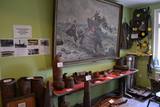 |
The museum opened in 2007 and displays a 180 mm gun barrel, reconstruction of a Soviet restricted border zone, a civil defence shelter, armoured vehicles, a border guard boat and naval mines. Exhibited in the main building are a maritime surveillance radar in its original position, various military items, “Lenin´s corner” and weapons and barracks rooms. |
|
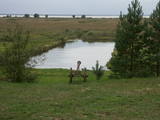 |
Along with the Nagļu ponds, these are Latvia’s largest fishing ponds. They were established on the flood-land peat areas of Lake Lubāns in the 1970s, when the hydrotechnical system of the lake was first established. The Lubāna-Gaigalava road bisects the Kvāpāni-Īdeņa ponds. There are three bird-watching towers on the dams of the ponds. The ponds are a major location for water bird nests, as well as places for migrating birds to rest. There are extensive bird-watching opportunities in the area.
|
|
 |
The restaurant is located on the banks of the beautiful Lake Pühajärve in Southern Estonia; here you can enjoy impeccable dishes prepared by the chef Mostly fresh local ingredients are used. Special culinary events are also organised. |
|
 |
Ezeres kultūrvēstures un novadpētniecības materiālu krātuve “Muitas nams” ir izveidota vēsturiski nozīmīgā ēkā, kur, II pasaules kara noslēgumam tuvojoties, 1945. gada 8. maijā tika parakstīts Kurzemes katlā ielenkto vācu karaspēka daļu kapitulācijas akts. Ar to tiek uzskatīts, ka Ezerē faktiski beidzies II pasaules karš. Krātuves materiālu ekspozīcijas ir no Ezeres pagasta senvēstures līdz šodienai, tai skaitā ezernieku vaļasprieki. |
|
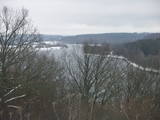 |
At the Aizkraukle Lutheran church along the upper part of the shores of the ancient Daugava River valley, there is a bit of an old road from which one of the most beautiful views of the central section of the river can be seen, particularly when the trees are bare. Approximately one kilometre to the North-west is the Aizkraukle castle hill, which offers a no less impressive view.
|
|
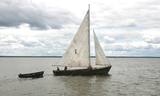 |
Kale is a traditional wooden sailing ship for trawling nets on Lake Võrtsjärv, but its graceful appearance with two triangular sails often inspired pleasure trips too. Võrtsjärve Foundation supported the building of the ship Paula, completed in 2005 and Liisu in 2009. Trips aboard a kaleship are a genuinely memorable experience. |
|
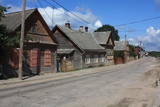 |
The wooden buildings with few floors emerged in the 19th century. Tourists can look at typical closed yards, verandas, wooden elements and decorations. The city suffered from fires in 1866 and 1938. The Market Square is the historical centre of Ludza, while the Ludza castle hill dominates the region. The streets of the city were established around the hill, which had an ancient Lettigalian wooden castle late in the 14th century. The Livonian Order replaced with the mightiest brick castle in Latgale. It was sacked in 1654 by the forces of Tsar Alexei Mikhailovich. The castle hill offers a lovely view of Latgale and the oldest city in Latvia and its historical centre. |
|
 |
Atrodas Cēsu rietumdaļā – pie ceļa, kas ved uz Cīrulīšiem. Piedāvājumā – plašs ēdienu klāsts no brokastīm līdz vakariņām. |
|
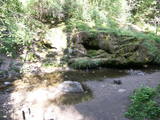 |
The Staburags cliff of Rauna has been Latvia’s most distinct travertine cliff since the great Staburags cliff of the Daugava River sank under the waves during the construction of a hydroelectric power plant nearby. The cliff is approximately 8,000 years old and is still being formed as lime settles on moss and other plants. The Staburags cliff of Rauna is cited as the only location in Latvia of the Alpine butterwort, but it has not been seen there for the last 15 years. That is probably because of the many people who tramp across the cliff each year. The streams which deliver lime to the cliff are a biotope that is of priority at the EU level.
|
|
 |
The largest Japanese garden in Europe (16 ha) was established in 2007 by Japanese designer Hajime Watanabe and Dr Šarunas Kasmauskas, merging religion, art and respect for nature. |
|
 1 day
|
From Kaberneeme the route runs through a forest where you can see piles of stones carried here during the last ice-age. The trail soon climbs about 20 m up to the hiking trail, which runs on the old shore line of Lake Ancylus. The trail continues to the Linnamäe HES and a suspension bridge. Follow the trail over the ancient fortress hill of Linnamäe and continue on the right bank of the River Jägala, until reaching the Jägala waterfall. This is the highest natural waterfall in Estonia, more than 8 m high. The Suka bridge is about 500 metres up from the waterfall. After crossing the river, the trail passes through the Jägala waterfall park. Finally, the trail runs through the village of Koogi and arrives at Jõelähtme. |
|
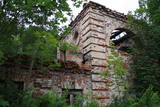 |
Atrodas Kraujā – Daugavas ielejas krasta malā un nogāzēs. Atrodama informācija, ka šajā vietā Livonijas kara laikā atradusies krievu karaspēka nometne. Muižas nosaukums cēlies no vācu Hof zum Berg – „Kalnu muiža”. Pēdējie muižas īpašnieki līdz 1. pasaules karam bija grāfu Šahno dzimtas pārstāvji. Viens no tiem – Marians Šahno 1910. gadā uzceļ muižas pili, kas bija būvēta eklektisma formās. Daļēji nojaukta tā pārdzīvo padomju laikus, līdz 2002. gadā nodeg. Līdz mūsdienām saglabājušās vien ēkas sienas, kuras slēpj biezs augājs. Var tikai iedomāties, kādi skati šeit kādreiz pavērušies uz Daugavas ieleju! Muižas parks ir vietējo iedzīvotāju pastaigu vieta. |
|


