
| No | Name | Description |
|---|---|---|
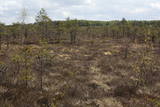 |
Territory established mainly for protection of bog myrtle and various bird species. An interesting fact is that bog myrtle or sweet gale is used as ingredient for making famous Riga Black Balsam. Brienamais purvs (wade bog) is hard to find and reach therefore it is not suitable for tourism.
|
|
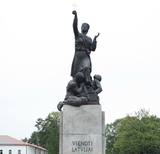 |
Located in the centre of Atbrīvošanas Alley, this statue is a monument to the liberation of Latgale and the unity of Latvia and is officially called “Unified for Latvia.” The bronze monument was unveiled in 1939 (sculptor K. Jansons, designer L. Tomačisks). In 1940, the Soviet regime tried to destroy the monument, but it was restored in August 1943. A second attempt to destroy the monument occurred in June 1950, and this time the process was successful. After the restoration of Latvia’s independence, “Māra of Latgale” was installed for a third time on August 3, 1992, sculpted by the son of K. Jansons, A. Jansons, on the basis of old designs. “Māra of Latgale” is one of the best examples of monumental sculpture in Latvia. Latvian mythology personifies the goddess Māra as a provider of fertility for earth and a protection of life. The cross that is part of the ensemble is a symbol of the Christian faith. |
|
 |
Garlic growing and processing, farmers’ market. A story about the value of garlic in health and cooking. Offers various garlic spices, teas, pickles, snacks, tasting of food with garlic. For children - garlic painting on canvas, garlic games. |
|
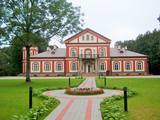 |
The Alantos Estate is in the village of Naujasodžio, and it was built in the style of Neo-Classicism in the 19th century. The estate is surrounded by a park with many types of trees, as well as a set of ancillary buildings. The mansion is reminiscent of an Italian villa, and the Neo-Romantic park has alleys of trees and three ponds of various sizes. The trees were planted so that over the course of time, their trunks would grow together to ensure mighty crowns. Alongside the park are a few gazebos, an obelisk that stands a few metres high, as well as white marble sculptures of Venus and Jupiter. |
|
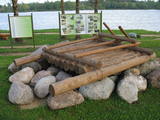 |
Plavinas and Stukmani region was inhabited already in the third century. During the Polish-Swedish War (1600-1629) at estuary of Aivekste in the Daugava River the Swedish war camp was formed, from which are preserved fortifications - bastions. They are one of the most impressive military formations of this kind in Latvia. Plavinas as a larger populated area started to develop in the nineties of the 19th century and in the beginning of 20th century after the construction of railway. Today Plavinas are more commonly known with dolomite production sites and spring flood area. |
|
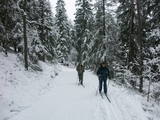 |
The nature park near the town of Ogre is a popular place for leisure, hiking and, in the winter, cross-country skiing. Most of the park is covered with coniferous trees that are on a long and comparatively narrow line of hillocks with steep sides – another element of nature left behind in Latvia by the Ice Age. Many different plants can be found here. The Jaunogres castle hill is one of the most distinct hillocks in the area. |
|
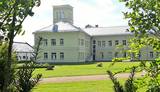 |
The Rietavas Park was once the largest landscape park in Lithuania. It was established between 1848 and 1855 in a naturally cleaned forest and reconstructed in 1904 and 1905. This is a very nice park with local bushes and trees, as well as several foreign plants. Various alleys of trees and fragments of the hedges have been preserved along with the white gate, the red gate and a guard's hut. The park has a complex system of bodies of water, including a few ponds, a curvy river and an island that is surrounded by the old river. |
|
 12 days
|
This route includes some of the most authentic experiences that can be found in the regions of blue lakes in eastern Latvia and Lithuania. No masses of tourists are here, and local residents are sincere and hospitable. You will find traditional villages, many religious objects and farms that represent agricultural heritage. You will ride through the Rāzna National Park, which is alongside the lovely Lake Rāzna. You will visit traditional farms and ancient castles, as well as the Aglona Basilica, which has been a destination for pilgrims for many years. There is also a bread museum in Aglona. From there you will ride through Daugavpils, which has an impressive 19th century fortress that includes the Mark Rothko Art Centre. Along the way you will find potteries where traditional ceramics are offered. You will learn more about breeding horses and cows, as well as about how traditional cheeses are made and herbal teas are prepared. Next you will ride through the Aukštaitija National Park that is on the border between Latvia and Lithuania. You will see ethnographic villages with wooden castles, as well as many lakes. It is worth visiting the Stripikiai Beekeeping Museum, the local open-air art museum, as well as the European Centre. To be sure, you will enjoy local Lettigalian beer, as well as zeppelins, which are a traditional dish in Lithuania. |
|
 |
Größe Steinkreisen. In der Mitte befindet sich eine oder mehrere „Steinkapseln” für einen Verstorbenen. Wurden im Eisen- und Bronzealter errichtet. |
|
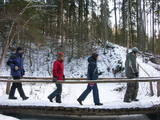 |
The beginning of this circular trail can be found at the Krimulda church – the oldest in Latvia. In one direction, the tourist will pass along the banks of the little Runtiņupīte river (Runtiņš) to the place where it flows into the Gauja river. Among the points of interest along the way are the parsonage of the church, the Kubesele castle hill, a memorial to the Livonian chieftain Kaupo, the Kubesele cave, the Saulstari rock, the “Great Rock”, ancient anchor blocks, ancient graveyards, a unique labyrinth, etc.
|
|
 |
This garden on the banks of the Bērze River is known as a rock fairy tale and a miraculous garden. The garden has rocks of various forms and sizes, including milling stones, distance markers and border posts related to parishes. The exhibition is supplemented by decorative plants and compositions of plants that are the responsibility of the lady of the house. |
|
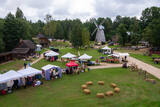 |
The venue features tools, farm machines, mechanisms and everyday objects that are typical of Latvia’s countryside. These are both in the yard and in the buildings of the enterprise. You can help to bake bacon rolls and loaves of bread in areal country oven. The owners will be happy to provide you with an informative tour. Water mill that is used for grinding grains: coarse milling, pearling, and making groats. At the annual Sowing Festival and Harvest Festival, the exhibited steam-powered machine and threshing machine can also be seen in action. During festivals, countryside markets and tastings also take place. |
|
 |
Medinski Vincīši boulder also called Magoņkalns (Poppy hill). Red rapakivi granite boulder is found
in the tree cluster only 40 m to the left of Jaunviļāni – Medinski road and about 40 m from the right side of
the river Malta. The boulder is 6,6 m long, 5,4 m wide and 3,3 m high. The circuit of the boulder is 20 m
and the volume 40 – 45 m3.
|
|
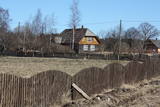 |
To the North-west from the Pitrags Baptist church (in the direction of the sea) is a fishing and farming homestead, Kurgati, which was established in the 1930s. This brought new building elements to the Liv Shore – a split roof end which was not typical of buildings in Liv villages. |
|
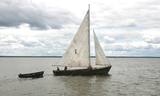 |
Kale is a traditional wooden sailing ship for trawling nets on Lake Võrtsjärv, but its graceful appearance with two triangular sails often inspired pleasure trips too. Võrtsjärve Foundation supported the building of the ship Paula, completed in 2005 and Liisu in 2009. Trips aboard a kaleship are a genuinely memorable experience. |
|
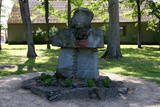 |
Found in the centre of Džūkste, the monument that was set up in 1990 was blown up in 1990, and the current one was made from the ruins of the destroyed one. The monument commemorates troops from the 19th Division of the Latvian Legion who fell during the so-called Christmas battles in 1944. |
|
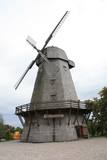 |
The windmill was built between 1867 and 1869 after a design first produced in the Netherlands. Its name is that of its first owner – Riba. The windmill is one of the best preserved architectural monuments of its type in Latvia, and it offers an educational exhibition, “The Path of the Grain.” It talks about the development of agriculture in Zemgale and about grain farming and the baking of bread. Guided tours are available. The windmill is part of the Rožmalas leisure complex, which features a hotel and a restaurant. |
|
 |
On the second Saturday of each month, farmers, home manufacturers and craftspeople gather together to offer their products. You will always find tasty and useful things here. |
|
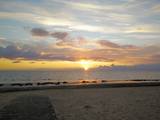 |
The largest town in the region dates back to the 19th century, when three local fishing villages – Neibāde, Pēterupe and Katrīnbāde – became a popular location for leisure and swimming. This led to the construction of many summer homes, and the development of the spa was facilitated by the opening of a rail line between Rīga and Saulkrasti in 1905. New spas and restaurants were opened, and the spa infrastructure was developed. During the summer there were various entertainments, including balls and concerts featuring orchestras from Rīga. Also facilitating the development of the spa was a road and railroad line between Rīga and Saulkrasti that were installed during the 1930s. During the Soviet occupation, leisure homes, sanatoriums and new summer homes were built in Saulkrasti, which was given the status of a city. Today Saulkrasti is attractive because of its white sand beach, as well as various annual events, the Saulriets trail, the White Dune, the unique bicycle museum, Sea Park, the “Centrs” swimming facility, Sun Square, etc. |
|
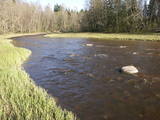 |
The nature park in the Ogre River valley is found along the middle section of the river. It has been established so as to protect the unregulated river valley and its surrounding territory, as well as biological diversity and habitats. For instance, this is an area in which rare park-type meadows can be found in Latvia. The Ogre is one of Latvia’s most popular rivers for water tourism in the spring, particularly downriver from the town of Ērgļi, where the technically complicated Braži rapids are found. |
|


