
| No | Name | Description |
|---|---|---|
 |
The restaurant in the relaxation complex Vonadzini, on the southern shore of Lake Ludza, not far from the city of Gulbene. On the menu: tasty fish, chicken and pork meals. Contact the venue in advance for tourist group meals, wedding banquets, etc. |
|
 |
Lots of wild animals can be found in vast paddocks along the ancient Gauja river valley and its small tributaries – areas in which living conditions are as close to natural circumstances as possible. Here the visitor can find, if lucky, reindeer, deer, wild boars, bears, foxes, lynx, various kinds of birds, as well as aurochs. There is a dense network of pathways in the park, including lots of information. There is also a route for drivers and bicyclists. During the winter, it is used for distance skiing. There is also a visitors’ centre.
|
|
 |
The restaurant is on the seashore with a wonderful view of Jūrmala. The grill terrace is a stylised ship wheel. The restaurant partners with local farmers and fishermen. Latvian cuisine: Cold beet soup, fish soup, smoked eel with country cream, duck livers, cream of potato soup with chanterelles, roast pike-perch, venison with mustard sauce. |
|
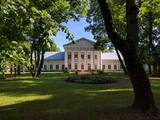 |
Located on an island in Lake Dviragio, the Salu Estate and its park, when viewed from above, are reminiscent of the boundaries of Lithuania. The park to the east of the estate is a mixed-type park and is one of the oldest ones in Lithuania. Back in the day, it was a forest park where trees were never cut down. The park featured maple, linden, elm, aspen and other local trees, and they are now around 200 years old. A winding path links the alley to a park trail by the lake. The various plants and fragments of alleys have survived to the present day. |
|
 |
Taka, kas izveidota Lemmjegi (Lemmjõgi) un Raudnas (Raudna jõgi) satekas vietā, iepazīstina ar palieņu pļavām un veciem pārmitriem mežiem, kas ir vieni no lielākajiem Igaunijā. Takas sākumā dominē atklātas lauku ainavas. Viens no 4,9 km garās lokveida takas apskates objektiem ir Lemjē dižozols. Mitrā laikā noderēs ūdensizturīgi apavi. |
|
|
|
Veisieji reģionālais parks (Veisiejų regioninis parkas) veidots (1992.g.) Sudavas augstienes (Sūduvos aukštuma) ainavu, bioloģiskās daudzveidības un kultūras pieminekļu aizsardzībai. Viena no parka bagātībām ir ezeri, kuru iegarenās formas liecina par ledāja darbības rezultātu. Pēdējā apledojuma laikā šeit atradusies ledāja mala. Ezerus (kopā – 37) ieskauj lielāki meža masīvi uz kontinentālām (iekšzemes) kāpām, kas piemēroti atpūtai dabā, dabas vērošanai, ogošanai un sēņošanai. Parkā ir iekārtotas peldvietas, kur patīkami gremdēties vasaras tveicē, izveidotas dabas takas, bet mazās upītes, kas savieno ezerus, ir piemērotas braucieniem ar kanoe laivām. Veisieji reģionālā parka teritorijā ir liela augu un dzīvnieku daudzveidība. Šeit tiek aizsargātas arī tādas retas sugas kā Eiropas kokuvarde Hyla arborea (parka simbols), purva bruņurupucis Emys orbicularis, dažādas orhideju sugas u.c. |
|
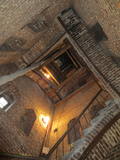 |
This is a unique example of industrial heritage – the only open munition factory in the Baltic States. It includes Europe’s oldest pellet pouring tower, and it is still used for that purpose today. Tours are available for those who contact the factory in advance, and a guide will lead groups through the factory, the tower and the museum. Today the factory manufactures nine types of bullets for smooth-barrel weapons, as well as bullets for pneumatic weapons. The products are exported to Germany and other countries. |
|
|
|
Der weiteste Nordpunkt der Insel Hiiumaa. Der höchste Leuchtturm Estlands aus Roheisen (1873 – 1875) und das Denkmal zur Errinerung an die bei dem Unglück des Schiffes ‘Estonia” Umgekommenen. |
|
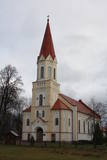 |
Храм неоднократно горел и строился снова. Теперешняя церковь построена в 1874 году, а после пожара 1927 года была восстановлена в 1932 году. Можно осмотреть алтарную икону«Иисус со святым причастием», две картины И. Зебериньша «Иисус у креста» и «Иисус благословляет детей» (1957 г.). Проспект органа является первым, построенным в «латышском» вкусе органом (резчик по дереву П. Планкус, 1936 г.), а сам инструмент номинирован как самая красивая и самая объемная работа лиепайского мастера Екаба Яугиеша. Трубы органа сделаны из дерева, что является редким случаем. Церковь можно осмотреть изнутри. |
|
 |
Atrodas dienvidos no Vienības nama. Skvērs veidots 19. gs. otrajā pusē. Tajā atrodas vairāki ievērības cienīgi objekti: strūklaka (20. gs. 20. gadi), latviešu tautas dzejnieka Andreja Pumpura krūšu tēls, piemiņas akmens Nevainīgajiem sarkanā terora upuriem un Sv. Aleksandra Ņevska pareizticīgo kapela. Vienības ielas otrā pusē paceļas iespaidīgā Daugavpils universitātes ēka ar Raiņa pieminekli un saules pulksteni priekšplānā. |
|
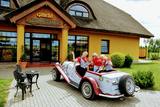 |
Older residents say that the guesthouse is located in the centre of the Domanti village. The guesthouse has four buildings built in accordance with ethnic architectural traditions, including a granary, a sauna and a traditional residence with two ends. |
|
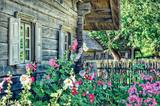 |
This museum focuses on life in the countryside and was opened in 1991. It sits on 18 ha of land, with authentic farms from the Augštaitija region. |
|
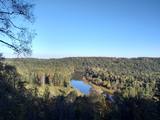 |
On the left bank of the Gauja River, opposite the Piķene cliff is the mighty Beite cliff which is split by a deep ravine. On the left side there is Ķeizarskats (Emperor's View), which is approximately 67 metres above the level of the Gauja and offers a fine view of Krimulda and the Turaida Castle. The viewing place was installed in 1862, when Russian Tsar Alexander II visited Sigulda. On the right side of the ravine is the mighty wooden Ķeizarkrēsls (Emperor's Chair). To get there, you have to cross the ravine (there are wooden stairs and a forest trail). You can go around it on Laurenču, Kalna and Gulbju streets. |
|
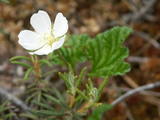 |
Augstā un purva vidusdaļā - pārejas tipa purvs, putniem nozīmīga vieta. Apmekļējumiem nav piemērota infrastruktūras trūkuma un sugu aizsardzības nolūkā. |
|
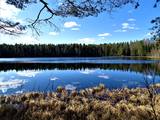 |
Ķekavas novadā, Daugmales pagastā atrodas jauka atpūtas vieta - Lejas ezers. Ezeram var apiet apkārt, taka nav marķēta un iešana ir pa mazām meža taciņām. Slapjākā laikā taciņas vietām var būt mitras un dubļainas. Pastaiga aizņems aptuveni stundu. Pie ezera ir iekārtotas vairākas piknika vietas. |
|
 16 days
|
This long-distance tour follows the Baltic Coastal Hiking Route from the Lithuanian coast, starting on the island of Rusnė and continuing to the Curonian Spit, running along the Baltic Sea coast to Cape Kolka and finally reaching Rīga. On this route you will hike some sections of the Baltic Coastal Hiking Route and experience the diversity of coastal landscapes: rocky beaches, steep shores, overgrown beaches, bird migration sites, vast sandy beaches. You will walk on solitary beaches with no-one in sight for several kilometres just to suddenly find yourself in lively resort towns. There are both sections of hiking and bus transfers along the route. Initially you will visit the peculiar island of Rusnė with its bird migration sites, observation towers and the delta Crossing the Lithuanian/Latvian border on foot you will stop over at the Pape Nature Park and enjoy its lighthouse, wild horses, the authentic fishermen village and local museum. The walk on lone beaches takes you to the top of the highest dune in Latvia – the Pūsēnu dune – and afterwards continues to reach the village of Bernāti. Next on the route is the windy seaside city of Liepāja, also known as the Latvian capital of rock music. Karosta is another distinctive site in Liepāja – it is the former military town and nearly every street of this part of the city has some footprints of its military heritage. Heading further, your feet will take you through the solitary beaches of Ziemupe to the village of Pāvilosta. If you are lucky, you might find some ambers washed ashore. Pāvilosta is a small charming village with a marina and some notes of smoked fish lingering in the air. Moving on, from Ventspils through Slītere National Park, through the Livonian fishermen villages to finally reach the Kolka Cape – the meeting point of the Baltic Sea and the Gulf of Riga. Also, a top site for bird watching. At the end of the tour, the Baltic Coastal Hiking Route leads to Engure Nature Park, meandering through reed trails running between the villages of Mērsrags and Engure. The tour ends in Jūrmala with its wide sandy Beaches, the bustling urban life of a resort town, impressive villas and summer cottages, and the Ragakāpa Nature Park in the resort’s neighborhood Lielupe. |
|
 |
Another area where the manifestations water-soluble lime in the earth can be found. As the lime dissolves, there are empty areas underground which eventually collapse. To the East of Skaistkalne is a leisure area where dry and full holes of various sizes can be found.
|
|
 |
A well-kept farm and garden, rabbits and various poultry - chickens, chicks - can be viewed. |
|
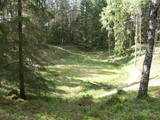 |
There are three craters here, and the biggest one, known locally as Põrguhaud, or Grave of Hell, has a diameter of 80 m and a depth of up to 12 m. There are barriers around the crater that are several metres high. The other two craters are hard to spot. The craters around 6,000 years old. No scraps of the supposed meteorite have been found, however, and so the origins of the craters cannot be confirmed with certainty.
|
|
 |
A long village stretching along both banks of the Lūžņa River. In 1937, there were 36 houses and two boat piers here. During the 1860s, ships were built here, but during the Soviet occupation, there were military bases there. During the 1930s, the village was visited several times by the Finnish linguist Lauri Ketunen and Estonian student Oskar Lorits. They were working on a Livonian dictionary. Another resident of Lūžņa was the first Livonian artist, Jānis Belte (1893-1946). The "Dēliņi" fisherman's homestead has been transferred to the Latvian Ethnographic Open-Air Museum and can be seen there. |
|


