
| Nr | Name | Beschreibung |
|---|---|---|
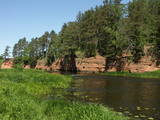 |
Dieser Park ist ein Gebiet, das vom Menschen kaum verändert wurde – Sandsteinklippen, verschiedene Höhlen, Biotope, Arten und Landschaften sind der attraktive Aspekt dieses Gebietes. Der Salaca-Fluss ist einer der wichtigsten Flüsse in der Ostseeregion als Laichgebiet für den Lachs, und es ist der zweitwichtigste Fluss für Wassertourismus in der lettischen Region von Vidzeme. Hier gibt es geologische Denkmäler, die für Besucher besonders attraktiv sind – Die Roten Klippen, der Skaņais-Berg, die Neļķu-Klippe, die Velna-(Teufels) Höhle usw. Hier sind auch solche Kulturdenkmäler wie der Livische Burgberg, der Vecsalaca - Gutshof, das Livische Museum, das Vantenberģi - Anwesen, die einzigartigen Neunaugen - Stauwehre usw. Im Park befindet sich auch eins der beliebtesten touristischen Ziele in Nordvidzeme – der Skaņākalna-Park, der ein dichtes Netz von Wanderpfaden hat. Der Salaca ist auch beliebt bei Fischern. Dies ist Teil des Nordvidzemer Biosphärenreservats.
|
|
 |
Mākoņkalna pagasta "Itkaču mājās" ir iespēja ieturēt maltīti- plānās pankūkas ar dažādiem pildījumiem, kartupeļu pankūkas, dārzeņu sautējumu. Iespēja apciemot trušus, pabarot tos ,paglāstīt un paturēt sev klēpī. Pieejami saimnieku veidoti suvenīri. |
|
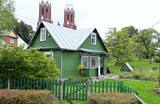 |
Das Museum wurde etwa 1990 begründet. Der Obstgarten, dessen Geschichte im Zusammenhang mit der Schriftstellerin B. Buivydaite steht, wurde 1935 gepflanzt. |
|
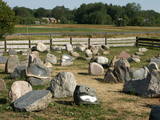 |
The craftsman produces gravestones, commemorative plaques and stone sculptures on the basis of orders from clients. He is prepared to tell you about a stonemason’s work and demonstrate his skills. |
|
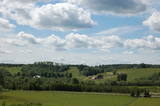 |
Sens pilskalns Abavas kreisā senkrasta nogāzē. Pēc sena nostāsta zviedru karavīri ar savām cepurēm to sabēruši virs sava ģenerāļa kapa. Tagad Zviedru cepures apkārtnē ziemā var braukt pa kalnu slēpošanas trasēm, bet vasarā – ar rodeļiem.
|
|
 |
Das Restaurant befindet sich im Zentrum von Rezekne (neben der Hochschule) und es ist in einem Gebäude mit gewölbtem Keller eingerichtet. Lettische Küche: Kalte Suppe, dünne Pfannkuchen, Kartoffelpfannkuchen, Schweinebraten, Schweinrippen, Frikadellen aus Kalbfleisch, geschmortes Lammfleisch, gebratener Kabeljau oder gebratene Forelle. Das besondere Gericht: Salat aus Ziegenkäse. |
|
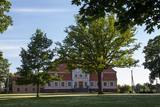 |
Das Schloss Kelmė ist eines der wenigen in Litauen erhaltenen typischen Provinzresidenzen im Barockstil. Die gesamte Anlage ist in einem Konzept angelegt und mit vielen Originalgebäuden und den ursprünglichen Teichen und Grünanlagen gut erhalten. Der Park hat mit seiner strengen geometrischen Anordnung, aufgeteilt durch rechtwinklig angelegte Alleen, klare Barockeigenschaften. Es gibt einen künstlich angelegten Aussichtshügel. Der Großteil der älteren einheimischen Bäume (Eichen, Ahorn, Linden, Eschen) sind noch Erbe des ursprünglichen Parks. Die größten Prunkstücke des Parks sind der große Teich hinter dem Schloss zusammen mit drei kleineren Teichen und der Aussichtshügel im alten Park. |
|
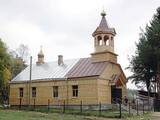 |
Viļāni Old-Believers Prayer House. The architect P.Pavlovs built Old-Believers Prayer House in 1930s.
The congregation was established very recently. Nevertheless the 14 meters high tower was constructed in
2004. The Prayer House is a very simple building but you will be pleased to see the magnificent icons. The
Prayer House has been renovated completely.
|
|
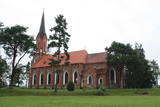 |
The Velēna Lutheran Church is at the crossing of the Smiltene-Gulbene-Lizums roads. It is said that the roof of the first wooden church at this location had a peat moss roof. The organ from the Sauer company still works, and it is one of the best organs in Latvia. The organist offers guided tours of the church. |
|
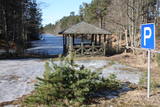 |
The Vecročupe river flows out of the artificial Vaide pond. It was created by blocking the Vaide and the Kukšupe rivers. This happened during the Soviet occupation, when forestry people decided to establish a fishing pond and an area for recreations. A wooden pergola has been installed at the pond, and there is an information stand, as well. On the northern shore of the pond is the Vaide cemetery, which dates back to 1928 and has interesting wooden crosses. |
|
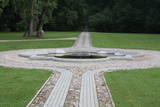 |
Eine kleine Ortschaft an den Ufern des Flusses Daugava zwischen den Städten Aizkraukle und Jaunjelgava. Die Umgebung von Skrīveri ist mit dem Leben und den Arbeiten des bekannten lettischen Schriftstellers Andrejs Upītis verbunden. Unweit von Skrīveri befindet sich das älteste Dendrarium in Lettland. Mit der Einrichtung des Parks hat der Landgutinhaber von Skrīveri Maximilian von Sivers begonnen. In dem Park wachsen mehr als 400 Pflanzenarten, -sorten und formen. Eine der schönsten Aussichten auf Daugava kann man von den sogenannten Hügeln Kraukļu kalni (Rabenberge) genießen, die ein steiler Oberteil des linken Grundufers von Daugava ist und früher ein Burgberg war. |
|
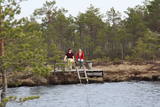 |
1,2 km gara taka, kas pa purvainu mežu aizved līdz Ērdi purvam (Öördi raba) un tā austrumu daļā esošajam Ērdi ezeram (Öördi järv), pie kura izveidota atpūtas un peldvieta. |
|
 |
Östlich der Straße Ezermuiža-Dūmele liegt das Seebett des alten Dieviņezers-Sees. Er war einer der größten Seen in Kurland:7,5 km lang und 1,6 km breit. Im Jahr 1838 wurde ein Kanal gegraben, wodurch der jetzige Fluss Melnsilupe und das Wasser aus dem See ins Meer abgeleitet wurden, um fruchtbares Ackerland zu bekommen. Die Einwohner von Ezermuiža waren bereits seit der Herrschaft von Baronen mit der Forstwirtschaft und Forstnutzung verbunden. Dūmele und Košrags werden mit einer einsamen Waldstraße, Apakšceļs (Untere Straße) genannt, verbunden, an der die Fahrradroute verläuft. In Dūmele befindet sich das Ferienhaus „Ziedkalni“. |
|
 |
Natürlich angebaute Heilpflanzen, Abende am Feuer, nach besonders auserwählten Rezepten zubereitetes Essen. Im Bauernhof Energia werden Heilpflanzen angebaut, Waren und Dienstleistungen angeboten, die mit den Heilpflanzen und der positiven Energie verbunden sind. |
|
 |
Die Haupttätigkeit des bäuerlichen Betriebs ist Getreidezucht. Seit 2006 beschäftigt sich der Betrieb mit Milchviehzucht und seit 2008 – mit der Herstellung von Käse und Quark. Zur Zeit sind im Betrieb mehr als 200 Melkkühe, von deren Milch Rohmilch, Joghurt, Käse und Eis hergestellt werden. |
|
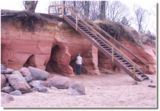 |
Ainavisks jūras viļņu izskalots smilšakmens atsegums
dienvidos no Zaķupes ietekas.
|
|
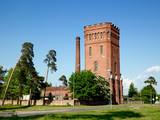 |
Encircled by apartment buildings, some of which are abandoned, the Tosmare water tower, which was built in 1905 in a pseudo-Gothic style and is made of red bricks, stands tall and proud. It is 37 metres high. Steam pumps were once used to pump underground water into the tower (the pumps have survived to this very day). Water was delivered three times a day to the residents of Karosta. The tower is no longer used for its original purpose, however. The tower can be viewed from the outside at any time. This is a unique aspect of Latvia’s industrial heritage.
|
|
 |
Der Bauernhof Uibo bietet seinen Gästen frische Schweinefleischgerichte an, die möglichst wenig Konservierungsmittel und Zusatzstoffe beinhalten und einen typisch nationalen estnischen Geschmack aufweisen. |
|
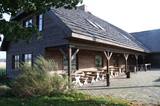 |
Dieses Wirtshaus befindet sich einige Kilometer von Jurkalne entfernt: in einem Blockhaus mit lettischer Innenausstattung. Hier werden Konditoreiwaren hergestellt. Das Wirtshaus arbeitet mit Heimarbeitern zusammen. Lettische Küche: Nesselsuppe mit Gänseeiern, Suppe aus Ostseefischen, graue Erbsen mit geräuchertem Schinken, Kartoffelpfannkuchen mit Lachs, Hering mit Quark, hausgemachte Frikadellen, geschmorte Schweinerippen, Festbraten mit Herbstbeeren, Rindfleisch mit Pfifferlingsoße, Wildschweinfrikadellen, gebratenes Kabeljau- oder Zanderfilet, geschichtetes Roggenbrot-Dessert, Birkensäfte, Johannisbeerensaft. Das besondere Gericht: Im Wirtshaus gekochte Nudelteigtaschen mit Fleisch. |
|
 2 Tagen
|
Die Route ist für aktive Fußgänger geeignet, die auf ihrer Reise sowohl Landschaften, als auch die Gefühle des Tales des eindrucksvollsten Flusses der baltischen Länder genießen möchten. Die Route beginnt in Sigulda, die historisch als die Schweiz der Region Kurzeme genannt wurde. In der Umgebung von Sigulda kann man einige der schönsten Landschaften Lettlands genießen. Die Route überquert mehrere tiefe Täler der Nebenflüsse von Gauja und legt die Ufer des Flusses frei, die im Baltikum mit seinen Sandsteinfelsen der Devonperiode bekannt sind. Die Naturpfade von Līgatne ist der einzige Ort in Lettland, wo in waldiger Umgebung, unter naturnahen Umständen und in großen Pferchen unseren Wäldern charakteristische Tierarten wohnen, die Besucher besichtigen können. Aber Tiere und ihre Fußabdrücke kann man auch besichtigen, wenn man auf den Naturpfaden und in den Wäldern des Nationalparks Gauja wandert. Route information from Latvijas Lauku forums |
|


