
| No | Name | Description |
|---|---|---|
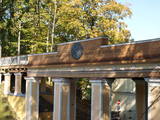 |
Vom 19. Jh. ist der Domberg ein offentlicher Park mit Pfaden, Gehwegen, Brücken (Engelsbrücke, Teufelsbrücke) und den Denkmälern für die Wissenschaftler der Tartu Universität. Hier befinden sich die Domkirche, das Anatomicum, das Observatorium u.a. interessante Objekte. |
|
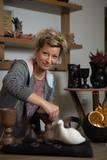 |
This is one of the few craftswomen in Latvia who does not use a potter’s wheel in her work. Instead she works in the “snail” or “sausage” technique that was typical of the Bronze Age. Her artworks are distinguished by a diversity of form and functionality. Children can attend master’s classes. You can take tours, take part in the opening of the kiln, and purchase fumigated ceramics products. |
|
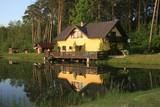 |
Recreation place "Kaupēna mill" is located near Tērvete, Zemgale region. In the pension there is hall for celebrations, there is a garden with grill. Free private parking is available for guests. The kitchenette is fully equipped with crockery and cutlery, and there is a microwave. Turkish bath and terrace. The guest house has 15 beds for overnight stays. Guests are also offered a holiday house "Paradise House". It is a fully equipped family house with kitchenette and 4 beds, pond view, barbecue and gazebo. Quality well / spring drinking water. "Egļu namiņš" - the house has 5 beds, anteroom, terrace. Barbecue with terrace, next to the pond, WC, showers. We also offer 3 camping houses. 4 beds in each cottage. Toilets and showers are shared. |
|
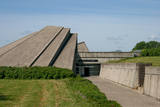 |
Ein am Ende des 19. Jh. gebautes Teil der Festung. Ein Museum, das Verbrechen totalitäre Regimes gegen Menschlichkeit wiederspiegelt. |
|
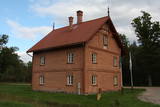 |
Vijciema čiekurkalte ir viena no retajām vēsturiskajām čiekurkaltēm Eiropā, kas celta 19. gadsimtā, un ir ne vien teicami saglabājusies līdz mūsdienām, bet arī, izmantojot vairāk nekā 100 gadus senas iekārtas, čiekurkaltē arvien tiek žāvēti čiekuri, lai iegūtu augstas kvalitātes meža sēklas. Pateicoties ēkas bagātajai vēsturei un senajām čiekuru žāvēšanas tradīcijām, Vijciema čiekurkalte ir iecienīts tūristu objekts, kas piesaista vēstures, dabas un tehnoloģiju interesentus. Vijciema čiekurkaltes apmeklētājiem ir iespēja doties izzinošā ekskursijā gan individuāli, gan grupās. Ekskursijas laikā ir iespēja atklāt čiekurkaltes vēsturi, skatīt čiekuru apstrādes cikla demonstrāciju, kā arī uzzināt, kur, kā un kāpēc čiekuri tiek lasīti. Ekskursijas un individuālos apmeklējumus iepriekš jāpiesaka, zvanot 26478620. Cena
|
|
 |
The family restaurant "Hercogs" is situated in the centre of the city of Jelgava, alongside Duke Jacob Square. The chefs use local ingredients and have a partnership with the “Rudiņi” deer garden. Latvian cuisine: Cold soup, venison goulash soup, venison chop, roast pike-perch or catfish, roast pork, sautéed lamb, potato pancakes, sea buckthorn dessert. Special foods: Filet of beef baked on rocks. |
|
 |
The owner of the farm grows petunias, geraniums, balsams, asters, snapdragons and other plants, also designing beautiful pots of flowers. She organises seminars on biological farming. Visitors can purchase plants, pick black currants from a bush, and pick tomatoes from a vegetable bed. Tastings are available, and there are rabbits on display, as well. |
|
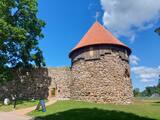 |
The Livonian Order built a fortified castle on the largest island in Lake Alūksne – Marijas Island (Pilssala Island) in 1342. It was linked to the land by a 120 m drawbridge. The castle had several forecastles, and it was regularly modernised and expanded until the end of the 17th century. It was one of the largest Livonian Order Castles, with similar ones found in Vastelina and Izborsk. Defensive barriers were put up around the castle, which survived until the Great Northern War. Its central part was blown up by the defeated Swedish military in 1702, after which Russians completely sacked it. All that is left are the castle ruins on the island, which is now linked to Alūksne and Temple Hill by two wooden bridges. An open-air stage alongside the castle ruins is used for various public events. |
|
 |
Fruit and berry wine has been made at the Tori Jõesuu Cider and Wine Farm since its beginnings. The people currently living there are inspired by the experiences of their ancestors and value the fruits and berries that grow from the local Soomaa soil, which has a particular composition. The old feral apple tree, which grows in the yard, is particularly special because its golden apples have an unusual taste which makes the Tori Jõesuu Cider Farm cider unique. The visit also includes a tour of a genuine Nordic vineyard. The Cider tour around Tori Jõesuu Cider and Wine Farm on the edge of Soomaa has been awarded the EHE (Genuine and Interesting Estonia) quality label. The farm introduces guests to the secrets of good cider and wine making, the special features of the cultivation of northern grapes, as well as offers catering and organises tastings. |
|
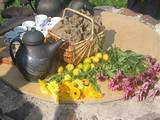 |
The Kurmīši farm grows medicinal plants in an ecologically pure and lovely nature park, "Curves of Daugava," which is part of the protected landscape area "Augšdaugava." Since 1994, the farm has produced approximately 40 types of medicinal plants so as to ensure the preservation of the farm. Enthusiasts and tourists can learn all about medicinal plants and how they are prepared. After the tour, you can taste and purchase Kurmīši herbal teas, which taste the best if you add honey from local beekeeping operations. Candles made of beeswax offer a special atmosphere. The farm has areas for relaxation and a facility where the candles are made. You can purchase a wide range of wax souvenirs and tour the beekeeping facility. The owner also offers guided tours of the arm. |
|
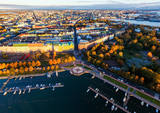 |
Helsinki is the capital of Finland and the biggest city in Finland. It offers a lot to see as it is seaside city surrounded by islands but city itself is full of wonderful parks. This city has everything to attract all kinds of people - from architecture and culture to nature and even has wide range of places where to enjoy night-time Helsinki. |
|
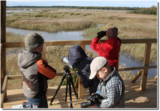 |
Kaņieris is a seriously overgrown and
shallow seaside lake. Its water level was
adjusted several times during the 20th
century so as to obtain agricultural lands.
The lake has 14 islands, among which nine
are natural and the rest are artificial and
aimed at attracting nesting water birds.
Lake Kaņieris has one of the richest
diversities of birds in Latvia. An
ornithological nature reserve was
established here in 1964. In 1989, the lake
was placed on the list of major birding
locations in Europe, and in 1995 it was put
on the list of the Ramsar Convention. At
the southeastern shore of the lake is a
boating facility (only rented boats are
permitted on the lake). A bird-watching
tower was erected on the Riekstu
peninsula in 2009
|
|
 |
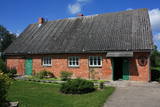
This is an authentic Lettigalian farm which dates back to the early 20th century. It features a house, granary, cattle shed, sauna and smithy. Folklore groups perform here. You can celebrate the Summer Solstice, attend a St Michael’s Day market and learn ancient craftsmanship skills. Lettigalian foods are served to groups. |
|
 |
Here you will find some 30 types of birds and animals, including cranes, pheasants, swans, pygmy sheep, pygmy pigs, kangaroos, squirrels, etc. You can take a tour and learn about the animals, or walk through the garden on your own. You can also purchase rare and exotic plants from the farm’s garden. |
|
 |
The Aknīste Regional Research Museum is at the corner of Skolas and Miera streets in Aknīste. It is another location which will very much help you to learn about the culture and history of the Selonian region. The museum was established in 1998 and featured antiquities from the Iron Age and Bronze Age, as well as objects which speak to distinguished people from the region and Selonian culture. It is worth looking at the collection of ancient Selonian dishware. |
|
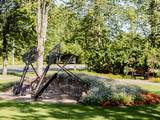 |
Parkā blakus pusloka tiltiņam ir novietotas trīs milzīgas dzelzs atslēgas, kuras balsta akmens mūris un metāla arkas. Tās simbolizē trīs vēsturiskos centrus un to vienotību – Siguldu, Turaidu, Krimuldu. Dobēs pie šī objekta sezonāli zied dažādi kultūraugi. |
|
 |
One of the few places in Latvia where there are so many well-organised pathways. The region is known for castle hills, the location where the great Latvian author Anna Brigadere (1861-1933) lived and worked, the storybook character figures that are scattered around that area, a great forest, an arboretum, a museum of history, a viewing tower, landscapes, etc. This has been recognised as the most family-friendly place in the country.
|
|
 |
This is a miniature zoo next to a tributary of the Ogre River, and most of it is taken up by a paddock of rabbits. Children just love the animals, as well as the hutches that were designed on the basis of the architecture of estates and castles. There are also goats, pigs, geese, peacocks, mandarin ducks and pearl hens. Children can help in feeding the animals. |
|
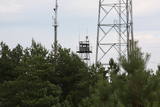 |
The military communications facilities at Pāvilosta are along the southern part of the town. The facilities are owned by the local government, and there is no information about their use at this time.
|
|
 7 days
|
Beer and fish is an important part in the Latvian heritage. The tour introduces you with Latvia through these two fundamental components. While in Riga you have a tasting of the beers from all four Latvian regions and typical snacks as an introduction. Then the tours goes out to the countryside. First stop at the Bauska Brewery which takes pride in their products free of preservatives. Then there is a visit to Rundale Palace and the reconstruction of an ancient Semigalian castle at Tervete. Then visit Tervete Brewery which is a part of multifunctional agrocompany. All their beer ingredients are locally produced. Next day you see how beer is made at home using traditional methods and could taste the difference. Afterwards the tour goes to Liepaja. The city has nice white sandy beach, atmospheric town centre and significant military heritage at Karaosta suburb nowadays used mainly for tourism. Then the route goes into small picturesque town Kuldiga with well-preserved wooden architecture and the widest waterfall in Europe. Another visit to brewery - Uzavas Brewery which specialises in live beer. Then sightseeing of port town Ventspils and fishermen meal and games at small harbour town Roja. Next day you could enjoy morning walk on the beach after which there is a visit to fishermen house to see fish smoking process. Then the route turns back to Riga with an atmospheric bog walk at 'Kemeri National Park on the way and stop at sea resort Jurmala with characteristic wooden villas from 19th century and a lunch at potato restaurant. |
|


