
| Нo | Название | Описание |
|---|---|---|
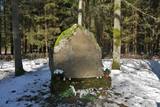 |
Находится недалеко от автодороги А 9, к западу от дома Батаров, где 22 марта 1919 года состоялся бой между бригадой генерала Яниса Балодиса и большевиками. Открыт в 1936 году. |
|
 |
The farm "Veckūkuri" in Jērcēni parish of Strenči district is included in the top of the most productive herds in Latvia. "Veckūri" is a milk processor that produces non-traditional dairy products from the milk obtained on its farm. The farm is also ranked among the companies that have been awarded the State Export Council awards “Latvian Export Product 2015”. |
|
 |
Расположен на территории Даугмале, которую омывают воды Даугавы. Благодаря этому пчелы могут собрать и принести высококачественный мед, который неоднократно завоевывал признание на латвийских конкурсах, а также другие продукты пчеловодства. |
|
 3 дня
|
Суйты - одна из самых ярких, разнообразными культурными традициями богатых общин в Курземе и в Латвии. Доказательством этому служит факт, что 1 октября 2009 года Культурное пространство Суйтов было включено в Список всемирного нематериального наследия ЮНЕСКО, которое требует срочного спасения. Культурное пространство Суйтов включено также в список народных традиций Латвийских канонов культуры. Проявления, характеризующие нематериальное Культурное наследие Суйтов - традиционные праздники, народные обычаи, устная традиция, традиционное пение и музыкальные навыки, традиционные народные костюмы и кулинарные традиции. С 2009 года община Суйтов переживает ренессанс, а это означает, что часть общины проводит активные действия по сохранению традиций, обеспечению жизнеспособности и их подвижению на местном, национальном и на международном уровне. Жизнеспособность Культурного пространства Суйтов находится в руках представителей общины, так как основывается на практическом применении и креативности представителей общины. Суйты считают развитие туризма в своем культурном пространстве одной из важных областей развития самого культурного пространства. В частности, подчеркивая нишу культурного туризма, основанную на продвижении уникального Культурного наследия Суйтов в более широком масштабе. |
|
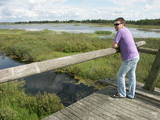 |
The tower is at the western end of the Seda swamp, accessed from the side of Jērcēni. Transport is limited here. The tower is in the area of the swamp where peat moss is extracted. It offers a broad view of the ponds of Seda and a boat rental facility that is nearby. It is an appropriate location for bird-watching during the season of migration. There is another bird-watching platform near the town of Seda. This is part of the ZBR. |
|
 |
Kafejnīca "Dižjūra" atrodas Mazirbē, Lībiešu tautas namā. Atvērta vasaras sezonā. |
|
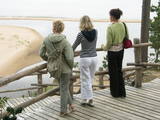 |
The Sunset trail starts in the centre of Saulkrasti town and takes you to the White Dune. Saulkrasti town with its municipal rural territory, occupies a 17km long stretch of coastal land to the North from the river Lilaste and the lake Lilaste. The White Dune stands on the right side of river Inčupe mouth. It is covered by old pine forest. The white, 18m high sand outcrop in olden times served as a landmark for fishermen. The White Dune formed as winds carried the sand from the beach over clay sediments of the Baltic Ice Lake. Some 150-200 years ago, the dune had been drifting as witnessed by several layers of soil buried within it. Local fishermen and farmers at Bātciems initiated afforestation of the drifting dunes. At that time, the 30m high dunes which are now covered with forest, were bare, shifting and even buried a farmstead. To speed up afforestation, mountain pines were planted. The White Dune was partly washed away in heavy storm in 1969, and 4-6m high precipice formed. Now the wind and sand have levelled out the dune surface, it has been fixed with willow-twigs or grown with forest where the largest pines are more than 170-190 years old. The pines are notable with their large trunks and branches, the scars obtained during their lifetime and the typical “crocodile skin” – the bark forms rhombuses resembling those of the reptile’s scales. Scots Pine (Pinus Silvestris) is one of the most common tree species in Latvia. It grows in dry, meagre sandy soil in dunes as well as in marsh. However, it does not stand overshadowing. Forest fires help pines to get rid of competitors as pine endures fire better than other trees because of its thick bark and high crown. The wood exudes resin and burned wounds close soon. Fire cleans space for seedlings of young pines. Pines can live 300-350 years. Ground cover in dune forests is very sensitive. If the sparse vegetation is destroyed, not only the natural biodiversity and landscape is damaged, but also the dangerous shifting dunes can possibly “wake up”. Embryonic dunes, White (yellow) dunes, Grey dunes and Wooded dunes are EU protected biotopes. Grey Dunes are protected by Latvian law as well. |
|
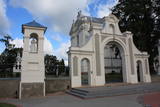 |
Храм (ярчайший памятник барокко в Латгалии) строился в период с 1755 по 1767 год по проекту итальянского архитектора Антонио Парако.В мире верующих это - очень важное место, потому что в 1775 году из Рима привезли реликвии патрона Краславы Святого Доната, которые в 1818 году поместили в специально построенной для этой цели часовне. С 1790 года вплоть до сегодняшних дней в первое воскресенье после дня Святого Петра празднуется день Святого Доната. В храме 13 алтарей. Автор фрески центрального алтаря «Святой Людвиг отправляется в Крестовый поход» - итальянский художник Ф. Кастальди. Позднее центральный алтарь дополнили алтарной иконой польского художника Я.Матейко такого же названия. В погребах церкви (восстановлены) можно осмотреть гробницу графов Платеров, созданную в 1775 году. Церковь осматривается изнутри. |
|
 |
Latviskais pirts rituāls ozola ieskautā lauku pirtiņā. Pirts procedūrās tiek izmantoti dabīgi un pašgatavoti materiāli (augu un zaru slotiņas, skrubīši, lāvas paklājiņi, tējas u.tml.), skaņu instrumenti (sajūtu bunga, zvanga, lietus koki, zvaniņi u.c.), klūgu slotiņas, latviešu tautas dziesmas, labi un stipri vārdi. |
|
 |
The Gauja National Park, established in 1973, was Latvia’s first national park, and it has a wealth of tradition in environmental protection and tourism. Indeed, the GNP is one of the most popular tourist destinations in Latvia. The main “artery” of the park is the ancient Gauja River valley, which was left behind when Ice Age glaciers receded. The valley is 95 kilometres long, with many tributaries that are also in deep ravines with massive sandstone cliffs from the Devonian period. The deepest part of the river valley is at Sigulda, where it is 85 metres deep. The territory has a great diversity of species – some 900 plant species in all. The Gauja is Latvia’s most popular river for water tourism, and many tourist accommodations are found along its shores. The Gauja National Park is one of the best-appointed protected territories in Latvia in terms of nature trails and tourism routes. Nature trails at Līgatne pass along paddocks of wild animals – the largest and most complete object of its kind in the Baltic States. The park also features cultural monuments of pan-Baltic importance – the Turaida Museum Reserve, the medieval old town of the city of Cēsis with its famous castle ruins and St John’s Church, the lake castle at Āraiši, etc. Visitors centres are found in Sigulda, along the Līgatne nature trails, and at the Zvārte rock. The administration of the GNP is building a new and modern visitors centre in Sigulda.
|
|
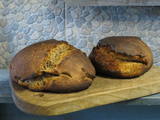 |
Хозяйка в напольной дровяной печи печет настоящий латышский деревенский ржаной хлеб. Тесто готовит из ржаной или пшеничной муки с добавлением соли, сахара, тмина и на натуральной закваске. Посетители могут наблюдать и принять участие в процессе выпечки хлеба, попробовать и купить хлеб, а также осмотреть музей. Все в хозяйстве выращивают сами в духе, дружественном к окружающей среде! |
|
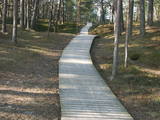 |
The nature reserve “Plieņciema kāpa” is founded in 1987 and covers 60.6 hectares of land. Since 2005 it is a Natura2000 site. The nature reserve protects a 150-200m wide and 3.5km long part of a distinct, continuous dune rampart. The dunes shelter Plieņciems village protecting from sea winds. The key natural values here are rare and protected biotopes of national and European significance: “Wooded dunes of the coast 2180” in the area of 61.8 ha, “Fixed dunes with herbaceous vegetation, 2130 (grey dunes)” in the area of 8.27 ha, “Shifting dunes along the shoreline with Ammophila arenaria (white dunes) 2120 in the area of 3.20 ha”, “Black alder swamp forests 9080”, ) in the area of 2,68 ha, as well as rare and protected species of Latvian and European significance including eastern pasqueflower (pulsatilla patens), Rolling Hen-and-chicks(Jovibarba sobolifera), Nothorhina muricata, Wryneck (Jynx torquilla), Woodlark (Lullula arborea). In the nature reserve, there is a “Vabu square” – a deflation in the dune where for centuries local fishermen have been drying nets. In the 18th and 19th centuries ships were built here. Nine ships have been built here in 1882 - 1925. The four-masted gaff-rigged schooner with hoisting engine “Eurasia” was completed in 1925, the largest ship built by the Kurzeme fishermen. It was one of the works of Martin Morgenstern (1866-1945), a famous shipbuilding master. Thanks to dunes, Plieņciems village was a popular holiday resort and has been mentioned in written sources already in 1738. Clergymen and landlords with their families used to stay here. In 1808, a merchant from Riga bought the local pub and replaced it with a massive two-storey building with a large ball-room and dining hall. On July 15, 1810, a sea bathing facility was opened for health treatment. For arrival of the empress Elisabeth Alexeievna, the wife of emperor Alexander I of Russia, who was a grandson of Catherine the Great, the road from Tukums town was repaired, the two highest hills were levelled, a road passage was dug across the Plieņciems dune, and a lime-tree alley was planted to facilitate access to the beach and bathing spot. Later, in 1920ies, the resort circles consisted mainly of the Kurzeme region landlords. There was a dance-floor in the park of Plieņciems village, and a special orchestra played music for resort guests three times a day. |
|
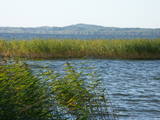 |
The eastern, southern and western shores of Lake Rāzna have roads which offer many lovely and unusual views of Latvia’s second largest lake and its surrounding landscape. Particularly lovely is the road between Foļvarkova and Vilkakrogs, which is part of the Rēzekne-Ezernieki road.
|
|
 1 день
|
The Forest Trail leads down from the highest point of the Haanja Upland. The most important sight on this route is the Suur Munamägi Hill – 318 m above sea level. The highest point of the Baltics with its observation tower provides its visitors with a splendid 50 km range view of the Estonian nature. The 150 year-old western taiga spruce forests grow on the slopes of Suur-Munamägi. Further on the trail circles around the southern part of Lake Vaskna, and continues down small country roads surrounded by solitary homesteads and small clusters of farms. The route ends in a small village, Tsiistre, where the Linen Museum is located. The museum has a collection of folk linen. Flax is one of the oldest cultural plants in Estonia and a few decades ago, blue flax fields were a common sight in southern Estonia. |
|
 |
Gebaut als ein Gebäude des Festungstyps. Wurde in der Zeit des Livländischen Kriegs und des Nordkriegs zerstört. 1865 wurde der heutige Turm gebaut. Die von J. V. Rabe gebaute Kanzel mit Spindeltreppe. |
|
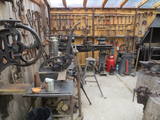 |
Saimniecības zemi, kas atrodas starp Ulbroku un Vālodzēm, 1929. gadā nopirka tagadējā saimnieka – Dzintara Āboliņa vectēvs. Tajā laikā arī tika uzcelta klēts, kurā glabāja saimniecībā izaudzēto lauksaimniecības produkciju. Krīvu klēts atdzimšana notika pirms 20 gadiem, kad tagadējie saimnieki tajā uzsāka veidot muzeju no sadzīves priekšmetiem un darba instrumentiem, kas savulaik izmantoti Krīvu saimniecībā. |
|
 |
Находится в живописном месте – в древней долине Абавы между Кандавой и Сабиле. Расположился в историческом здании, имеющим одну из крупнейших в Балтии кухню-очаг-дымоход, каменные стены которой постепенно переходят в трубу. Рядом находится стоянка для водных туристов. Латышская кухня: Холодный свекольный суп, суп с фрикадельками, щавелевый суп, суп из кислой капусты, куриная печенка, домашняя котлета, копченые свиные ребрышки, жареная свинина, приготовленная на гриле свинина, картофельные блины со сметаной, тонкие блины, натуральные чаи. Особое блюдо: Вареники фаршированные копченым мясом, творогом и луком. |
|
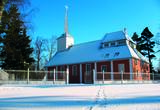 |
19 апреля 1998 года Римско-католическая церковь Милости Божией – в т.н. “Белое воскресенье” или день Милости Божией – была освящена Римско-католическая церковь Милости Божией в Саулкрасты. Длина здания –24 метра, высота башни – 16 метров. Церковь проектировал архитектор Янис Шредерс. Церковь рассчитана на 300 мест. Образ Христа на алтарной картине изображен таким, каким его в своем видении 22 февраля 1931 года узрела святая монахиня польского монастыря Фаустина, и создан художником Эриком Пудзенсом. В 14 картинах на стенах церкви изображен путь страданий – крестный путь Христа от суда до момента воскрешения. Алтарь сделан из благородного дерева ясеня. 2 августа 1998 года около Римско-католической церкви Милости Божией в Саулкрасты был освящен крест высотой 7,38 метра. Ночью этот крест освещен подсветкой. Этот крест является копией креста на Голгофе в Иерусалиме, на котором был распят Иисус Христос. |
|
 |
В Царникаве ‒ в том месте, где Гауя впадает в море, ‒ уже в старину развивались традиции ловли и переработки миноги. Во время экскурсии можно узнать о миноге и о том, как ее перерабатывают, а также попробовать миногу гриль, приготовленную на углях, миногу в желе и суши из миноги. Латышская кухня: Жареная минога на решетке, миноги в желе, булочки с миногой. |
|
 |
Находится в гостинице Park Hotel Latgola на 10 этаже, откуда приоткрывается великолепный вид на город. Предлагает латгальскую и мировую кухню. Латышская кухня: Салаты с балтийской селедкой, салаты с тминным сыром, латгальская закуска с салом, картофелем, сыром и маринованными огурцами, свиные ребрышки с квашеной капустой, картофельные блины и клецки, фасоль в горшочке, купаты, сырники. Особое блюдо: Капустный суп с боровиками. |
|


