
| No | Name | Description |
|---|---|---|
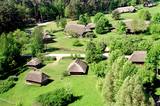 |
Countryside life open-air museum. Various historical county buildings, everyday life tools, traditions etc. |
|
 |
A small bakery that Jānis Kurpnieks, a baker with more than 20 years of experience, has set up in his father's home. More than 12 types of bread from cereals grown in Latvia. The greatest pride of the bakery is its wholemeal rye bread and sweet and sour bread, neither of which contains wheat flour. Rye bread is baked in large loaves weighing 8-9 kg and reaching up to half a metre in length. With such a loaf, the flavour “bouquet” is stronger and the shelf life – longer. Only natural ingredients and home-made sourdough, taken from the dough scraper (the dough of the previous baking), are used here for baking bread. The dough is fermented in oak tubs and the bread is baked in a proper bread oven, which is fired with softwood. |
|
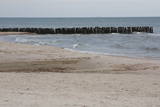 |
This is an enormously important territory for migrating birds. The most commonly spotted protected species of birds are the velvet scoter, the black scoter, the long-tailed duck, the little gull, the red-throated and black-throated loon, and the black guillemot. The territory is opposite the Dundaga and Ventspils administrative districts, and it covers 172,412 hectares.
|
|
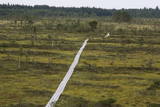 |
The tower is in the western part of the Vasenieki swamp, and an interesting nature trail with information stands and pathways was recently established there. The tower offers a look at unique swampland – visitors can survey the entire swamp. Wear proper footwear when it is damp outside!
|
|
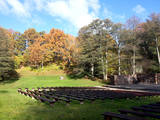 |
features an open-air stage in a lovely place. During the summer there are concerts, theatrical performances, parties, Summer Solstice celebrations, etc. The International Bourdon Festival is held once every four years, and the next one will be in 2020. This brings together bourdon singers from many countries in the world. |
|
 |
The Līgatne Paper Factory is located at Pilsoņu Street 1 in Līgatne. The factory was first built in place of an old paper windmill by two tradesman from Rīga who also built dormitories for residents. These structures are an important component in the urban environment of Līgatne. The rapid flow of the Līgatne River allowed the factory to produce writing paper, stationary and wrapping paper. In 1858, the factory was brought by a local nobleman who brought in new equipment from Scotland. If some 100 people worked at the factory during the first half of the 19th century, then that number rose to 600 by the end of the century and 800 at the beginning of the 20th century. Writing paper was the primary product from the factory, although there were sometimes special orders. During World War I, for instance, the factory produced paper on which the Russian military printed its maps. This allowed the factory to hold an important role in the Russian market. During the Soviet era, the factory at Līgatne produced notebooks and other products that were sent all over the USSR. Today the factory mostly produces wrapping paper of various kinds from waste paper. The Līgatne Paper Factory is the only functioning entity of its kind in Latvia, and there are guides available to give you a tour. The historical centre of the campus on which the factory sits is a cultural monument. The Līgatne Tourism Information Centre (_371-6415-3313) offers tours of the centre during which you will learn about the lives of the factory's workers and administrators in the late 19th and early 20th century. Back then there was major construction work at the factory to build residences for workers, a school, a childbirth facility, a hospital, a club, a guesthouse and other buildings which have survived to the present day. |
|
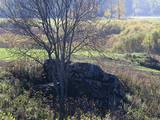 |
The Boulder of Purmaļi is the biggest boulder in Rēzekne district and one of the 20 biggest boulders in
Latvia. It is located on the escarpment surrounded by the trees and the bushes. Perimeter 18,5 m, height 3,2 m,
lenght 5,6 m, width 4,7, surface volume 30 m3.
|
|
 |
The guesthouse is on the side of the Rēzekne ring road (A12). The lady of the house offers Lettigalian dishes based on local ingredients, and she works with local farmers and fishermen. |
|
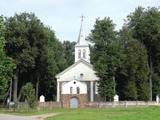 |
Sts. Peter and Paul Roman Catholic Church of Ozolmuiža was built in 1820 by the foundation of
counts Plāteri-Zībergi. It is a stone building with a small bell tower. The church has a huge stone altar with
four columns and a massive cross. It is a monument of state importance.
|
|
 7 days
|
From Riga airport the tour goes straight into countryside to Jaunmoku manor, surrounded by an attractive park. Next day, birding starts at Ķemeri National Park, including wet-forest areas and locations around Lake Kaņieris and Ķemeri village. Then the route follows the west coastof the Gulf of Riga with some small stops along the way and longer walks at Mērsrags. Next you spend some time at Cape Kolka and its surroundings which is a prime migration spot. Visitthebroad-leafforests of Slītere National Park around the ancient coast of the Baltic Ice Lake and drive through Užava floodplain fields, then stop at the westernmost point in the country, Akmeņrags. The tour continues to Liepaja and Pape Ornithological Station and lake where it is possible to spend a night watching the owl migration if it has started. Then we drive through Zvārte wooded area and make some stops at fish ponds on the way back to Riga. |
|
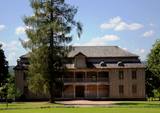 |
This estate is surrounded by an ancient and geometric landscape. During the latter half of the 19th century, it had a landscape style with various elements of geometry. The park covers 4.2 ha and has ancient linden, maple, elm, oak and other decorative bushes, with more than 20 types of plants that have turned into wood. |
|
 |
The Lithuanian Pomiculture and Gardening Institute became a national scholarly institute in 1992. It engages in scholarly studies, as well as experimental manufacturing. The institute produces Lithuanian fruits and vegetables that are used to manufacture high-quality, natural and healthy products. |
|
 |
The Soviet Border Guard facility at Mērsrags was the start of the border regime zone. Absolutely nothing of the facility is left for perusal today.
|
|
 |
One of Northern Europe's oldest universities (founded in 1632). Many famous people and scientists have studied here. Main building (1804. – 1809.) is one the country's most excellent monuments of Classical architecture. |
|
 |
The Livonian Order built a castle made of bricks and fieldstones in this location in 1253. The building measured 72 x 40 metres and had a three-story residential area and a gate tower at its centre. An entrance for soldiers was installed at the height of the second floor of the fortified wall during the 14th century, with barriers and four bastions installed during the 16th and 17th century. Legend has it that the daughter of a knight was bricked into the wall and that there was once a secret underground passage to the Lutheran church that is 200 metres away. The park includes the “Ancient Seashore” promenade, featuring plaques with quotes from Zenta Mauriņa and Jānis Rainis. |
|
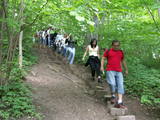 |
The Little Sigulda of Pilskalne is a place for longer or shorter hikes. Here you will find a number of trails – the Sprīdītis trail (1.6 km, featuring wooden sculptures of characters from fairy tales by Anna Brigadere), the Forest landscape educational trail (3.8 km), and the Highland landscape trail (8 km in each direction). The trails are in a sub-glacial depression with a number of little lakes and swamps that are connected by streams. This is a restricted environmental area aimed at protecting the landscape and its treasures. At the beginning of the trails (near Pilskalne) there is the Melnaiskalns (Rāmavas) castle hill, which is around 30 m high. |
|
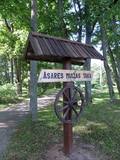 |
Asares muižas romantiskā stila dendroloģiskais ainavu parks veidots 18. gs. un papildināts 19. gs. 2. pusē. Muižas parka teritoriju ieskauj laukakmeņu mūris. Bet parkā sastopamas daudz interesantas krūmu un koku sugas: Sibīrijas baltegles, Eiropas lapegles, duglāzijas, šķeltlapainie baltalkšņi, Švedlera kļavas, košumkrūmi, dažādi lakstaugi. Liepu alejā - 2 dižkoki. Tempļa kalna atjaunotajā lapenē - muižnieku tējas dzeršanas vieta ar skatu uz pili. |
|
|
|
1996. g. atklātais piemineklis (tēlniece: A. Veinbaha) Dagdā (starp Asūnes un Rēzeknes ielām) ir piemiņas vieta komunisma terora upuriem. No šejienes paveras labs skats uz salām bagāto Dagdas ezeru. |
|
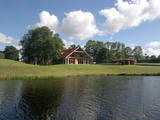 |
The pride of this guesthouse is the cellar which houses a large collection of wines produced at the farm. You can buy apple, grape, cherry, blackberry, cranberry, gooseberry and rhubarb wine. |
|
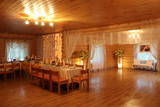 |
The farm engages in cattle breeding, fruit and vegetable growing, and production and processing of milk and meat. Contact the farm in advance to purchase homemade products, learn to make cheese, and bake your own bread on the basis of ancient recipes. This farm is part of the culinary heritage of Latgale. |
|


