
| No | Name | Description |
|---|---|---|
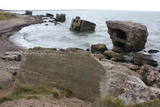 |
This is one of the most visually expressive coastal defence batteries in Latvia. Why? Because most it has been fully or at least partly washed into the sea, creating a truly unusual landscape, particularly during stormy weather. This is an historical monument which is subject to the mighty power of Mother Nature. The battery can also be seen from the Northern breakwater of Liepāja. It’s worth hiking the four kilometres along the beach to the Northern Forts. Along the way, you can take a look at the No. 23 Coastal Defence Battery.
|
|
 |
Avinurme Cultural Heritage Centre exhibits displays of local cultural history and runs workshops for woodwork and handicraft. Old workbenches are used for carpentry, and spinning and weaving skills can be honed too. 1-3-hour programmes are available for groups. |
|
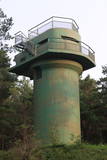 |
The battery is to the South of Ventspils, not far from the Piejūras Park. Work on the battery began in 1939. Today the site is a complete mess, standing out in a negative way from the tidy city itself. People seeking building materials and ferrous metals helped to tear the place down. It’s too bad that this historical location – one that might be of interest to tourists – is in such sad shape, and right at the gates of the city, to boot.
|
|
 |
Atrodas uz Imulas upes un celtas 19. gs. sākumā. Uz dzirnavu vārtu staba redzama tēlnieces D. Ezergailes veidota pūce. Pūces dzirnavās savulaik uzņēma pazīstamo latviešu mākslas filmu Likteņdzirnas.
|
|
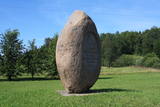 |
The G.F. Stender Museum is at the former Laši pastoral estate, 500 m to the Northeast from the Nereta-Ilūkste road. Gotthard Friedrich Stender (1714-1796), also known as Old Stenders, was the author of the first broader Latvian language grammar book (1761), the first Latvian-German and German-Latvian dictionary (1789), the first Latvian primer (1782), and the first illustrated primer, “ABC of Pictures” (1787). He worked as a pastor in Sēlpils and Sunākste and was born at the Laši pastoral estate, at which one of the buildings now contains a small museum. A memorial stone (sculptor I. Folkmanis, architect N. Tamane) is alongside the Nereta-Ilūkste road. |
|
 1 day
|
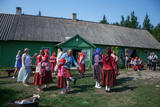
Kihnu is the largest island in the Gulf of Riga, with an area of 16.4 km2. It is only 7 km long and 3.3 km wide. Kihnu's cultural space and traditions are included on the UNESCO List of the Intangible Cultural Heritage of Humanity. There are four villages on the island and the islanders still wear national dress as everyday apparel. The unique atmosphere of the island can be experienced during a guided day programme. Kihnu Mare, the local guide, has developed her own traditional culture network with the people who have the know-how and skills to demonstrate for visitors the different aspects of Kihnu culture: the language, the traditional clothes, farming and fieldwork, handicrafts, the preparation of traditional foods, folklore, church life, singing, and dancing at weddings and village parties, as well as their traditions surrounding the sea, fishing, seal hunting and living with nature. |
|
 |
The café is along the Rīga-Ventspils highway (A10). A summer terrace is available during the season. Latvian cuisine: Beef tongue salad, chilled soup, stock with dumplings, “little farmer,” pork ribs, potato pancakes and crepes, whipped fool. Special foods: Kharcho a la “Pie Jānis”. |
|
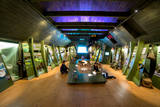 |
The Baltic Sea gave this territory one of the old names of Jūrkalne – Felixberg, and people still talk about the interesting legend that is the origin of the name. Several wrecked ships have been found in the Baltic Sea off the coast of Jūrkalne. An exhibition in the museum visualises the underwater world as the deck of a ship that has sunk into the depths of the sea. The exhibition focuses on the cultural and historical heritage of underwater Latvia, allowing visitors to learn all about the history of sailing ships, steamships and other objects that have been raised from the depths. Small children will start to learn about the underwater world, and researchers with broader knowledge will find something new here. |
|
 2 days
|
Маршрут предусмотрен для путешественников, которых привлекает большой и частый перепад рельефа, а также для тех, кто жаждет увидеть и на себе испытать впечатляющие берега глубокой древней долины Аматы, передвигаясь по мало тронутым лесным тропам. Тропа, проложенная на правом берегу реки, петляет как по нижней, так и по верхней части долины, поэтому местами необходимо преодолевать перепад высоты более чем 40 метров. Maršruta informācija no Latvijas Lauku foruma |
|
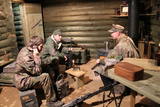 |
Pie Vidzemes šosejas pirms Melturu tilta pāri Amatai ir privātais muzejs "Mežabrāļu bunkurs". Bunkurs izveidots, lai varētu vēstīt par Nacionālo partizānu mežabrāļu cīņu laikā no 1944.-1956. gadam, kad mežos pret okupācijas varu cīnījās ap 20 000 Latvijas patriotu. Nacionālo partizānu bunkurs izveidots balstoties uz savāktajām mežabrāļu atmiņām, dienasgrāmatu pierakstiem un fotogrāfijām. Uz bunkuru ved meža taka ar informāciju par dažādiem mežabrāļu piedzīvojumiem un cīņām. Bunkura pazemes daļā apskatāmi vēsturiskie priekšmeti, kas viņus pavadīja dzīvē un cīņā. Saimnieks piedāvā pastaigu pa meža taku, kur izvietota informācija par mežabrāļiem un slēpņu spēle bērniem. Ar iepriekšēju pieteikšanos iespējams iekļūt bunkurā un apskatīt iekārtotu bunkuru ar mežabrāļu izmantoto ieroču, munīcijas un citu priekšmetu ekspozīciju. Stāstījumu papildina savāktās mežabrāļu interviju videoieraksti. Apmeklētājiem iespējams pasūtīt mednieku desiņu cepšanu lapenē pie bunkura. |
|
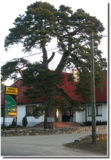 |
The Great Pine of Bigauņciems outside
the Dižpriede café,
|
|
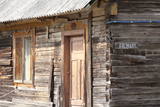 |
Vāldamõ – a residential building that is yellow and has natural roofing materials. It was built as a new farm at the beginning of the last century. Virgo is the next homestead to the North from Vāldamõ, and it was established as a new farm in the 1920s. The house (1930) features interesting wood carvings. Next to the North is Fīlmaņi, which has a building that appears antique, but was built in the early 20th century as a single roof. Silkalni is the homestead that we find if we turn to the right toward Pitrags at the crossroads. The yellow building was built around 1906 as a single room. Norpiedagi is to the South from Silkalni – a brown and larger house than the previous one. The home was built around 1906 as a one-room granary by the active Liv public activist and boat builder Diriķis Volganskis (1884-1968). His son, Edgars Valgamā, who was also a Liv cultural activist and worked as a pastor in Finland, was born here. Anduļi can be found at the aforementioned crossroads. This is one of the largest old farms in the village, and it is owned by the village elder. The history of the homestead was first recorded in 1680, when it was called Kūkiņi. The homestead includes a residential building (c. 1909), a threshing barn (1905), a granary (mid-19th century), and a smokehouse made of a boat that was cut in two. Under the part of the threshing barn which is on the back of the dune, there is the medieval, so-called Plague cemetery. Žoki is a homestead that is on the other side of the road from Anduļi. The building that is there now was built on the foundation of an older one. In the mid-19th century, Žoki was home to the first reading school for Liv children from the seashore villages of the Dundaga region. Liv Nika Polmanis (1823-1903) worked there as a teacher. Next to the North of Žoki is the Tilmači homestead, with several buildings that were built in the late 19th and early 20th century – a brown residential building, a stable and part of a granary. When the residential building was restored, the owner found a board reading "1825. Kurlyandskaya gubernya." The seven historical homesteads and buildings were at one time considered for listing on the UNESCO list of world heritage. |
|
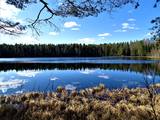 |
Ķekavas novadā, Daugmales pagastā atrodas jauka atpūtas vieta - Lejas ezers. Ezeram var apiet apkārt, taka nav marķēta un iešana ir pa mazām meža taciņām. Slapjākā laikā taciņas vietām var būt mitras un dubļainas. Pastaiga aizņems aptuveni stundu. Pie ezera ir iekārtotas vairākas piknika vietas. |
|
 2 days
|
Latvia is the land of apples, so producing cider here is only natural! The ancient traditions of apple growing in our country, as well as the variety of high-quality apple cultivars, are key advantages of Latvia's cider culture. In our climate zone, it is challenging to grow good grapes for wine production, but the local conditions are particularly suitable for making apple cider. This is a natural consequence that local cider producers are increasingly mastering with excellence. The Cider Route will take you to various cideries in Latvia, as well as to restaurants and pubs that serve it. The Cider Route allows you to understand the specifics of Latvian cider, introducing you to the culinary traditions and cultural heritage of different regions. You will have the opportunity to meet the cider makers themselves, who run small farms, tend to the orchards, share about their work, and even let you participate in it. |
|
 |
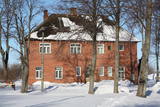
The landlady of this farm will tell you about healthy herbal teas and home-based goodies. If you wish to spend the night under the stars, we offer a place for tents and a campfire on the banks of local river by the old Lūkas windmill. “Aploki” will welcome anyone who wants to relax in a peaceful and quiet atmosphere. |
|
 |
Name of Ainazi is an integral part of the Latvian maritime history. The first Naval School, which was able to learn the Latvian peasant children, was established here in 1864. Naturally - Ainazi became an important Latvian coastal shipbuilding centre and port. Economic life of the town was also facilitated by the opening of Smiltene -Valmiera-Ainazi narrow-gauge railway line in1913. Today Ainazi is a small and quiet town on the Latvian - Estonian border with a number of interesting sightseeing objects. |
|
 3 days
|
This tour takes you to beautiful gardens in Latvia and Lithuania. Poems are dedicated to trees in the garden surrounding the memorial house of Edvarts Virza, a Latvian poet and writer who wrote a legendary novel about the lives of Latvian farmers. Strūbergu decorative garden offers a garden excursion and consultations in gardening. At Brukna manor you will see a vegetable garden that is arranged as a Renaissance park, a rose garden and a vineyard. The beautiful 18th century Mazmežotne castle is renovated by a grain farmer’s family. The Rundāle castle is known as Latvia’s true jewel of Baroque and Rococo architecture featuring also a rose garden with over 2200 varieties of roses. At Blankenfelde manor you will see a collection of bells and will enjoy natural juices, syrups and pickles produced in-house. Visiting Mint House you will taste mint tea, biscuits, honey with peppermint and peppermint syrups. Next stop is at the vegetable and herb farm “Droši vesels” producing herbal ointments. In Lithuania you will visit Žagarė, known for its cherry orchard-park and the special species of cherry – the ‘Žagarvyšnė’, on the National List of Plant Varieties. Stop by Žagarė Manor Park, containing more than 100 species of trees and shrubs. Back in Latvia you can have a picnic at Vilki arboretum showing about 1000 different plants - both typical of the landscape of Latvia and quite unique. At Zaļenieki tree nursery, you can walk in the garden with over 2000 trees and shrubs. Further you will enjoy the beauty of peonia in the collection garden by Andris Berkins. Amatnieki homestead offers tours of their tulip garden. Klūgu landscape garden is famous for begonias. Institute of horticulture in Dobele owns a collection of over 200 types and forms of lilac plants. ''The beautiful and practical idea garden'' is proud of its collection of conifers, and the hosts offer tastings of herbal spice powders, dried berries and fruit. “Rūķīšu tea” is one of the largest farms for medicinal plants in Latvia (purple coneflowers, marigolds, chamomile, etc). And finally, visit Liepas tree nursery specialised in cultivation of fruit-trees, berry bushes and roses. |
|
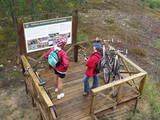 |
This is Lithuania’s largest mossy swamp, and the Čepkeliu Nature Reserve was established to protect it. Before visiting the swamp, you must register at the Dzūkijos National Park’s visitor centre (Marcinkonys, Šilagėlių gatve 11). |
|
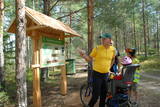 |
The wooden pathway which crosses the high swamp leads to the Teirumnīku swamp lake, which is right in the middle of the swamp. On the shores, there is a well-appointed place for leisure and relaxation. One can return to the starting point via a forest path. The trail is 800m long, and visitors will spend about an hour there. It is a part of the Tīrumnieki nature reserve.
|
|
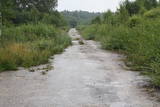 |
One of the largest tank bases in the Baltic War District was located during Soviet times just South of Gardene. The territory has largely been abandoned, and there are just a few remnants of the buildings that were once there. If you drive down the Dobele-Annenieki road, you will find a paved military road splitting off from it. It is still used today. The buildings and urban planning of Gardene are also of interest – during the Soviet era, soldiers and their families lived there.
|
|


