
| No | Name | Description |
|---|---|---|
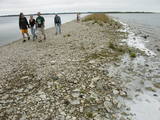 |
The Kassari Island is the fifth largest Estonian island, and it is found to the South of the Hiiumaa Island. There are two dams between the two islands, and a road for motor vehicles has been installed atop them.
|
|
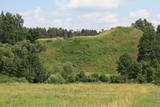 |
Das alte zemgalicshe wirtschaftspolitische Zentrum, das eine stark befestigte Siedlung vor der Ankunft der Kreuzritter war. Die Ruinen der Burg des Livländischen Ordens. |
|
 |
In einem in der zweiten Hälfte des 19. Jh. errichteten Gebäude befindet sich eine Sammlung vom Limbažu-Museum und das Touristeninformationszentrum. Blick auf die Altstadt vom Turm (der glässerne Boden). |
|
 |
GiLine ir ģimenes uzņēmums, kurš ražo konfektes Konfelāde un sīrupus. Konfelāde ir sulas konfektes, kas ražotas no Latvijā iegūtām augļu un ogu 100 % sulām, neizmantojot konservantus un garšas pastiprinātājus. Ražošanas procesā tiek izmantots roku darbs. Arī sīrupā izmantotas tikai dabīgas izejvielas. Piedāvā radošās ekskursijas ražotnē. |
|
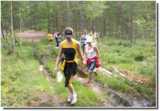 |
The Zaļais (Green) swamp is a medium swamp in
terms of the national park, and it used to be a place
where peat moss was extracted (those areas are flooded
now). In the North it links to the Čaukciems swamp. The
swamp is to the Southwest and West of the Green
Dune.
|
|
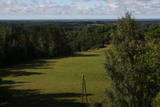 |
This is the highest church tower in Latvia, and from it you can see views of the Alūksne highlands. The view to the South is particularly impressive.
|
|
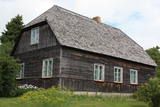 |
The museum was established in 1973 and has been in the Kalna Ziedi homestead since 1989. The permanent exhibition is in a building that was erected in 1989 on the foundations of the former home, while the warehouse (1990) was built on the foundations of a cattle shed. The exhibition hall (2000) was built where a granary once stood. The only part of the former farm that remains in place is the cellar, but the placement of the buildings is typical for the layout of a farm in Vidzeme. The collection of the museum speaks to the history of the administrative district, beginning with information about the Stone Age. The open-air exhibition features beehives with marks of belonging, as well as rare round crosses that are monuments to Medieval cemeteries. 100 metres to the Northeast from the museum is the Kalna Ziedi castle hill, while 200 metres to the south are the remains of a sacrificial oak stump that was destroyed in 1994. The location is on the edge of the reservoir of the Pļaviņas hydroelectric power plant and offers a broad view of the plant’s dam and the town of Pļaviņas.
|
|
 |
"Karpyne" has an excellent restaurant which offers both various fish dishes as well as other foods. Here there's a lot to do inside and outside, for example, inside is bowling alley, swimming pool, gym and outside - outdoor swimming pool and a tennis court, there's a possibility to fish too. Seminars and celebrations can be organised here. |
|
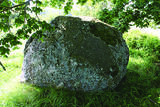 |
The great Black Plague rock, which has engraved text that can still be seen
to a certain extent – it tells future generations about the local pastor who died
from the plague, about how the parsonage was established at Sīkrags and then
moved to Mazirbe. The rock is also a monument to six pastors of the nearby
congregations. All the three stones tell about the horrors of the Black Plague in
1710, the texts have been engraved during the parson Peterson in 1711-1734.
|
|
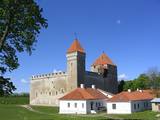 |
The stronghold dates back to the 13th C, exhibitions in its cellars present wildlife and history of the island. Workshops (smithy, glass, ceramics, stone) run from May to August for visitors to admire or participate in. The archery range nearby adds to the excitement and there you can also mint coins. |
|
 |
Atrodas pilsētas centrā – Tukuma ledus halles ēkas otrajā stāvā. Piedāvā maltītes visām ēdienreizēm, klāj galdus pasākumiem, īrē telpas dažādiem pasākumiem. |
|
 |
Laila Kelle works in a building of the former Lamiņi semi-estate. She teaches drawing and painting of landscapes and still life paintings, using oil paints for this purpose. Nature trail (3km).
|
|
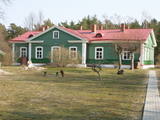 |
This is about 30 km long territory between the Baltic Sea and the Kolka-Ventspils road. It begins at the mouth of the Irbe River and ends at Ovišrags. The territory was mostly established so as to protect dry coniferous forests, grey dunes, damp areas among the dunes, other landscape features and plants and animals in the area. Distinctive landform - kangari and vigas - and grey dunes are Europe-wide significant habitat. Tourists love the sandy and quiet beaches of the area, as well as the Miķeļbāka and Ovīši lighthouses (it is possible to visit Oviši lighthouse and museum in it) and the Lutheran Church at Miķeltornis. There are also certain leftover elements of the Soviet military system, former narrow gauge railway (railway embankment, former train stations marked by memorial stones etc.) which unfortunately are not used as tourism resources. |
|
 |
The café is in the centre of Aglona on the edge of the Dagda road (P60). |
|
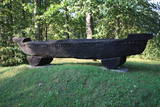 |
3 km to the south of the centre of Jūrkalne, near the old (gravelled) road between Liepāja and Jūrkalne, is the place where the three-year Feliksberga Maritime School existed between 1871 and 1902. The building is long gone, and the memorial has involves an oaken boat with two wooden poles on which old ownership signs have been engraved. |
|
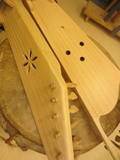 |
Andris Roze is one of very few kokle makers in Latvia who manufactures the instrument and helps others to do so at master’s classes. Roze also manufactures other traditional musical instruments, demonstrates them, offers consultations about them, collects them and gathers together historical information. He works at the Drabeši Crafts House, where people can learn traditional skills such as weaving, processing of leather, felting, pottery and construction of musical instruments. |
|
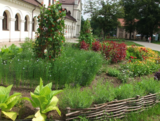 |
The only school-based botanical garden in Lithuania was planted in 1989 at the Traupis school. More than 8,000 types of plants grow in the garden, and all of them have been collected by Sigutis Obelevičius. |
|
 7 days
|
Это богатый на мероприятия тур, ориентированный на семейный отдых. Запланированные мероприятия влкючают в себя катание на велосипедах, байдарках и пешие прогулки. После знакомства со Старым Городом и парками в Риге, вы сделаете остановку в Этнографическом музее под открытым небом, который дает практическое представление о жизни в старинной Латвии и ее архитектуре. В Сигулде пешая прогулка начинается у руин романтического средневекового замка и проходит вдоль долины реки Гауя к Турайдскому музею — резервату с его средневековым замком, обзорной башней, традиционными поместными зданиями и действующей кузницей, где вам понравится выковать монеты. Увлекательный сплав на байдарках от Цесиса проходит через несколько живописных прибрежных обрывов и небольших порогов, завершаясь у старомодного парома в Лигатне, который до сих пор действует ежедневно, работая от энергии течения реки. Будучи в Лигатне, прогуляйтесь по природным тропам, где сможете увидеть местных диких животных в больших вольерах, таких, как: дикие кабаны, медведи, рысь, волки и другие. Совершить «Путешествие во времени» вы сможете, отправившись на экскурсию в бывший секретный советский военный бункер, созданный на случай ядерной войны, в то время как экскурсия по средневековому Цесису и его замку Ливонского Ордена при свете фонарей предоставит вам иные исторические ощущения. Во время экскурсий дети смогут увидеть красивую природу, узнать много нового о местной флоре и фауне, заинтересоваться историей, получить полезные навыки и помимо всего прочего, им будет очень весело. |
|
 |
Kronvalds (1837-1875) was a distinguished Latvian writer, pedagogue and linguist, and this is the Lejas Miķi homestead where he was born. The homestead is in Krote in the Priekule Administrative District, and none of its buildings has survived. There is a commemorative plaque reading “The place where one was born and raised is holy for oneself” (A. Kronvalds). |
|
 |
Kazas piena produkti, ēdieni no kazas izcelsmes produktiem, izglītošanās programmas. |
|


