
| No | Name | Description |
|---|---|---|
 |
Sēlijā, 5 km attālumā no Aknīstes, mājā "Skārdupītes" atrodas biedrība “Sēlijas laivas”. Kamēr teritorijā vēl tikai tiek attīstīta aktīvā tūrisma bāze, jau tagad viesiem tiek sniegts ieskats laivošanas kultūras attīstībā, kā arī ir iespējama dažādu laivu veidu noma un laivošanas tehnikas apmācība. Papildus: vides gida pakalpojumi ar iespēju laivojot iepazīt upes ekosistēmu, floru un faunu. |
|
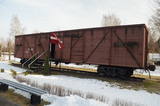 |
The wagon commemorates the 2,916 innocent people from Skrunda and the surrounding area who were deported to Siberia in cattle wagons. It is found at Stacijas Street 1 near the Skrunda railroad station. |
|
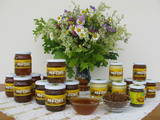 |
This farm has some 150 hives of bees which are carefully tended by beekeepers. The farm also produces nectar plats such as buckwheat, clover and phacelia. You will learn all about beekeeping and taste and purchase beekeeping products. |
|
 3 days
|
The tour starts and ends in Kaunas, Lithuania's 2nd largest city that was the capital of the country from 1920 until 1939. At Tadas Ivanauskas Homestead at Obelynė Park you will see a collection of 300 species and forms of plants, including some of the oldest trees on the planet – the ginkgo biloba and the dawn redwood. In Kaunas you will see the Oldest Apple Tree in Lithuania – almost 360years old, 8 metres tall, with a girth of 285 centimetres at a height of 1.3 metres. The Vytautas Magnus University Kaunas Botanical Garden exposes the Lithuanian Heritage flower garden plants according to their botanical classification. The Lithuanian Institute of Horticulture carries out both scientific and experimental/production activities. You can also buy seedlings, and seasonal fruit and vegetables. Home produced “Happy Foods” can be bought from Garsi Tyla homestead, and you can have a walk in their 100-year-old orchard and see the culinary herb garden. Burbiškis Manor and its beautiful landscape and sculpture park is a home to the annual tulip festival. Authentic homesteads representing Aukštaitija region can be seen at Kleboniškiai Rural Household Museum. Šiauliai University Botanical Garden demonstrates heritage rural plant gardens arranged according to the traditions of pre-war, inter-war and post-war periods. There are about 30 different species and varieties of plants growing on the grounds of the Baltic Plant Museum. The Liudvika and Stanislovas Didžiulis Homestead Museum garden features traditional Lithuanian apple tree cultivars, flowers and herbs. The A. Baranauskas and A. Vienuolis-Žukauskas Memorial Museum presents culture, literature, history, agrarian culture, and technical history in the Anykščiai region. Traditional Lithuanian flower garden can also be seen at the Bronė Buivydaitė Memorial Museum. In Anykščiai you can enjoy the Treetop Walkway and Labyrinth Park, and take a train ride on Aukštaitija’s narrow-gauge railway. In Traupis Botanical Garden you will find everything from perennial flower collections and rock garden to a flower clock and decorative pool with aquatic plants. The interior of the Taujėnai Manor house was decorated extensively with the Radziwiłł family’s portraits, sculptures, hunting trophies, and antique weapons. In Ukmergė District, visit President Antanas Smetona’s Užugiris Manor, which now houses a memorial museum in his honour. At the end of tour, you will visit the Open-Air Museum of Lithuania, one of the largest (194 ha) and most abundant (91,420 exhibits) open-air ethnographic museums in Europe. |
|
 |
Торговый канал, протяженностью неполных 3 км, в советское время являлся закрытой зоной со статусом режима приграничного района. Лиепайский порт был известен еще в XIV столетии. В конце XVII века здесь выкопали канал, который соединил море с Лиепайским озером - теперешний Торговый канал. Заканчивается он Зимним портом и двумя молами, из которых Южный мол служит излюбленным местом для прогулок и рыбалки. В южной части Торгового канала тянется Променад, на котором установлены Янтарные часы. |
|
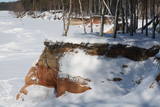 |
This is the most impressive and colourful set of cliffs along the Vidzeme coastline. Waves have created the steep shore that is as much as 6 m high, with several hundred meters of red sandstone cliffs with narrow caves, niches, grottos and other formations. The nearby Veczemu farm is where the Rīga Film Studio shot the films “Long Way into the Dunes” and “The Nest of the Old Fisherman.”
|
|
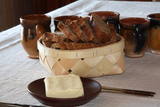 |
This is an authentic Lettigalian farm which dates back to the early 20th century. It features a house, granary, cattle shed, sauna and smithy. Folklore groups perform here. You can celebrate the Summer Solstice, attend a St Michael’s Day market and learn ancient craftsmanship skills. Lettigalian foods are served to groups. |
|
 |
Lina, vilnas apģērbu šūšana, galdautu, dvieļu, jostu u.c. tekstilizstrādājumu šūšana. Tērpu darināšana nav tikai darbs, bet arī aicinājums. Tas palīdz izgatavot vissarežģītākās tērpu konstrukcijas. Nemitīgā zināšanu papildināšana kursos ļauj veiksmīgi dzīvot līdzi mainīgajām modes prasībām. Paralēli individuālajiem pasūtījumiem tiek izgatavoti gan apģērbi, gan citi šūtie izstrādājumi tirdzniecībai. |
|
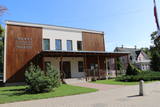 |
Located in a cultural centre at Brīvības Street 15 in Ogre, the museum was established in 1980 and has a permanent exhibition, “Ogre – a Swimming and Air Spa, Relaxation and Everyday Life, 1920-1940,” which offers a good look at the “golden age” of Ogre, when it was a popular spa. Another exhibition, “Legendary Ogre” offers a different view. Visit the museum to find out what it is!
|
|
 2 days
|
Here you will learn about home-based manufacturers, farms, companies and others in southern Vidzeme that produce various dairy products such as milk, yogurt, cottage cheese, cheese, ice cream, etc. From Rīga, take the Vidzeme Highway and turn toward Mālpils. On the way to Ērgļi and Jumurda, you’ll be delighted by the hillocks of the Vidzeme highlands and the lovely landscape that they represent. Near Ērgļi you will find Braki, the home of the classical Latvian author Rūdolfs Blaumanis, Meņģeļi, home of the Jurjāns brothers, and the Jumurda Estate. Drive on through Cesvaine, stopping to look at its impressive castle, and on to Madona, where you can have a delicious meal. From Madona, follow the lovely banks of the Daugava River to Koknese (Destiny Island, the Koknese castle, park and church), and on to Skrīveri, where the author Andrejs Upītis was born. There’s a homemade ice cream place and the factory that produces the universally known penuche candy that is sold under the “Gotiņa” brand name in Latvia. Then drive to Ogre for some Sierštelle cheeses and then back to Rīga. |
|
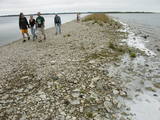 |
The Kassari Island is the fifth largest Estonian island, and it is found to the South of the Hiiumaa Island. There are two dams between the two islands, and a road for motor vehicles has been installed atop them.
|
|
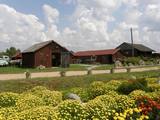 |
We offer a private collection of ancient tools, household items and technologies which we began to assemble in 2002. Right now we have more than 5,000 objects of cultural and historical objects on display, as well as a lovely garden with countless compositions of colourful flowers, fountains, an Eastern meditation bridge, ponds, a pergola, leafy areas, etc. The garden covers more than 2 ha, and it is located 1 km from Lazdukalns. |
|
 |
Tavern Vedu is located 10 minutes’ drive from Tartu, going in the direction of Narva. In the historic tavern you can taste delicious dishes from local ingredients. |
|
 |
Here you will enjoy an educational programme that teaches you that cattle offer not just food, but also communications. You will see cattle learn about how they are bred, and what they provide for the local village and nature. |
|
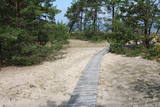 |
The trail (the length 1.2 km) introduces with the habitats of dunes and century-old pines, partly covered with sand. Biologists estimate that the oldest tree, the “mother of pines”, could be around 200 years old. Coastal pine forests serve as a barrier between the sea and land protecting inland areas from impact of the sea and winds. Felling coastal forests was forbidden by law already back in 1643, during the Duchy of Courland. Still due to economic activities, the seashore forests were often fell and fires occurred there occasionally. As a result, the sand which had for centuries been hold by trees, started drifting at Cape Kolka. In the 1930ies, there were about 142 hectares of sandy areas in the Slītere National Park, and 11.5 hectares of those were drifting sand. To stop drifting, the sand areas were carefully afforested. Afforestation was started before WW I and it was completed in the 1970ies. To plant new trees, first the sand had to be stopped. Just 26km to the south from Kolka there was one of the largest sand dunes in Latvia, 25km in length. Every year it devoured 0.3 hectares of land. The sand was stopped covering it with heather, twigs and branches of pines and junipers. Pine trees were planted between them. Today in Kolka, the old, low pine trees tell about the once drifting sand. After storms, when the water washes the bluff and tree roots are exposed, one can see that the tree trunks once have been covered with sand more than 1 meter high. The trees on the seacoast usually have crooked trunks and flag-shaped crowns formed under influence of persisting sea winds. Now these forests are designated biotope “Wooded dunes of the coast”. Stable white dunes (biotope 2120) do not form in Cape Kolka as they are washed by sea waters during spring and autumn storms. Embryonic dunes develop here (code 2120) with plants that usually grow in dunes. These plants have adapted well to poor soils, heat, drought, and the saline sea water. The Kolkasrags Pine Trail is in Slītere National Park. |
|
 |
The café welcomes guests with healthy, local, ecologically clean food. Here you can also get acquainted with cultural heritage, learn various legends, as well as purchase snacks and souvenirs. |
|
 |
The potter embodies traditional pottery skills. He offers candlesticks and two-prong lighting elements, and he uses milk in his work. You can take a tour, purchase products, and take part in the opening of the kiln. |
|
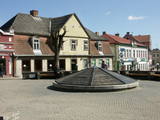 |
Tukums in the historical sources is mentioned in 1253 agreement of the Livonian Order and the Bishop on the division of Kursa. If the town's name is translated from the Liv language, it means "a pile, mountains of sand". at the beginning of 14th century German merchants and craftsmen settlement was formed at the Livonian Order stone castle, whose flowering was facilitated by the proximity of Riga - Prussian road. Later the city was largely influenced by the construction of Riga - Tukums railway in1877. During the Soviet period the on the eastern outskirts of Tukums, the largest Soviet military airfield and military town in the Baltic States was deployed. Today Tukums is a district centre of the same name with a wide range of services offered to tourists. |
|
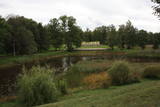 |
Dundagas pili ieskauj parks, kura pirmsākumi ir meklējami jau 17. gs. Tam cauri tek Pāces upīte, kuras uzdambējums veido Dundagas dīķi. Tajā atrodas senatnē (vēl pirms pils būvniecības) mākslīgi veidota sala - Kalnadārza pilskalns. Tam iepretim (dīķa austrumu krastā) atrodas Dundagas pilskalns. Parkā joprojām zaļo (daži lielākie zari ir nolūzuši) t.s. “Rubļa ozols”, kura attēls bija uz 1919. g. izdotās Latvijas simts rubļu naudaszīmes. Parkā uzcelta estrāde. |
|
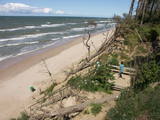 |
At Jūrkalne, there is a small viewing area on the steep shore which offers a magnificent view. At the foot of the shore, which can be accessed via a set of steps, the view is no less wonderful. It is worth hiking along the entire shore from Pāvilosta to Sārnate (approximately 30 kilometres).
|
|


