
| No | Name | Description |
|---|---|---|
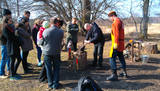 |
Visiting a blacksmith has always been something special. Does this job still exist, and is it still importance? Some may wonder who is a blacksmith is in the first place. The DUDU Nests open-air smithy will answer all of your questions. The blacksmith will teach you all about his profession, talking about the tools and materials that are necessary, the relevant traditions and the everyday work of blacksmiths today. You can forge your own nail to test the difficulty of the work. The blacksmith will happily attend your event with his open-air forge. This is perfect for students, smaller children, wedding guests or individual visitors.
|
|
 |
Taarka Tarõ Köögikõnõ is located in the traditional Setos Farm House, and besides the Setos traditional dishes, also offers flavours of other Finno-Ugric nations and Ukraine. |
|
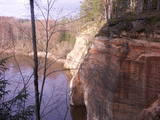 |
The viewing area on the Ērgļi (Ērģeles) cliffs offers an impressive view of Latvia’s most monolith sandstone cliffs (up to 22 metres high) – this is the highest location in the Gauja River valley. Please be very careful and don’t go anywhere near the edge of the cliff!
|
|
 10 days
|
This grand hiking tour includes some of the best and most beautiful parts of the Forest Trail in Latvia and Estonia. Hikes in the forest trails and villages are combined with trips and excursions in cities, as well as other popular tourist sights in both countries. You will get a detailed impression about the forest diversity and most popular national parks in Latvia and Estonia. You will start the tour in Riga, where you will enjoy the beautiful Old Town included in the UNESCO and Art Nouveau District. Then you will drive to Sigulda and see the most scenic ancient valley of the River Gauja, visit Turaida Museum Reserve, hike in Gauja National Park till the historic Ligatne papermill village. Further on you will visit the famous Lake Āraiši Castle, hike on the Cirulisi nature trails and see the beautiful medieval town of Cesis. On the way to Estonia you will stop at the Sietiņiezis big sandstone cliff to have picturesque views of the River Gauja. Then you will stay in Estonia’s second biggest city – Tartu, and visit the recently opened Estonian National Museum. Further on you will drive to Alutaguse National Park and hike along the picturesque Kurtna landscape reserve among the bright coniferous forests ornamented by the mirror surfaces of its many lakes. At the end of the tour you will hike in Estonia’s oldest national park – Lahemaa, which means the “land of bays” in Estonian. The Forest Trail goes along the bays and peninsulas of Lahemaa National Park, introducing the hikers to its most significant natural and cultural heritage. The forests are rich with blueberries and mushrooms in autumn and the air is very clean. This tour will end with sightseeing in Tallinn, Estonia’s capital city, with the Old Town also included in UNESCO. |
|
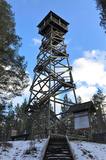 |
This recently built 26-metre wooden tower is on Ūdri Hill (58 metres above sea level). It is on the north-eastern shore of Lake Usma, less than one kilometre from the lake. The tower offers an excellent view of Lake Usma, its islands, and the vast forests which surround it.
|
|
 11 days
|
To start the tour you take a train from Riga to Liepaja, a city with white sandy beaches and a lively cafe culture. The route goes through suburbs of Liepaja to the former millitary town where you see the Orthodox cathederal, old naval fortifications, former barracks and an imposing military prison which is now a tourism site. Pavilosta is a small seaside town and a favourite with windsurfers. Next the route follows the picturesque coastline, including steep banks at Jurkalne and finishes at the well-maintained town of Ventspils. Then along to fishing villages that are home to the tiny Finno-Ugric ethnic group, the Livs. At Cape Kolka the Baltic Sea meets the Gulf of Riga. Here, sampling the local smoked fish is a must. Further on, the route crosses three different types of sea shore – the stony beach at Kaltene, a sandy one at Upesgriva and coastal meadows at Engure. Finish with the trails at Kemeri National Park and return to Riga from the popular resort town of Jūrmala. |
|
 |
The restricted area was established to protect this part of the Ogre River valley, which has ancient river beds and meadows with relevant biotopes and populations. Among these are the wych elm and the European white elm, which are not often found in Latvia.
|
|
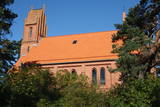 |
Ein im gotischen Stil gebautes Gotteshaus wurde 1888 eingeweiht. Daneben befindet sich ein etnografischer Friedhoff aus dem 19 – 20 Jh. mit ungewöhnlichen Grabkreuzen aus Holz. In den Formen der Kreuze sind die Motiven von Pflanzen, Vögeln, Tieren zu sehen. |
|
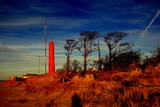 |
Akmensraga tāpat kā Kolkasraga apkaime jau kopš seniem laikiem ir bijusi zināma kā kuģotājiem bīstama vieta, jo te atrodas viena no lielākajām Latvijas piekrastes kuģu kapsētām. Bīstamības fakts slēpjas apstāklī, ka Akmensraga apkārtnē mainās krasta virziens un jūrā iestiepjas akmeņaini sēkļi. Pirmo signāluguni Akmensragā iededza 1879. g., bet 10 gadus vēlāk uzcēla 28 m augstu koka bāku. 1911. g. uzcēla mūra bāku, kuru sagrāva 1. pasaules kara laikā – 1916. g. Mūsdienās redzamā (augstums 37,5 m, uzbūvēta 1921. g.). Padomju laikā visas bākas bija militāri – stratēģiski objekti un šeit strādāja hidrogrāfiskais dienests un jūras novērošanas punkts. Bākas apkārtnē - mežā vēl joprojām redzamas bijušās padomju armijas ēku drupas. Apskatāma no iekšpuses. |
|
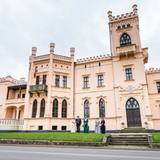 |
The castle was commissioned by Baron Alexander von Fittinghof and built between 1859 and 1863 in the late Tudor Neo-Gothic style. It is one of the most important monuments to this style in Latvia and has an ornate limestone façade. The 7th Sigulda Infantry Brigade was housed in the castle from 1921 until 1940. Today it is home to the Alūksne Museum with a permanent exhibition and an “environmental labyrinth.” One of the most unusual exhibits is a set of fluorescent minerals that can be viewed under lights with various spectrums. |
|
 |
Skaisto un mūsdienās atjaunoto zilā krāsojuma ēku Karaīmu ielas 5 malā sākotnēji (1810. g.) cēla Dominikāņu mūki. Kopš 1864. g. tajā 23 gadus saimniekoja policija, līdz 1887. g. te izvietoja pastu un telegrāfu. Šobrīd ēkā atrodas nacionālā parka administrācija. |
|
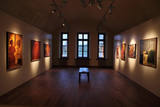 |
The Daugavpils Mark Rothko Art Centre is a multi-functional institution of culture, arts and education, located inside of the fortress' Arsenal building. It is a unique place in the Eastern Europe, where are located the original paintings of Mark Rothko – a great artist of the XX cent., a founder of the abstract expressionism movement, best known for his enigmatic color field paintings. |
|
 7 days
|
We strart the tour from Riga by bus and proceed along the Baltic Sea coast, passing through many different landscapes - white sandy beaches, coastal meadows, dunes with pine forests and steep banks. Many beaches are wild and completely deserted. Access to these territories were highly restricted during Soviet times. The route leads through ethnographic fishermen villages at Nida, passing Pape nature reserve where wild horses graze. The bustling city of Liepaja impreses with its lively promanade and music scene. The city also has a long military history which can cleary be seen walking among the naval fortifications and visiting the former millitary town. Well-maintained Ventspils has a pleasant market, castle and numerous parks. A restored narrow-gauge railway with working steam engine is well worth a visit as well as the Craft House - ideal for local handmade souvenirs. On the way back the tour goes through the pretty provincial town of Kuldiga with well- preserved wooden architecture. The tour includes two of the most interesting national parks: Slitere which holds the geological history of former ages and Kemeri with its great heath trail and sulphur springs. |
|
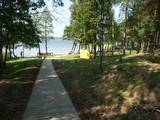 |
There is a small and relatively hard to reach area on the western shore of Lake Būšnieks which has been restricted to protect swamp habitats and several protected plants. Boat base is on the northern shore of the lake offers boat rental. From the plank-way good sites of eutrophic part of Lake Būšnieks can be seen. A well-appointed recreational facility (not included in the restricted area) is on the opposite shore of the lake. |
|
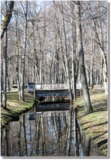 |
Vēršupīte is a small river which curves through the
town of Ķemeri and has more than 10 small and
romantic bridges across it – each with its own name.
|
|
 |
Viens no jaunākajiem Latvijā celtajiem mūra tiltiem. Tā akmens margas ir barona Karla fon Manteifeļa dāvinājums (celts 1907. gadā) Aizputei. Tilta ziemeļu puses margās ir iemūrēta granīta plāksne ar Manteifeļu dzimtas ģerboni, kas ir vāji izšķirams. |
|
 |
RADADA ir radošā darbnīca, kura ierīkota senā ugunsdzēsēju depo. Audumu apdrukas ar saviem orģināliem zīmējumiem rokas sietspiedes tehnikā. Apdrukā apģērbu ar rakstiem un simboliem, kas simbolizē Latvijas dabu, latviešus un to spēku. |
|
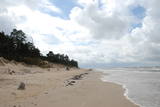 |
Бернати - самая западная точка суши Латвии. Рядом с автостоянкой установлен каменный знак скульптора Вилниса Титанса «Зеленый луч» (1998 г.). Бернатский мыс подвержен воздействию ветра и волн, поэтому здесь наблюдается вымывание морского берега. У дороги, которая из центра поселка Бернати ведет к морю, в конце дюн (имеется указатель), установлен памятный камень со словами первого Президента Латвии Яниса Чаксте, сказанными в 1924 году: «Здесь должен быть курорт». |
|
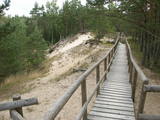 |
The trail climbs up and down along the bluffs of lower River Pilsupe and reveals a fascinating sight of three white dune exposures (the largest is called the White Dune). The trail is 900m long, and the White Dune is ca 20m high. It has formed ca 6000 years ago, in the period of the Littorina Sea which is a foregoer of the Baltic Sea. Here the first Stone Age settlement on the North Western coast of Latvia has been found in 1934 by geologist S. Burhards. In the sand, some 500m from the sea, he found some pottery fragments, a sandstone hone, a piece of flint, parts of bones and an amber bead. He handed the findings over to the National Museum of History. In October 1934, the site was checked by archaeologist E. Šturms, who found the archaeological layer, typical for such settlements, in the landslides of the Pilsupe riverbanks. In 1936 he started larger excavations to continue by 1938. Totally seven, chronologically different settlements were detected and many artefacts found, including fragments of the so called Sārnate and pit-comb pottery, as well as some pieces of corded pottery. Based on these findings, the settlement is dated back to the beginning or middle of the 3rd millenary B.C., and it has been inhabited till the beginning of the 2nd millenary B.C. Especially remarkable are three clay figures in human shape which have probably been used for some religious cult purposes. Since 1993, archaeologist Ilzes Loze has discovered several pit-comb ware culture settlements in large area around Pūrciems village. They are known in research literature as „the Ģipka settlements”. |
|
 |
The restaurant is situated in the guest house Liedags alongside the Liepaja-Ventspils highway, 4,5 km away from Jurkalne on the banks of Enavite river. |
|


